Book chapter by Sarah Moulds on the Australian House of Representatives
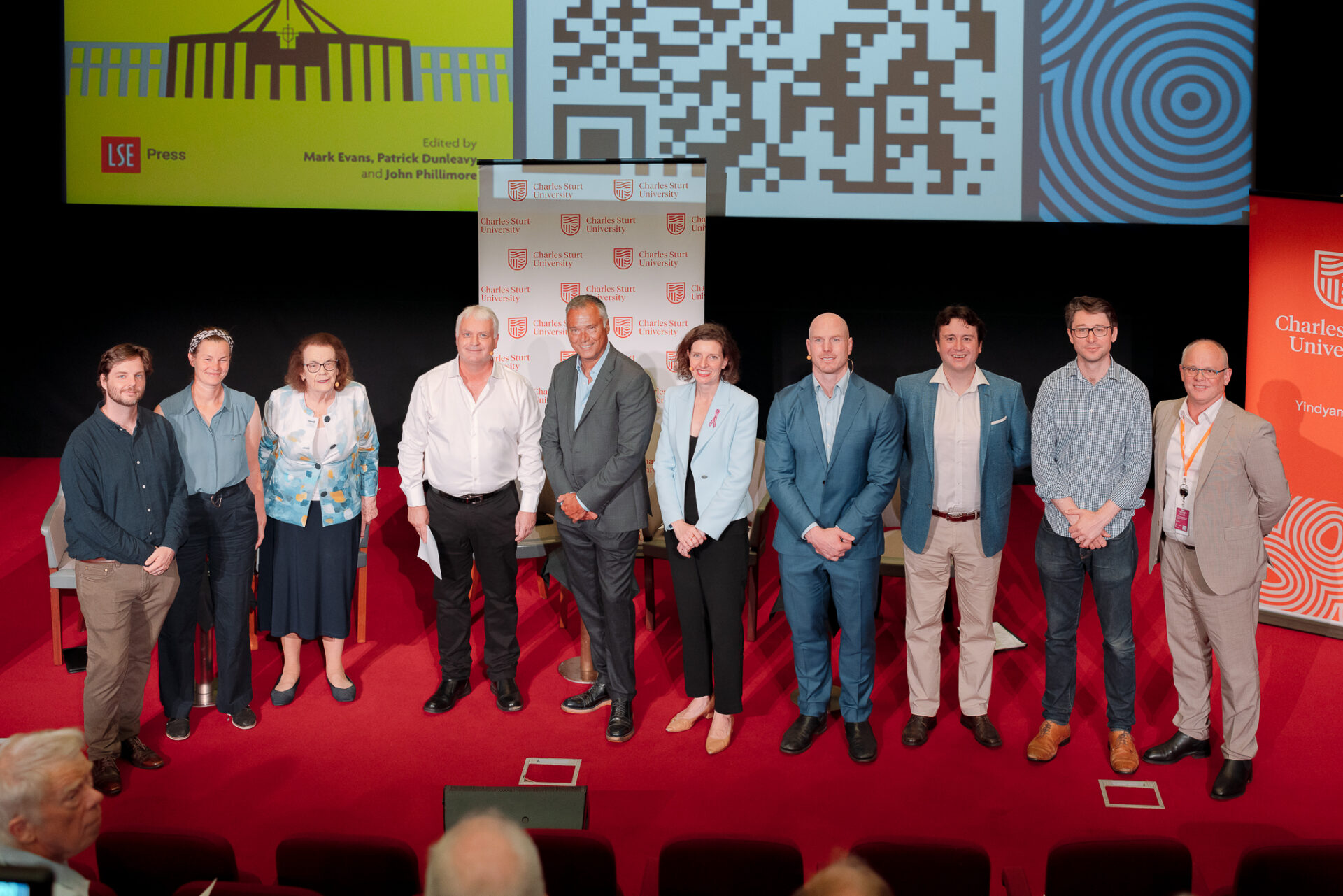
A new book published by LSE Press includes a chapter on the House of Representatives in the Australian Parliament by Dr Sarah Moulds (Associate Professor in Law, University of South Australia and IPEN Deputy Chair).
Edited by Patrick Dunleavy, Mark Evans and John Phillimore, Australia’s Evolving Democracy: A New Democratic Audit uses an audit approach to critically explore Australia’s government institutions, as well as state- and territory-level politics, and to examine how each has contributed to or held back Australian political life as it has changed and diversified.
Sarah’s chapter is one of 28 in the book which covers a range of different aspects of Australia’s democracy, including the protection of human rights, the 2023 Voice to Parliament Referendum, elections and voting, the role of interest groups and mainstream media, and the impact of federalism on lawmaking and policy.
Each chapter outlines recent developments along with an analysis of strengths, weaknesses, opportunities and threats, to fully evaluate the state of Australian democracy in the 21st century. In doing so, the authors draw key lessons for other democracies, showing in detail how robust major and micro-institutions can guard against democratic ‘backsliding’ and policy failures.
This comprehensive audit also highlights scope for potential democratic improvements. Australia continues to confront the challenges of partisan political barriers to addressing climate change and improving the situation of First Nations peoples, redressing modern social inequalities, and responding to popular mistrust of government and politicians.
This cross-party committee of MPs was set up to consider reforms to House of Commons procedures, standards and working practices.
The committee gathered views from the wider parliamentary community and external stakeholders, resulting in hundreds of individuals submitting their views to the committee. Ideas were invited under its three strategic aims of driving up standards, improving culture and working practices, and reforming procedures to make the House of Commons more effective.
We invited our members to contribute views to shape IPEN’s submission of written evidence to the Committee, through a call in our November 2024 newsletter.
IPEN’s evidence focused on public engagement and drew on our members’ extensive knowledge and experience of what makes public engagement work. The key points were that:
the Committee should make public engagement one of its priorities to drive improvement in the strategic coordination and delivery of relevant activities across the House; and
better public engagement can help to build people’s trust in their representatives, and can contribute to better scrutiny. This can in turn improve legislative standards and avoid costly unintended consequences that can flow from enacting legislation that has not been carefully considered from a range of different perspectives.
Professor Cristina Leston-Bandeira said:
“The submission of evidence by the International Parliament Engagement Network to the UK House of Commons Modernisation Committee demonstrates the important role that IPEN now performs.
“IPEN is a critical network with a significant voice in highlighting the importance of public engagement for parliaments today. At a time of low trust in politics, parliaments need to take public engagement seriously.
“With over 500 members from over 80 countries, IPEN has played a transformational role in sharing knowledge and practice in this area and in underscoring the importance of public engagement for parliaments across the world.
“We look forward to see how the Modernisation Committee takes on board the topic of public engagement in their proposals for reforms to House of Commons procedures, standards and working practices”.
One of the many benefits of membership of the International Parliament Engagement Network (IPEN) is the sharing of practice, experience and research between members within our MS Teams space. This happens in all manner of ways, such as through seminars, showcase events, conversational posts, the sharing of initiatives, reports and more.
IPEN has created a range of resources over the past few years, some of which are available here on our website and others in MS Teams. We’re now looking to extend our portfolio of resources through a new series of case studies (examples of good practice for a specific activity) and ‘quick guides’ (short guides to specific engagement activities).
Co-created with members
These will be co-created with and for our members and hosted in our MS Teams space. The key purpose is to help IPEN members share their wisdom, and equip each other with short, practical guidance for improving public engagement practice.
We’ll be sharing the first of these with members in the coming weeks. The will include two case studies on the theme of youth parliaments, written by Emma Brewis ( Postgraduate Researcher at the University of Leeds) alongside IPEN members from the Senedd Cymru (Welsh Parliament) and the Parliament of Indonesia. Another showcases the Teacher Ambassador Programme at the UK House of Commons.
In addition to the case studies, the first of our ‘quick guides’ will share insights and tips on setting up and running youth parliaments.
Share your practice
We are keen to develop further case studies and quick guides on the various aspects of the amazing work that our members do to engage the public with their parliaments.
Emma Brewis and other members of the IPEN Executive team have created a template for quick guides and case studies. Now we need you to fill in the blanks! This is not about writing an academic paper: it’s all about creating something accessible, shareable and practical.
Quick guides
Quick guides could be on engagement activities (such as online petitions or supporting witnesses to engage with parliamentary committees), or they could cover education or outreach programs targeting specific groups, or address emerging issues (such as the use of AI and public engagement, or the parliament as a culture institution).
Case studies
Case studies might focus on specific experiences that you have been part of – such as an effective (or challenging) committee inquiry that saw elected members travel to rural or regional areas, or the use of online gaming to engage with young people, or the connection between post legislative scrutiny and engagement.
They could also focus on citizen-led engagement, or specific tools or strategies that you have used to measure or evaluate engagement activities. They could address or specific skills you have developed within your engagement teams, such as excellent teaching and school resources.
Find out more and get in touch
If you would like to share your work as a case study, or are interested in working with us to create more quick guides, then please get in touch with us at [email protected] or email Dr Sarah Moulds (University of South Australia and Deputy Chair of IPEN).
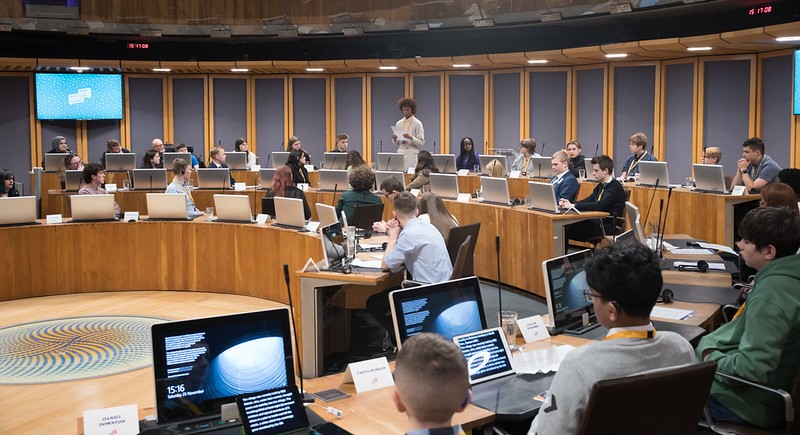
Photo: Welsh Youth Parliament Residential in the Chamber, 25 November 2023 / Senedd Ieuenctid Cymru, Gyfarfod Preswyl yn y Siambr, 25 Tachwedd 2023. Photo: Senedd Cymru / Welsh Parliament. Source: flickr. Attribution: CC BY 2.0.
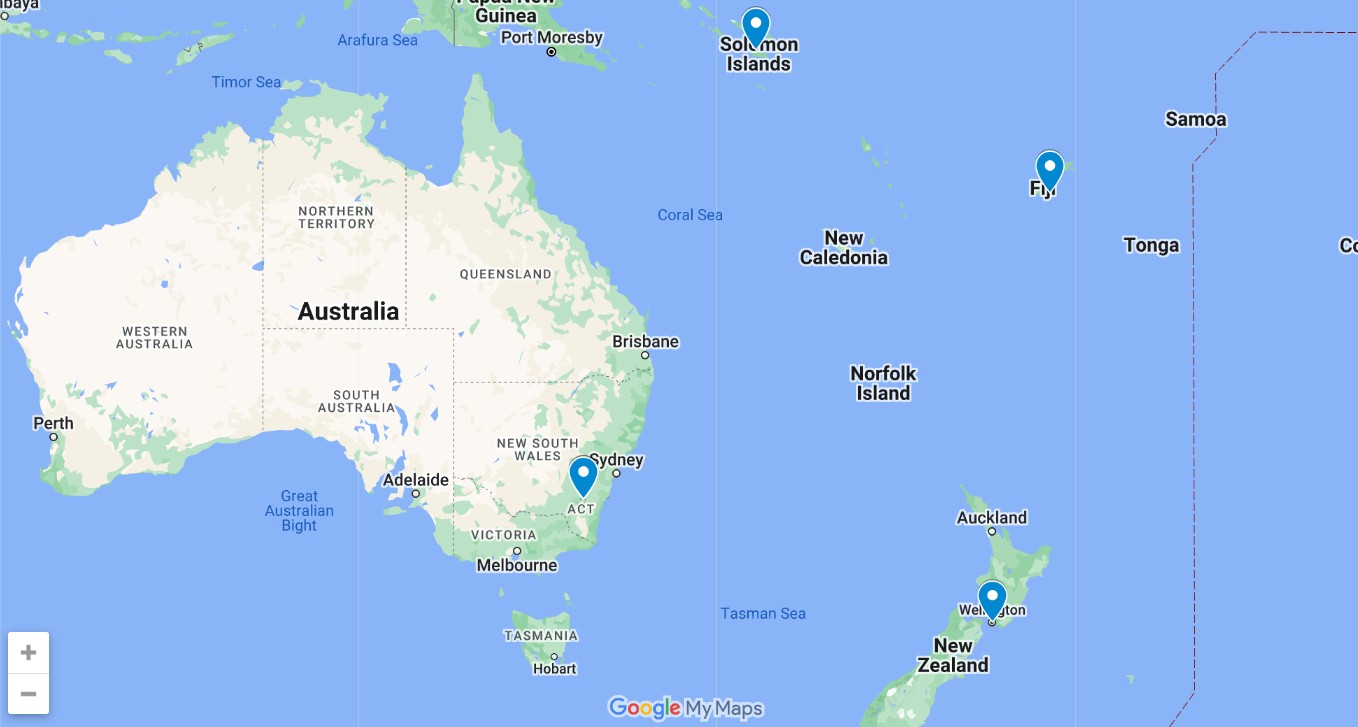
A new community of practice for practitioners and academics working directly with public engagement with parliaments in Australia, New Zealand and the Pacific Islands has been established by International Parliament Engagement Network (IPEN) members.
Initiated in early 2024, the group has grown to over 30 members and includes parliamentary staff, academics and third sector practitioners as its members.
The overarching aim for the group is to build a thriving, supportive community of Australian-New Zealand and Pacific colleagues who can identify examples of best practice in facilitating, designing or evaluating engagement, education or outreach activities. Key to this is working in close collaboration with IPEN.
The community of practice met for a second time on 26 July 2024, to dig deeper into engagement research and discuss how these important factors can work in practice.
Thirty-five people attended from a range of jurisdictions across Australia and New Zealand, with new members having joined since the first session earlier in the year.
Dr Sarah Moulds then shared a new toolkit she has developed, aimed at those involved in designing, implementing or evaluating youth engagement strategies within parliamentary settings.
Informed by the insights and experiences gained from Sarah’s Churchill Fellowship, IPEN’s Public Engagement Toolkit and the significant contribution to scholarship in this space made by Professor Cristina Leston-Bandeira, this new toolkit highlights ten key factors which can influence effective public engagement initiatives.
‘Is this research workable?’
A provocation put out to the group – ‘Is this research workable?’ – was addressed by Sasha Greig (Manager, Visitor Experience at the New Zealand Parliament) who has a great deal of experience in working with how to engage staff to then engage with the public in a parliamentary setting.
Key takeaways from Sasha were that:
It’s amazing to have a framework against which to assess ideas, especially in terms of business planning or any sort of future prioritisation.
Working with staff working at the coalface often highlights disconnects between the theory and the reality. One that resonated in the Visitor Experience context is the factor which talks of ‘listening not broadcasting’. This can be a difficult line to walk when encouraging meaningful discussions whilst also reminding people of rules and things that can’t happen because of the parliamentary space (for example, security requirements).
A number of other aspects of this work discussed concerned feasibility. For example, there can be influence on initiatives dependent on funding (such as translation services, audio and visual elements), and funding allocation made by senior executive leaders who may not have the expertise in what makes good engagement or information on what good engagement practice is.
Ending on a positive note, Sasha shared that parliamentary engagement is not a thing to be achieved, it is a consideration and a process that we need to bring into everything we do.
Iain Walker from newDemocracy Foundation shared resources and his thoughts on citizens assemblies, including innovations in the Brussels Parliament and deliberative committees.
The provocation and talks generated a great deal of further thought and discussion within the group. Some of the key things covered were around the use of a recess for front loading (for example, delving into research) for when back in parliamentary sessions and the need to include differing perspectives when looking at engagement initiatives. It was also acknowledged that members of the public and staff are all at different levels of the engagement journey at any one time.
Community of practice co-chair Caroline Wallis said:
“It has been rewarding to see the uptake across many parliamentary jurisdictions in Australasia. I hope we can continue to use this forum for rich discussions that result in meaningful work and outcomes. We also welcome any new members who wish to join us!”
The community of practice met again in early December when the Parliament of New South Wales spoke about their work throughout the year and the wider group discussed ideas for other sessions for this fledgling community of practice in 2025. Watch this space for more details!
More information
If you would like more information about the Australian/New Zealand/Pacific parliamentary engagement community of practice, please get in touch with Sarah Moulds, Sasha Greig or Caroline Wallis.
IPEN members can find out more in MS Teams.
Images
1: Map showing Australia, New Zealand and Pacific Islands. Source: Google Maps. 2: Introduction slide from July community of practice session. 3: Slide showing overview of research based 10 factors of effective public engagement, from July community of practice session. 4: Citizens Assembly graphic. Source: RNZ (Radio New Zealand). 5: Examples of youth engagement with parliamentary processes: protests and submitting to a committee. Source New Zealand Parliament.
The International Parliament Engagement Network (IPEN) has appointed an international Advisory Group to support an ongoing project to develop resources that will support parliaments to design, deliver and evaluate public engagement activities.
The guides will focus on a range of public engagement topics to help build parliaments’ capacity to engage members of the public in their work.
Initial topics for the resources include principles of parliamentary public engagement, youth engagement, and petitions and citizens’ legislative initiatives.
Other themes will cover education programmes, committee consultations, deliberative approaches, parliament as a place and space, and engaging underrepresented groups.
The project is being conducted by Juliet Ollard, Senior Research and Engagement Officer for IPEN, based at the University of Leeds, under the leadership of Professor Cristina Leston-Bandeira and in partnership with INTER PARES.
Juliet Ollard said:
“Since the project is aiming to support parliaments across the world through these guides, it is important that the project includes collaboration with colleagues working in different parts of the world and a range of engagement traditions. We have created an Advisory Group of parliamentary officials and other experts from around the world to provide feedback, input and challenge as we develop the guides.”
The project is drawing on the experience and expertise of parliamentary officials and researchers in other ways, too, through interviews, workshops and pilot activities.
In October 2024 the team held two international workshops to develop a set of Principles for Parliamentary Public Engagement which will be the focus of one of the first guides to be produced.
The Advisory Group is made up of parliamentary staff, academic and third sector representatives from countries such as Argentina, Belgium, Brazil, Canada, Nigeria, Indonesia and the UK. We are also drawing on the experience of small parliaments with representation from the Solomon Islands and the Isle of Man, as well as state parliaments in Australia. The group also includes a representative from our Public Engagement Hub partner the Inter-Parliamentary Union (IPU).
Ruth Donnelly from the Office of the Clerk at Tynwald, Isle of Man, said:
“I am delighted to have been asked to be part of the advisory group for this project.
“Working for a small parliament, I am looking forward to being able to share the insight of a small jurisdiction and make a positive contribution to parliaments across the world. Small or large, we all have our challenges engaging with the public more effectively and working together is a positive way to improve democratic participation.”
“I am delighted to be part of the Advisory Group for this very important project. At a time of doubtful, if not decreasing, confidence in democracy, developing resources to foster public engagement with parliament becomes critical. As the bedrock of representative democracy, there is no better time than now to rethink, relearn, and possibly unlearn traditional ways of citizen engagement with parliament. I am happy to share thoughts from the African perspective to enrich the group’s contributions to the project.”
There is no better time than now to rethink, relearn, and possibly unlearn traditional ways of citizen engagement with parliament.
Jonathan Murphy, Head of Programme, INTER PARES, said:
“The Guides on Citizen Engagement will offer parliaments practical tools to support stronger and more meaningful public participation in decision-making. By reflecting on public engagement principles and the impact of traditional and innovative approaches to citizen participation, they will contribute to discussions and understanding on the representative role of parliaments.
“The role of the Advisory Group will be indispensable through the development process in ensuring that the guides are informed by diverse experiences, are practical, and impactful. The expert review and recommendations will support the creation of resources that truly bridge the gap between citizens and parliaments.”
The work on the resources is ongoing and the finished guides are due to be published in the spring or summer of 2025.
Juliet Ollard said:
“We still welcome input from parliaments while we continue to work on the resources.
“If you work directly in the area of public engagement with parliament or have academic expertise in this area – and would like to take part in an interview to inform the project – please let us know by emailing us at [email protected].”
The Civil Service Excellence and Innovation Awards were established in 2015 in Ireland to highlight innovations in policy and service delivery across the Civil Service where best practice and lessons can be shared.
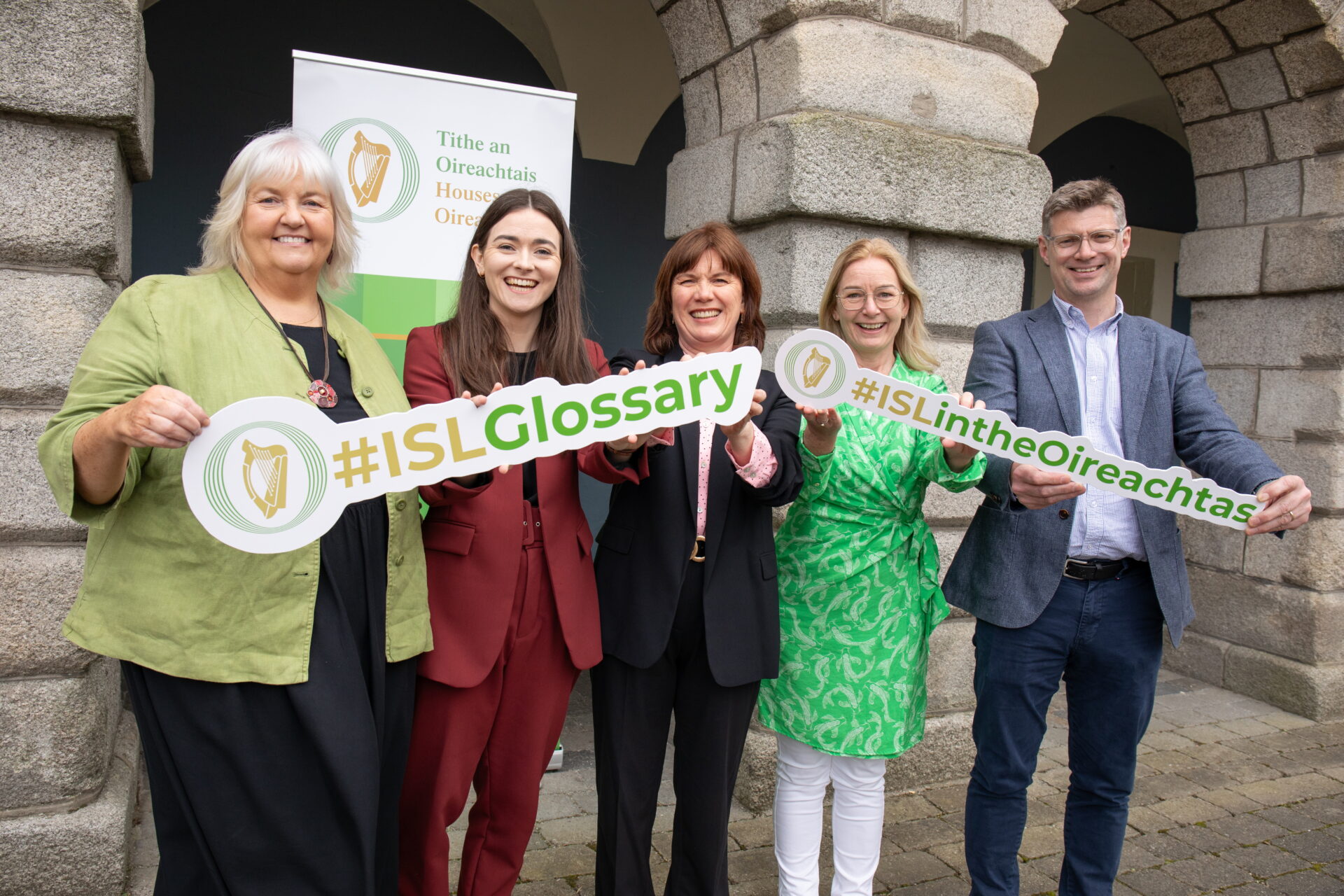
At a ceremony in June, the Houses of the Oireachtas team and integral project partners from the Centre for Deaf Studies received the award for the World Class Civil Service category. This award ‘recognises teams and projects that are a source of inspiration to other public administrations at home and abroad’.
Caroline O’Leary said:
“I believed in the value and aims of the project right from the start. Collaborating with deaf interpreters and in person engagement with the wider deaf community for feedback was vital to the success and future use of new signs within the glossary.”
Ciara Grant added:
“In our roles, we aim to provide greater accessibility to parliamentary proceedings through ISL. This project has created a culture of collaboration with deaf interpreters which will continue to be fostered in our work.
“Along with collaboration with the broader deaf community and sign language academics, this has resulted in a sustainable glossary which is hoped will further enhance language access to political discourse.”
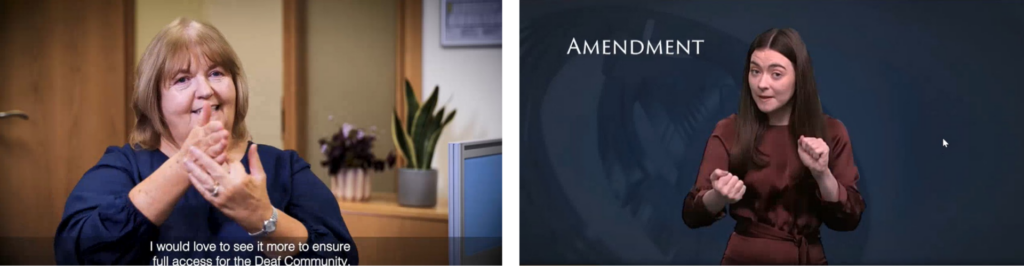
At an IPEN seminar in December 2023, Caroline and Ciara shared how the ISL Interpreting Team were working towards improving Irish Sign Language access into aspects of the Irish parliament. Attendees were treated to an exclusive preview of the new glossary (which launched the following day to coincide with National ISL Day) and a demonstration of some of the new signs created, including three ISL variations of the sign for ‘amendment’.
Cristina Leston-Bandeira, Chair of IPEN and Professor of Politics at the University of Leeds, said:
“The whole IPEN community sends their congratulations to the ISL team at the Oireachtas for their very well deserved prize, which recognises true trail blazing work in providing for more inclusive public engagement practices within parliament.”
Practitioners who work on matters directly relevant to the theme of public engagement and parliament are invited to take part in a new survey to create an accessible global map of public engagement practice.
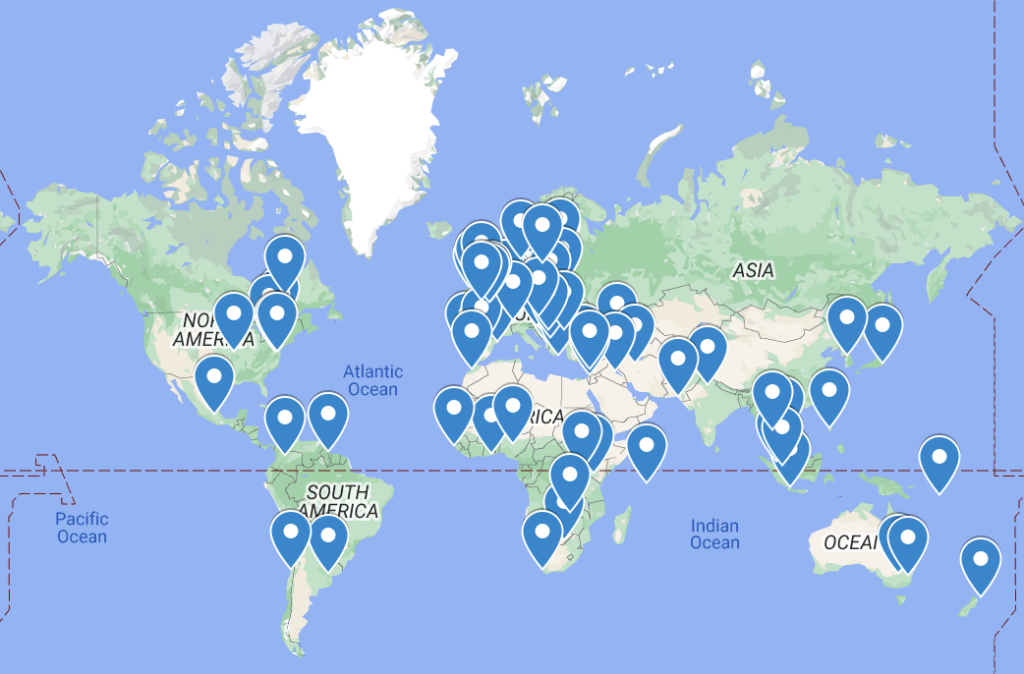
The survey is part of a project titled ‘Mapping public engagement in parliaments across the world’ which is designed to help us understand how different parliaments engage with their citizens.
“The aim of this project is to show how parliaments engage with their citizens across the world, through the creation of a map which will be hosted on the IPEN website.
“The survey is specifically aimed at officials who work for parliaments, the Civil Service, and those working for third sector organisations that help parliaments deliver public engagement activities.
“The survey asks a range of questions to determine the wide-ranging approaches parliaments use with regard to public engagement. The rich information gathered through the survey will be collated to create summaries which will be accessed via an interactive map by each country’s parliament or legislature.”
“This new map will enable us to celebrate the multiple ways parliaments from across the world engage with the public.
“To make this possible, we need the input and insights of the dedicated staff who plan and deliver public engagement initiatives and activities within their own parliaments.
“If you work directly to deliver public engagement activities for parliaments then we invite you to contribute to the map by giving some of your time to complete the survey.”
In this blog post, Chris Shaw (Clerk of the Foreign Affairs Committee in the UK House of Commons) explores three pilot projects on participatory democracy carried out by Select Committees in the UK House of Commons and discusses the ways in which deliberative engagement can enhance committee scrutiny activities.
Introduction
Committees in the UK House of Commons recently completed trials of public engagement events to test the value of participation by citizens in their work. All three pilot projects produced some really positive feedback and data on the potential for deliberative methods to make a valuable contribution to the scrutiny of policy in Parliament.
Background
For several years, select committees in the House of Commons (which do scrutiny rather than legislation) have been developing an appetite for public engagement in their work, whether it be through visits, round tables, or online surveys and forums.
These have added depth and colour to the traditional, more formal, processes of examining written submissions and holding public hearings. They have also sponsored more ambitious deliberative exercises: citizens’ assemblies on health and social care in 2018 and on climate change (the path to net zero) in 2020.
The pilots
In 2023, three select committees took advantage of offers from established providers (Involve and IDEA, Ohio State University) to run deliberative events in support of forthcoming committee inquiries.
• The Justice Committee held a deliberative engagement exercise to support its inquiry into public opinion and understanding of sentencing. This comprised 25 people, broadly representative of the population, who met for three half-days.
• The Home Affairs Committee held an online town hall event, for 1,300 people, in support of its inquiry into policing priorities. It was attended by committee members and a Police and Crime Commissioner.
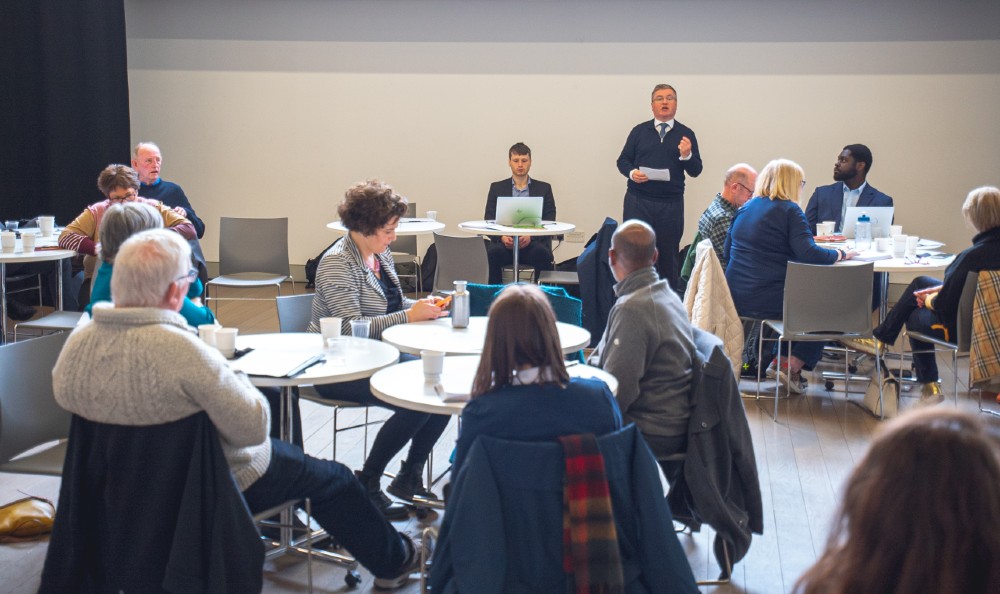
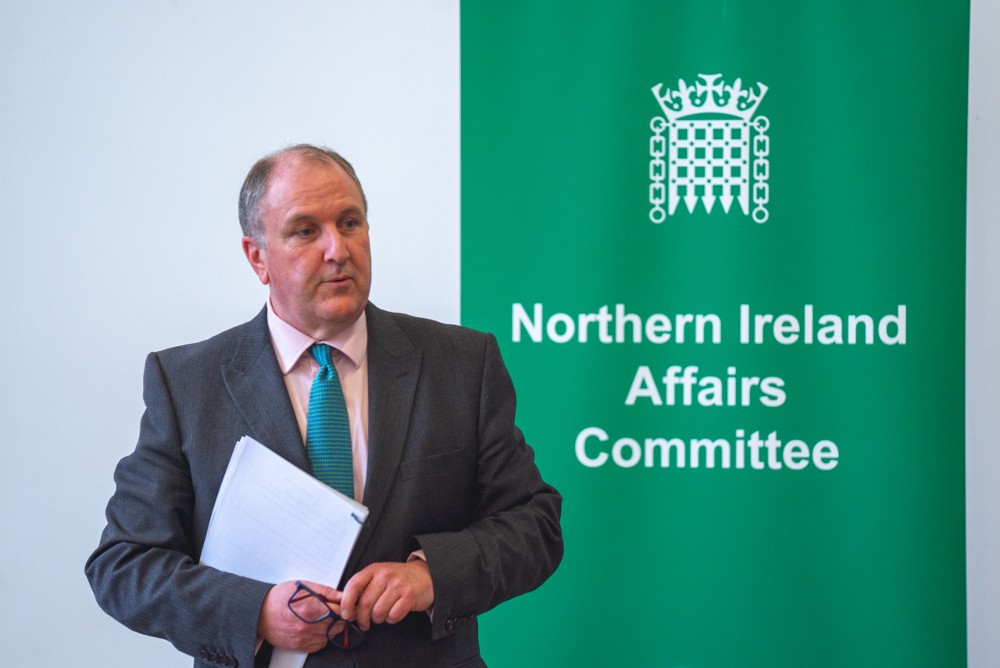
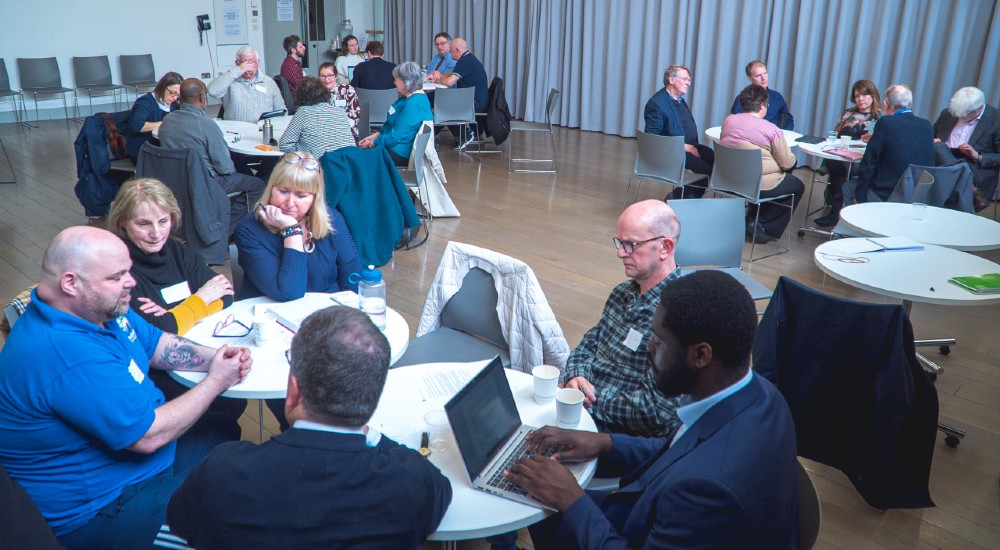
• The Northern Ireland Affairs Committee held an online town hall event, for 270 people, in support of its inquiry into the effectiveness of the institutions of the Belfast / Good Friday Agreement. It was attended by committee members from different political parties. It complemented this with an in-person engagement event in Belfast.
In each case, participants completed surveys about their views before and after the engagement event or, in the case of the Justice Committee, were asked about the extent to which their participation had changed their views.
Rationale
Understanding public attitudes – and the reasons behind them – was crucial to all three inquiries. The committees were keen to reach out beyond the interest groups and non-governmental organizations (NGOs) – who regularly submit evidence to inquiries – to converse with a representative sample of the population, most of whom would not ordinarily stop and consider policy challenges which may be complex, but nonetheless affect them directly.
In the case of the Northern Ireland Affairs and the Justice committees, they wanted to secure quantitative and qualitative data to supplement written evidence and also, in Northern Ireland, in-person community engagement. The Home AffairsCommittee wanted to use a method which would allow ordinary people to consider the pros and cons of prioritising different areas of policing over others.
The Chair of each Committee participated in order to demonstrate political buy-in and, in the case of the Home Affairs Committee, an elected Police and Crime Commissioner led the online discussion by setting out some of the difficult decisions about prioritisation that he faced every day.
Listening in to the discussions, I was struck by the quality of the questions asked by the public and the consensual way in which the participating politicians engaged with the process and participants. This may have come as a shock to those whose engagement with politics was limited to catching occasional glimpses of Prime Minister’s Questions.
Results and impact
All three committees involved in the pilots found these deliberative activities very useful to their work. Two of them went on to make recommendations in their reports for further use of deliberative methods by the Government for policy making.
So what was the added value that these exercises provided?
In part, they served to provide reinforcement – additional validation – to the messages from known contributors with established views. But at times they also provided new insights directly from the public.
For example, the Justice Committee dialogue revealed strong support for an additional, new priority to be used for sentencing: the need to provide justice for the victims of crime. The Committee’s report recommended that the Ministry of Justice should conduct “regular, structured, deliberative engagement exercises with members of the public as part of policy development process” and that the Sentencing Council too should consider taking a similar approach in revising its Sentencing Guidelines.
In response to the report, the Government agreed that “public opinion absolutely plays a pivotal role in shaping sentencing policy” and the Sentencing Council agreed to “consider” whether structured deliberative engagement exercises like this one may benefit its ongoing work on encouraging a greater range of responses to public consultations. So, a positive, if non-committal response, which reflects the absence of a fully developed Government view on the use of deliberative methods in policy making.
The Northern Ireland Affairs Committee’s online town hall and in-person engagement event produced several insights that probably would not have surfaced through the normal processes of gathering information. There was overwhelming enthusiasm for a strong voice being given in the design of any new political institutions to those not identifying with one of the two main communities.
The Committee found “clear, compelling evidence that much of the public are more open to change than the political class”. For example, the requirement for cross community support for any changes was identified as a barrier to reform which should be addressed. The non-partisan and informed nature of the deliberative approach was evidently very influential on the Committee: it concluded that “Citizens’ assemblies have the potential to empower people to find solutions and reach across deep divides in a way which politicians—except perhaps in the case of events leading up to Good Friday 1998—rarely can”.
It recommended that the Government establishes a Northern Ireland Citizens’ Assembly to consider institutional reform and to feed into a wider review. Since the Committee reported, the Northern Ireland Executive has been re-established and the Government has indicated that public engagement is a matter for the Executive.
Participants in the process were certainly enthused: some 95% of them said that deliberative events were valuable for democracy and should be a more regular part of the political process.
Finally, the Home Affairs Committee town hall on policy provided a useful and unique insight into how the public viewed the difficulties involved in balancing competing priorities in an environment of constrained resources. The summary of the views provided after the discussion indicated a strong consensus around some issues (for example, improved vetting of and training for police officers; ethnic minorities being treated worse by police) and less consensus on others (support for victims of crime).
The impact and value of the dialogue was demonstrated by the fact that 80% of participants said that they had changed their views as a result of their engagement in the town hall. This was supported by the evaluation data which indicated a substantial increase in the participants’ trust in the committees as a result of their involvement, although the increase in respect of Parliament as a whole was marginal.
The impact on MPs is perhaps harder to discern. Anecdotal evidence suggests that they valued the opportunity for more in-depth discussion with the public. The strength of feeling amongst participants in the Northern Ireland Affairs Committee town hall on the failings of the current political arrangements and the willingness to think across community lines may have been a surprise to some MPs more used to engaging with people on a party political basis.
What next?
Looking ahead, these pilots have proved to committee MPs and to participants that deliberative engagement can add to the depth and breadth of committee scrutiny activities. They contribute to an ever-increasing portfolio of public engagement activities being undertaken by committees.
The challenge is now to further establish these types of activities in the toolbox of scrutiny that committees have at their disposal and, in the new Parliament, to increase trust in them amongst public, politicians and government alike.
1, 4 & 5: Public engagement event held by the Northern Ireland Affairs Committee in Belfast. Credit: UK Parliament/Tyler Allicock. 2: Speech bubbles on window. Image courtesy of Involve. 3: Online meeting. Image courtesy of Involve.
Since its inception in 2020, membership of the International Parliament Engagement Network (IPEN) has continued to grow, with new members joining us from different parts of the world on an ongoing basis.
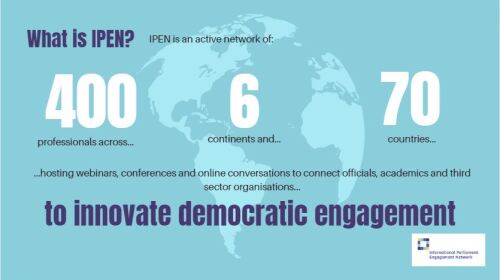
We’re delighted to announce that we now have over 400 members in the network. The reach of our membership now covers over 70 countries and six continents.
“We never quite envisaged that our membership would expand this much. We’re delighted to have members recently joining us from such diverse countries as Australia, Ghana and Madagascar.
“The sharing of different experiences, knowledge and challenges from all corners of the world is what makes the IPEN community so rich.”
The International Parliament Engagement Network brings together academics, parliamentary officials and third sector representatives from across the world, to promote collaboration and encourage knowledge sharing around parliaments and public engagement.
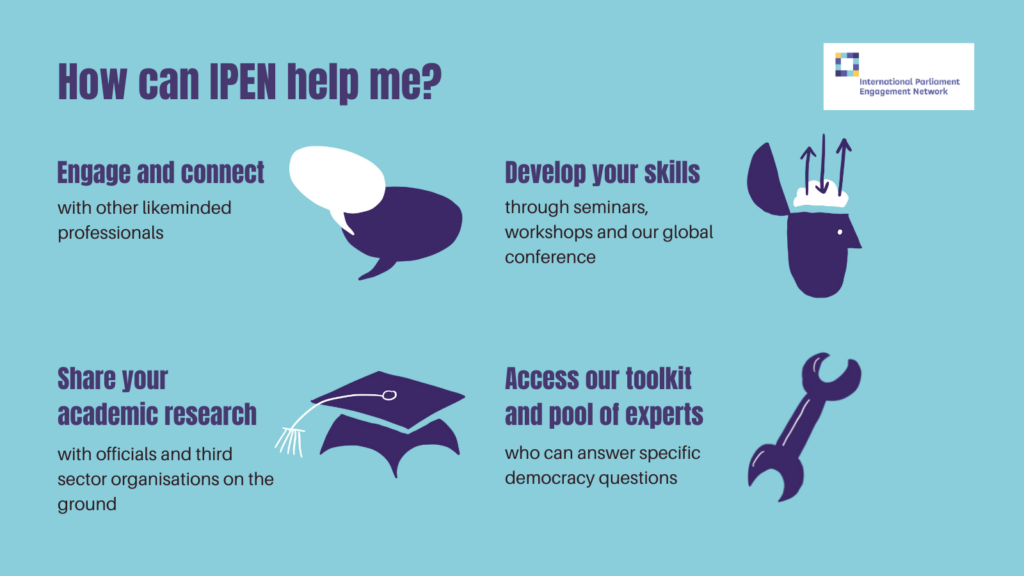
IPEN connects its members through the sharing of research and reports, facilitating introductions, discussions and exchanges via MS Teams and hosting professional development seminars online. Being a part of a unique global network brings a range of benefits to IPEN’s 400+ members and, amongst other things, has initiated collaboration between officials from different parliaments and enhancement of engagement practices thanks to evidence-based research.
We asked our members to tell us (in just one sentence) the most important thing that being a part of IPEN has brought to their work or research.
Caroline Wallis is Education Lead at the New Zealand Parliament. Caroline has been a member of IPEN since 2021 and became the newest member of the Executive Board earlier this year. Caroline said:
“I think being a part of IPEN has opened my eyes to the depth and breadth of research based practice there is for parliamentary public engagement.
“It has helped me think about what is important to consider for initiatives, and gives me inspiration for future work.”
Other lovely feedback from our IPEN members indicates the range of benefits to being a part of our global network:
“It’s so hard to restrict this to one sentence, but I think being a member of IPEN has broadened my horizons in that it has enabled me to not only connect with people who work in and study other parliaments across the world, but I’m also able to listen and read first-hand about activities and operations from those parliaments. And that is something I cherish.”
“Becoming part of a rich network of nice people with interesting questions and helpful answers and getting a so much broader scope of parliamentary issues and practices all over the world. Big thank you to the team for facilitating this!”
“For me it is a gateway to facilitate further international engagements with parliamentary people who have similar experiences and a rich bounty of knowledge, expertise and assistance to share.”
“IPEN to me is a community of experience and professional experts who have really revolutionised various sectors of our society through idea and knowledge exchange, and in addressing the most critical issues facing leadership and Sustainable Development Goals. IPEN has been a professional learning space, value base network community and policy development springboard for me.”
“I am sorry, one sentence can’t be enough to write about the meaning and benefit of IPEN vision and mission in our world society today. Keep up the good work because the impact is an history [sic].”
“IPEN has been a pure joy since I joined. The webinars and data available on here are very crucial to my work.”
“My sentence is ‘I agree with all of the above’! Honestly – this is such an amazing space and I only wish I was able to spend more time here and my aim for 2024 is to do so! Thanks Cristina Leston Bandeira and team for your creation and curation of this space.”
“As a recent member, I’ve found IPEN provides an opportunity to learn from and network with others who value public participation in parliamentary practice and democracy generally, as well as offering a space to discover good practices around the world.”
We would like to offer a huge thanks to all of our members for being a part of our ever-growing network and for their many contributions – not only within the network itself, but more significantly in promoting and practicing parliamentary public engagement in their work and research across the globe.
A new blog by IPEN member Ailsa Burn-Murdoch (Senior Researcher at the Scottish Parliament Information Centre, SPICe) summarises the recent milestones the Scottish Parliament have passed in embedding deliberative democracy in scrutiny.
After a year and a half of fact finding and commissioning a full citizens’ panel to explore public participation in the Scottish Parliament, the Citizen Participation and Public Petitions Committee published its final report and recommendations on 12 September 2023.
The blog post focuses on the Committee’s aspirations for institutionalising deliberative democracy, the first steps being taken in exploring and realising that, and key risks in the coming years.
Alisa Burn-Murdoch said:
“The Scottish Parliament has had an internal unit dedicated to supporting citizen participation for several years, and it delivered its first Citizens’ Panels in 2019. The publication of this report, and its unanimous support from the wider membership of the Scottish Parliament, marks a significant step in institutionalising deliberative practice.
“The Parliament will be piloting two more people’s panels, in 2024 and 2025, including one supporting post-legislative scrutiny. The hope is that by the end of the current Parliamentary session, in 2026, the Committee will be able to recommend a practice, governance and accountability framework for the use of deliberative methods that will help the institution to grow and strengthen the role of citizens in its work in future sessions.”