
by Rhayna Mann
In this article, IPEN member Rhayna Mann (Citizen Engagement Senior Manager at Senedd Cymru, Wales) shares insights into how the Senedd’s Citizen Engagement Team closes the loop in their work with seldom-heard groups.
Introduction
At the Senedd (Welsh Parliament), the Citizen Engagement Team often works with people who don’t usually see parliament as “for them”. One thing becomes clear very quickly: a single conversation isn’t enough.
Lack of trust and accessibility barriers, both real and perceived, can make it hard for people even to step into the process. Previous experiences may have left them wary; information is often not presented in ways they can use or feel comfortable with. And when we invite people to share personal, sometimes painful experiences with an institution that also makes the rules, the power imbalance is unmistakable.
All of this means we have to work reflexively and with care, adapting at every step so that people feel informed, respected and able to stay in the loop. For us, “seldom-heard groups” means people who are rarely reached or represented in formal political processes, even when those decisions affect their daily lives.
For the Senedd’s Citizen Engagement Team, a test of good engagement is how we close the feedback loop – how we show people what happened to their words and how their evidence shaped scrutiny and decision-making. But that final moment of feedback only works if every contact point before it has been handled with care and reflection.
We’ve learned to think of our work as a series of significant contact points with participants. At each one, we learn something about what they need and adapt what we do next. That reflexive way of working shapes the whole loop, all the way through to the final feedback. We don’t always get this right the first time, but treating each contact point as a chance to adapt has changed how we work.
Here are six key contact points that, taken together, help us close the loop with seldom-heard groups in a way that feels honest, accessible and – we hope – even enjoyable.

1. First contact: where trust and the feedback loop begin
The loop doesn’t start with an activity, such as an online form or a committee meeting; it starts with whom we speak to first.
Before we approach participants, we spend time with the people they already trust, such as charities, support workers, organisations and community leaders. We ask two simple but important questions: “Is our engagement approach appropriate?” and “What is the right way to communicate with this group?” That includes understanding social norms, etiquette, preferred terminology and the ways people naturally share information.
For the British Sign Language (BSL) (Wales) Bill, for example, deaf gatekeepers helped us understand the landscape long before we reached out to participants. They told us about previous experiences of being consulted and then ignored, about access barriers, and about what “good engagement” looked like. They also taught us crucial language and cultural points, such as referring to BSL signers, not “users”, and using a capital ‘D’ for the Deaf community.
What we learn at this point shapes everything that follows: how people want to be approached, what they are wary of, and how they might want to be kept informed later. The feedback loop really begins here, with reflexive listening and the willingness to adapt our first step.

2. Designing communications: making the loop accessible from day one
The next contact point is what people receive from us before engagement: the invitation, the participant guide and the consent information. If those materials don’t work for people, the loop breaks before it even gets going. So, we design communication around participants from day one, and we keep revisiting it as we learn more.
Some participants told us they disliked Easy Read with pictures. The images felt childish and made assumptions about their abilities. They wanted clear, simple text, but without pictures. We changed it: same content, same structure, just without images. A tiny edit with a huge impact on how people felt listened to.
With the advisory group on mental health inequalities, many participants were neurodivergent. Together, we co-created clear communication guidelines based on what they told us they needed: Word documents rather than PDFs, blue backgrounds instead of white, and materials that worked well with read-aloud tools. These choices came directly from participants’ own expertise about their needs.
The ethical test for us isn’t “does this fit our institutional template?” but “does this reflect what participants have told us they need to understand, engage and make informed choices?” We can’t rely on parliamentary speak, dense documents or standard formats and expect people to feel included. Communication design is an early step in the feedback loop, and it only succeeds when the materials reflect participants’ preferences rather than institutional habits.

3. In the room: agreeing how people want to stay informed
During the engagement session, we’re there to listen. But we’ve also learned it’s a good time to ask: “What do you want from us after today?”.
In our work with BSL signers, participants told us they didn’t trust email links. They asked for BSL feedback videos embedded directly in the email. We changed our practice, and that became the norm for that project.
For the inquiry into children and young people on the margins, we interviewed young people who had been criminally exploited. At the end of each interview, we asked how they would like to be kept updated. They told us they wanted any follow-up to go through their support workers, rather than directly to them. So when the findings were ready, we checked in with each support worker, talked them through the report and agreed on the best way to pass it on. Some young people received a hard copy; others preferred a verbal summary.
This approach respected their safety and circumstances, and just as importantly, it respected their own expressed preferences about how they wished to stay connected to the process. At this stage of the loop, reflexivity means letting participants shape the rhythm and route of future contact, not just the content of the initial conversation.

4. Sharing findings: strengthening connection and ownership
Sending a copy of the engagement findings to participants is one of the most significant contact points in the feedback loop. For many seldom-heard groups, this is exactly where communication has often stopped in the past. Our job is to make sure the loop doesn’t break here.
It’s also the moment where participants can begin to see their experiences grouped, interpreted and reflected in ways that feel true to them. When this works, people don’t just see a report about them; they recognise evidence that exists because of them. That sense of ownership is powerful.
The BSL (Wales) Bill findings page is one example. We worked with deaf participants to co-create the page. They weren’t just contributors; they were co-designers of the feedback. This took more time than we had planned and continued into the engagement phase, with regular email contact and time spent building relationships with the right gatekeepers and Deaf community experts. We could not always do everything people asked for, but involving them meant we could be honest about our limitations and make decisions together.
At this stage, participants need to see themselves in the evidence, feel ownership of it and, crucially, want to stay on the journey through the next stage and into the final feedback moment.

5. Showing impact: when people see what they changed
As the inquiry or Bill progresses, we show the ways participants’ contributions shape scrutiny and recommendations. Impact can be visible in many ways, such as their concerns forming lines of questioning for witnesses or Ministers or their issues reflected in recommendations to the Welsh Government.
For many seldom-heard groups, this is a completely new experience. Instead of feeling that their story disappeared, they can point to something concrete, a paragraph, a recommendation, a question in committee, and say: “That’s us.”
Pride in that impact is a powerful antidote to distrust. It turns feedback from a dry update into a meaningful moment and reinforces why a flexible, adaptive approach throughout the process matters: it makes this visible impact possible and credible.

6. Closing well: bringing everything we’ve learned together
The final feedback moment is where every previous contact point comes into play: the trust we’ve built, the communication preferences we’ve learned, the ownership people feel over the evidence, and the care we’ve taken to keep them informed along the way. This is where the loop closes, and it matters that we close it well.
This isn’t just a goodbye; it’s a deliberate moment of recognition where we use everything we have learned about the group to design a final feedback that feels meaningful to them.
With the advisory group on mental health inequalities, we had been meeting for a year. They had shaped the inquiry from the outset and saw the engagement findings as their evidence. Before the Plenary debate, they came to the Senedd to meet committee members and hear how their experiences would be represented in the Chamber. A photograph from that day, showing one participant and a Member of the Senedd, is a reminder of whose voices were being carried into formal politics.
After the debate, we organised a lunch in the Senedd to celebrate their work. Many people in the group still faced significant challenges in their daily lives; taking time to acknowledge what they had achieved together really mattered. It was probably the most enjoyable “closing the loop” we’ve ever done.
Ending well can be emotionally difficult, especially when we know that parliamentary scrutiny cannot fix every issue people are living with. But a clear, thoughtful final contact point brings the loop to a respectful close: people know what happened, what it led to, and why we are now stepping back. It also leaves the door open, if they choose, to engage with the Senedd again in the future.

Conclusion: Feedback as a reflexive journey, not a single message
For us, closing the feedback loop with seldom-heard groups is not a single email or a final report; it’s the cumulative effect of all these contact points. At each one, we learn something about what people need from us, in language, format, timing, tone or support, and we adjust as the engagement progresses.
When this works well, at the end of an engagement, people can see their impact, recognise their own words in the published reports and feel that Members have truly represented them. For us, this has meant treating feedback as a journey rather than a moment. You may recognise similar patterns in your own work, especially when engagement needs to adapt in real time.
However, this does not always work smoothly. Sometimes a committee reaches a different view to participants, even after strong and thoughtful engagement. In longer inquiries, people can lose momentum or disengage while waiting for outcomes, and there can be misunderstandings about what a committee can realistically change or influence. At times, participants may also feel their contribution has disappeared into the process, particularly when decisions are shaped by wider evidence, political context or competing priorities.
Wherever we work, the core question is similar: if someone from a seldom-heard group gives us their time and their story, how do we ensure they can see and feel what changed because of it?
More information
The work of the Citizen Engagement Team is featured as case study in a recently published Guide on Engaging Underrepresented Groups – one of a series of eight Guides on Citizen Engagement for Parliaments, created by IPEN in partnership with Inter Pares.
Page 9 of the Guide showcases an engagement project carried out by the team in 2024 to inform an inquiry by the Children, Young People and Education Committee into ‘children and young people on the margins’.
Feature image
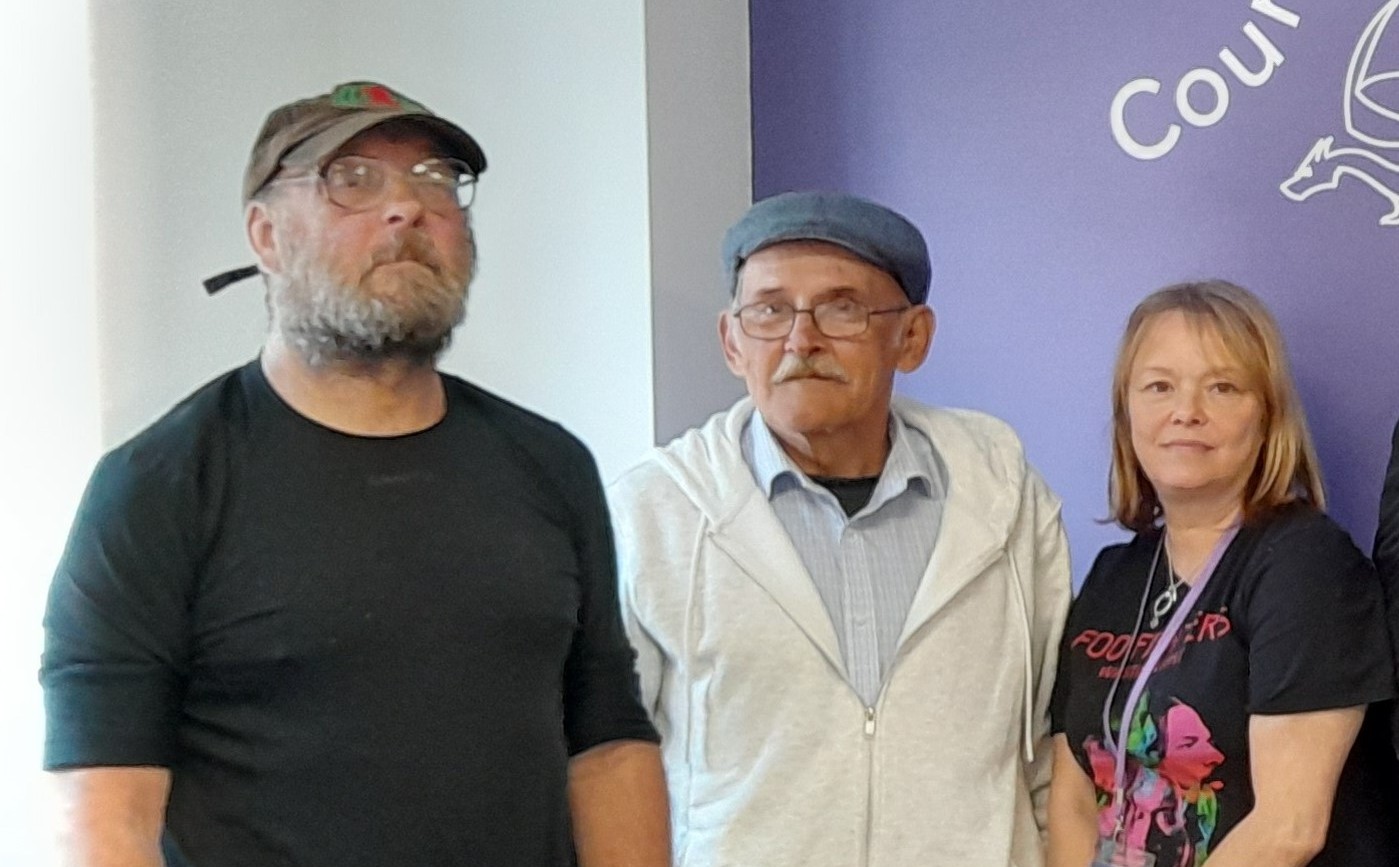
Members of the Wallich Shadow Board, after participating in a focus group for the post-legislative inquiry into the Well-being of Future Generations (Wales) Act 2015. Copyright Senedd Commission.
19 January 2026