
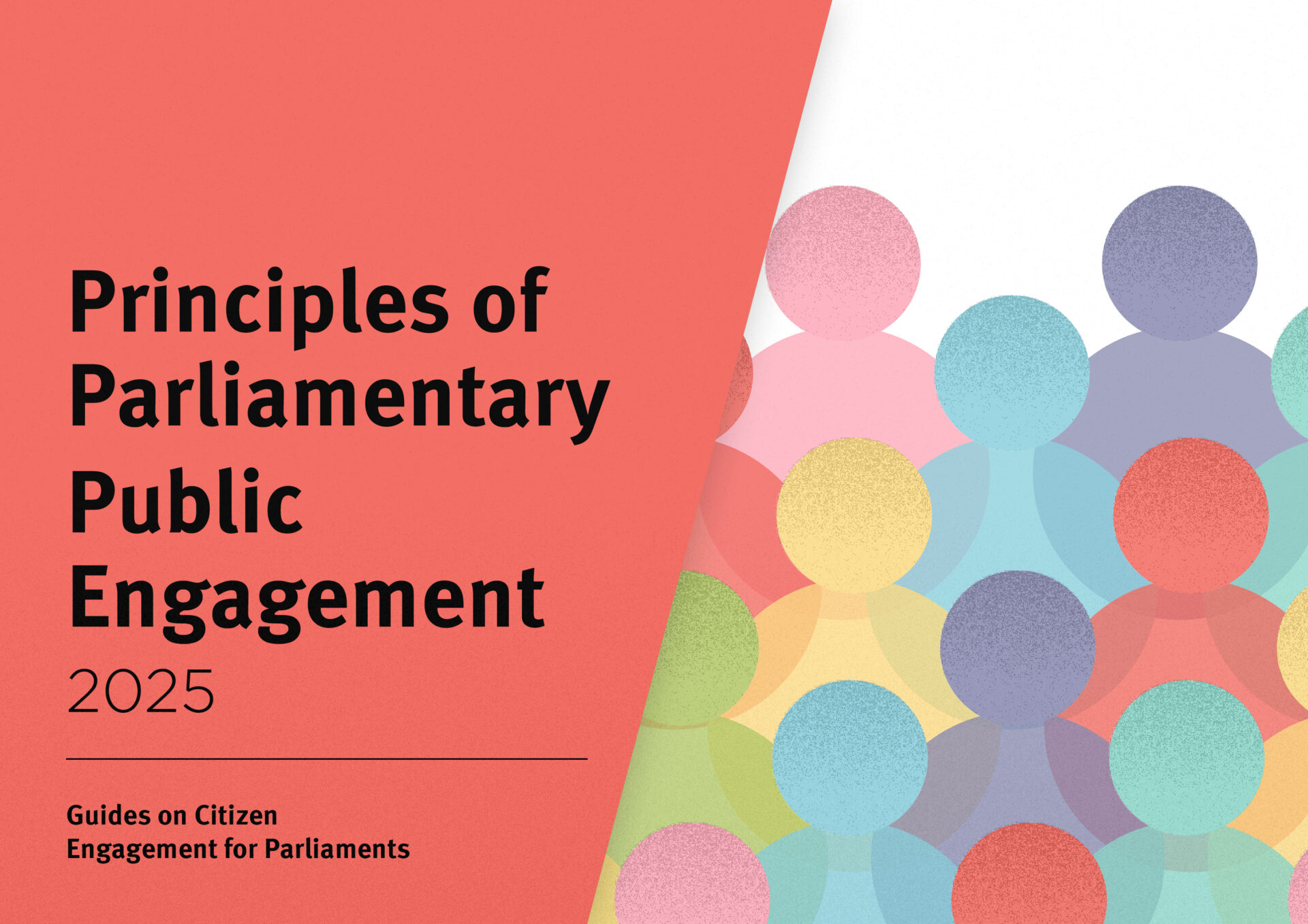
The first in a new series of Guides on Citizen Engagement for Parliaments was published on 30 June.
There is an increasing understanding among parliaments that their relationship with citizens needs to go beyond the ballot box. With trust in institutional politics declining around the world, public engagement is an essential tool for safeguarding parliamentary democracy into the future.
Public engagement includes many different types of activities, from education about parliamentary processes to participation in parliamentary business.
In this new Guide on Principles of Parliamentary Public Engagement – created by the International Parliament Engagement Network in partnership with INTER PARES | Parliaments in Partnership – we take a step back and consider the core principles that should drive public engagement activities in general.
The Guide identifies eight parliamentary public engagement principles:
- Purpose
- Inclusion
- Openness and transparency
- Collaboration and empowerment
- Ethical standards
- Planning and resourcing
- Integration and coordination
- Impact and evaluation
Examples from a wide range of countries and political systems – with different levels of resources, including older, newer, larger and smaller parliaments – are showcased to illustrate each principle.
Read the Guide on Principles of Parliamentary Public Engagement.
About the series
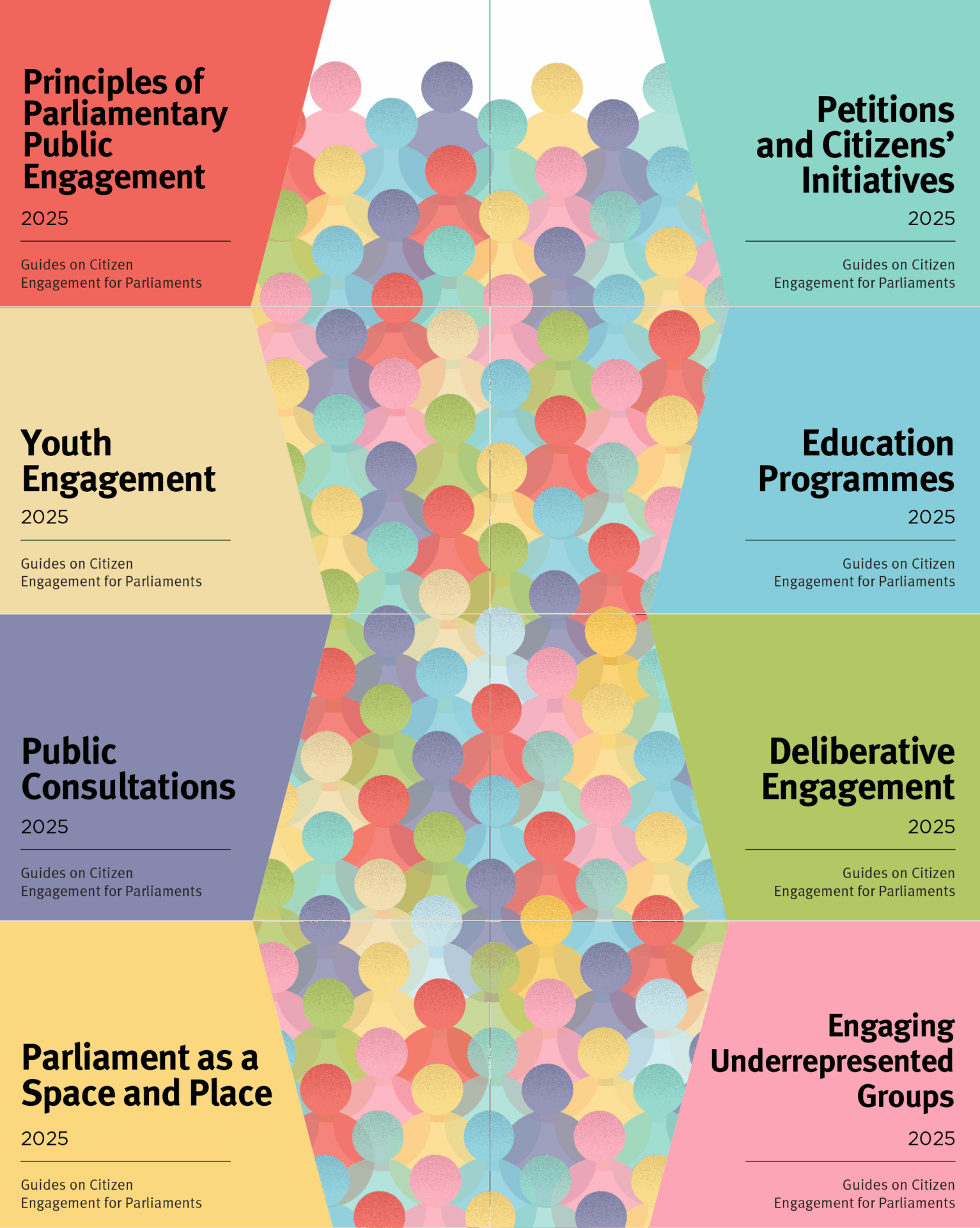
Published on 30 June 2025, the Guide on Principles of Public Engagement is the first in a new eight part series focusing on a range of public engagement topics to help build parliaments’ capacity to engage members of the public in their work.
The series is being created through a project collaboration between the International Parliament Engagement Network (IPEN) and INTER PARES. They are produced with the financial support of the European Union as part of the INTER PARES I Parliaments in Partnership project, implemented by International IDEA.
The Guides have been developed by Cristina Leston-Bandeira (Professor of Politics at the University of Leeds and Chair of IPEN) and Juliet Ollard, (Senior Research and Engagement Officer, IPEN) in partnership with INTER PARES.
The project team have drawn from extensive academic research and parliamentary practice from across the world – including many interviews with parliamentary officials and academics, and the expert advice of our International Advisory Group and the IPEN Executive Team.
A further seven Guides will be published over the coming months.
Image created by Research Retold