Educational outreach programs and initiatives at the Legislative Assembly of British Columbia, Canada

by Karen Aitken

In this article, IPEN member Karen Aitken (Legislative Assembly of British Columbia, Canada) shares details of the wide range of in person and online outreach initiatives used to promote a better understanding of the parliamentary system in British Columbia.

Introduction

British Columbia is the western-most province in Canada with a population of just over 5.6 million but covering an area over 944,000km (three times the size of New Zealand).

Community outreach can be very challenging due to our provincial landmass, so virtual classrooms and online programs have been a great addition to our parliamentary education offerings.

The Legislative Assembly is in the capital city of Victoria, which is on Vancouver Island – about a one and a half hour ferry ride from Vancouver where over nearly half of the province resides.
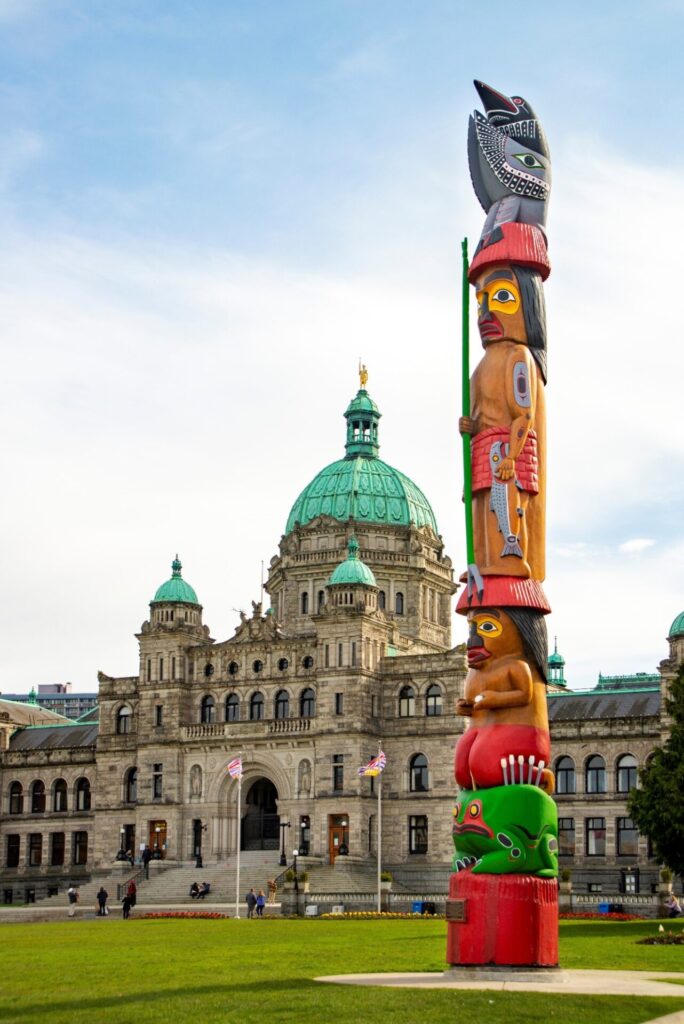
British Columbia Parliament Buildings with Knowledge Totem Pole in the foreground. Copyright: Legislative Assembly of BC.

Speaker in the Schools

The Speaker in the Schools program was launched in 2023, ​with the aim of encouraging students to engage in democracy and consider contributing to their communities by becoming parliamentarians as adults.

Through this program, the Speaker of the Legislative Assembly and I travel to constituencies to visit primarily elementary schools and invite the local Member to join us.

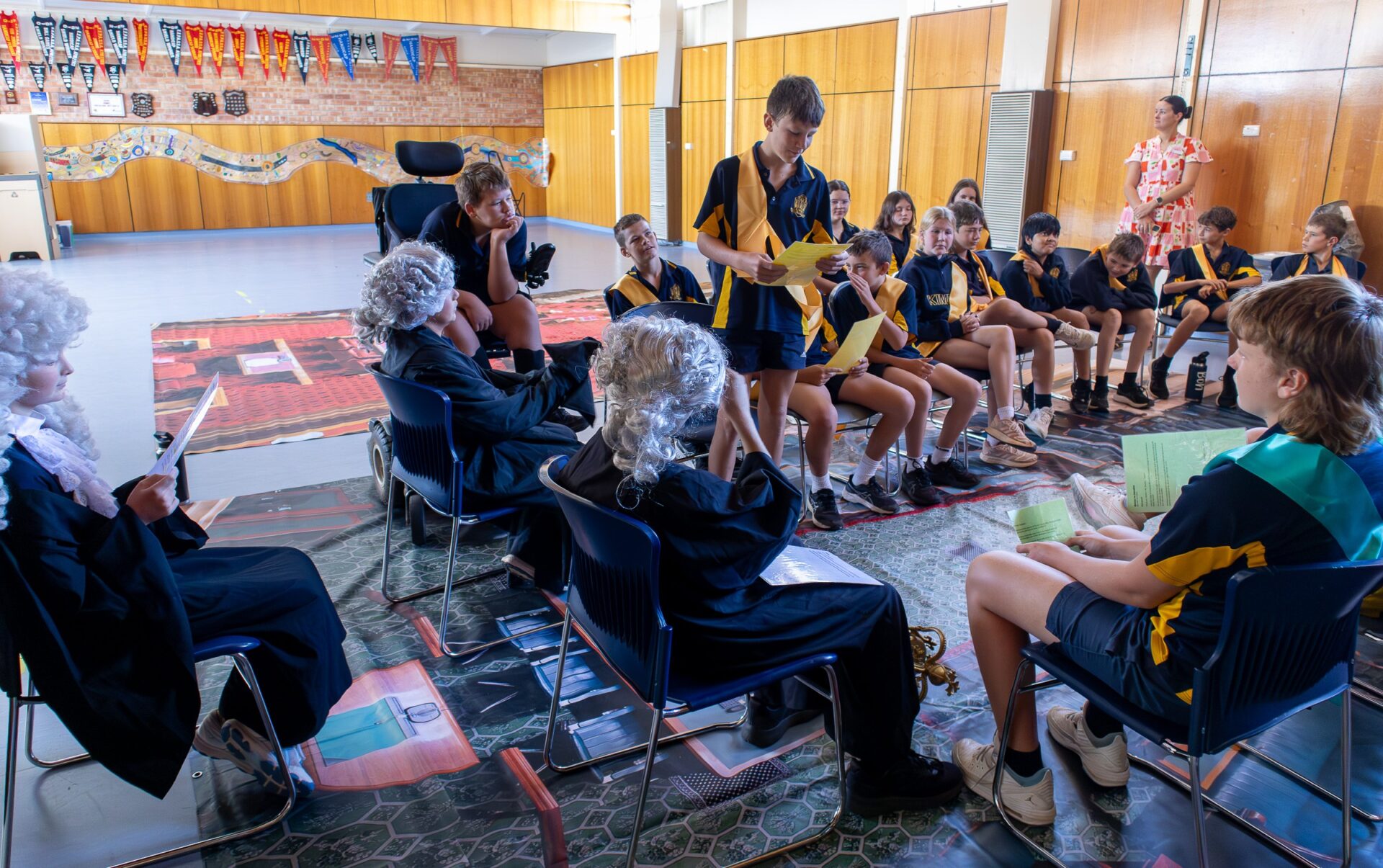
We spend about one hour with a class, or sometimes a combination of classes, in either a classroom, gym, or multipurpose room. Students are divided into two groups to role play government and opposition, complete with dress up clothes for the Speaker, Clerk and Sergeant-Arms (including a child-sized mace).

Through fun and engaging sessions, the Speaker shares their first-hand knowledge with students and leads them in a model parliament exercise to explore how a bill becomes a law. The students decide on their own topic and debate is typically enthusiastic, creative and always fun. The teacher plays the role of Lieutenant Governor to give the royal nod of assent.
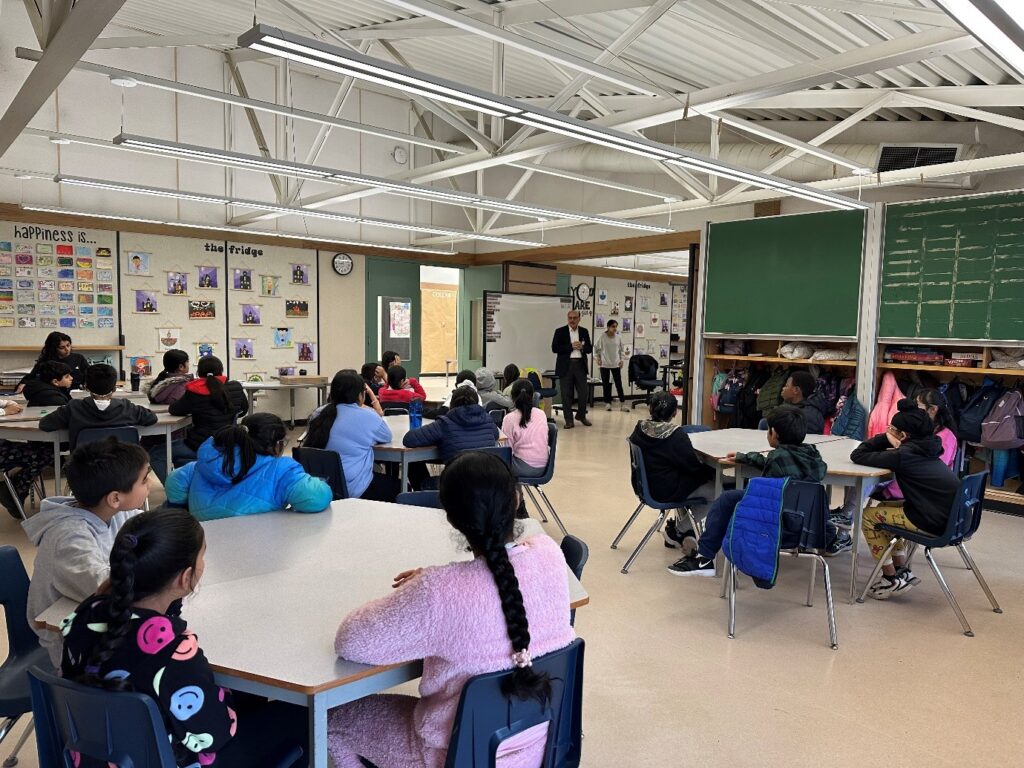
Hon. Raj Chouhan, Speaker of the Legislative Assembly visiting a school in Surrey, BC. Copyright: Legislative Assembly of BC.

Online program options

The in-person Speaker in the Schools program moved to an online visit with the Speaker during Covid and remains an option available to school groups of all ages.

It starts with a simple introduction to the Legislative Assembly, its purpose and function and then an open Q&A with the Speaker. The class receives a mailed certificate after participation. Offering the program online has ensured that remote and rural classrooms can participate and meet with the Speaker and ask some incredible questions.

Cartoon animals holding a sign with the words Speaker in the Schools Program.
Speaker in the Schools branding for front cover of students’ workbooks. Copyright: Legislative Assembly of BC.

Hallow’een activities

Other initiatives for students include our Halloween Trick or Treating program at the Legislature building where staff in the first-floor offices participate to hand out peanut-free candy along with several activity stations for games.

Also, at this time of year, we offer Halloween Travelling Plays in the evening where visitors are met by up to four different characters from British Columbia’s past as they travel through time and the building to learn about “spooky” connections to Parliament. The characters are portrayed by the stellar Parliamentary Players – acting students from local post-secondary institutions that we hire each year.
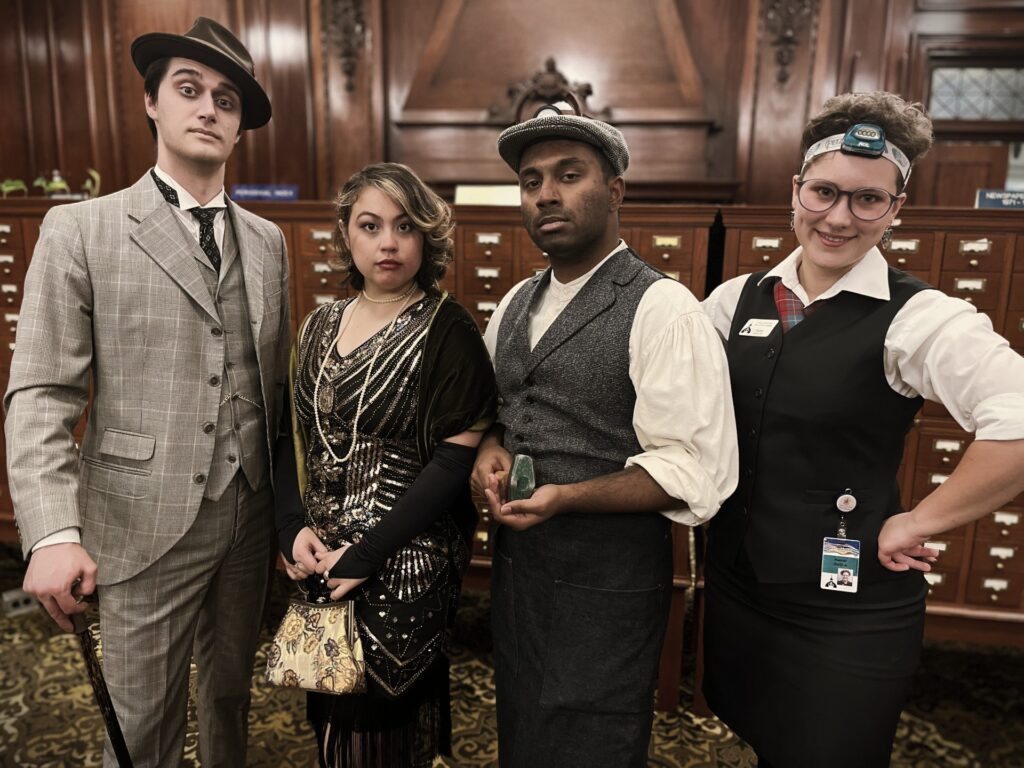
Four costumed Parliamentary Players as part of the Haunted Life of Francis Rattenbury. Copyright: Legislative Assembly of BC.

Tea & Tour

Continuing our programming in costumes, we have a Tea & Tour where visitors sign up for breakfast in the Parliamentary Dining Room and then take a tour of the Parliament Buildings with a costumed interpreter – often the architect of the buildings, Francis Rattenbury.
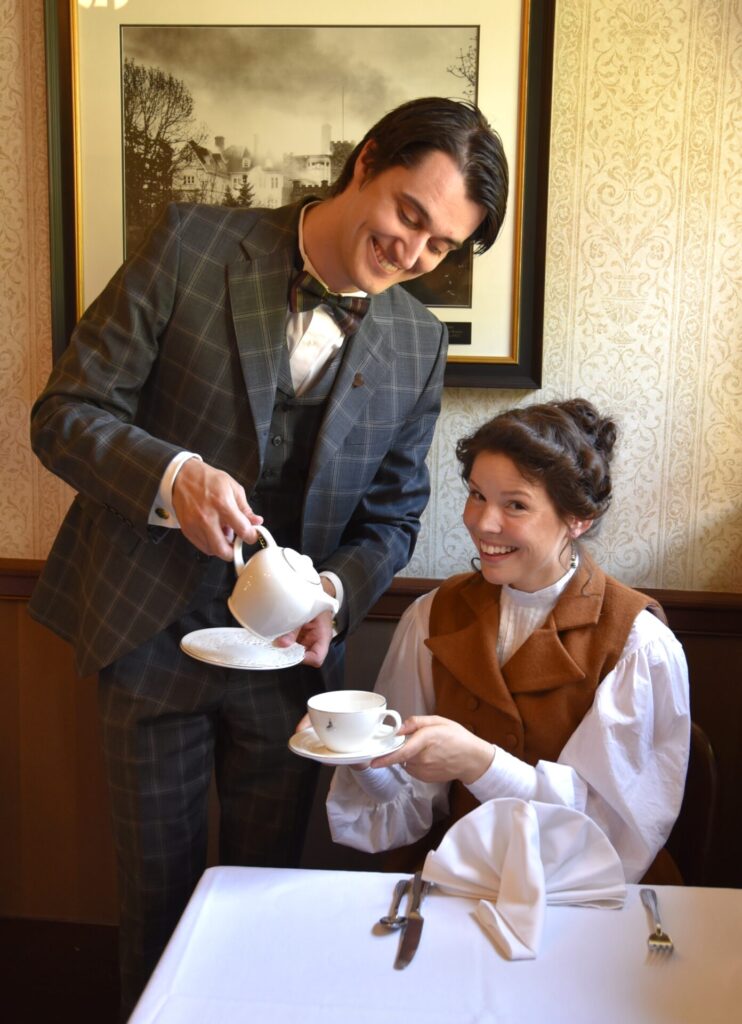
Tea & Tour promotional poster with costumed Players. Copyright: Legislative Assembly of BC.

Play & Tour

In May and June, we also offer a Play & Tour for booked school groups to travel around the outside of the buildings and through time to meet characters from two different plays: My Place in Politics and A Place for Democracy and then come inside for a tour and potentially seats in the gallery when the House is sitting in May.
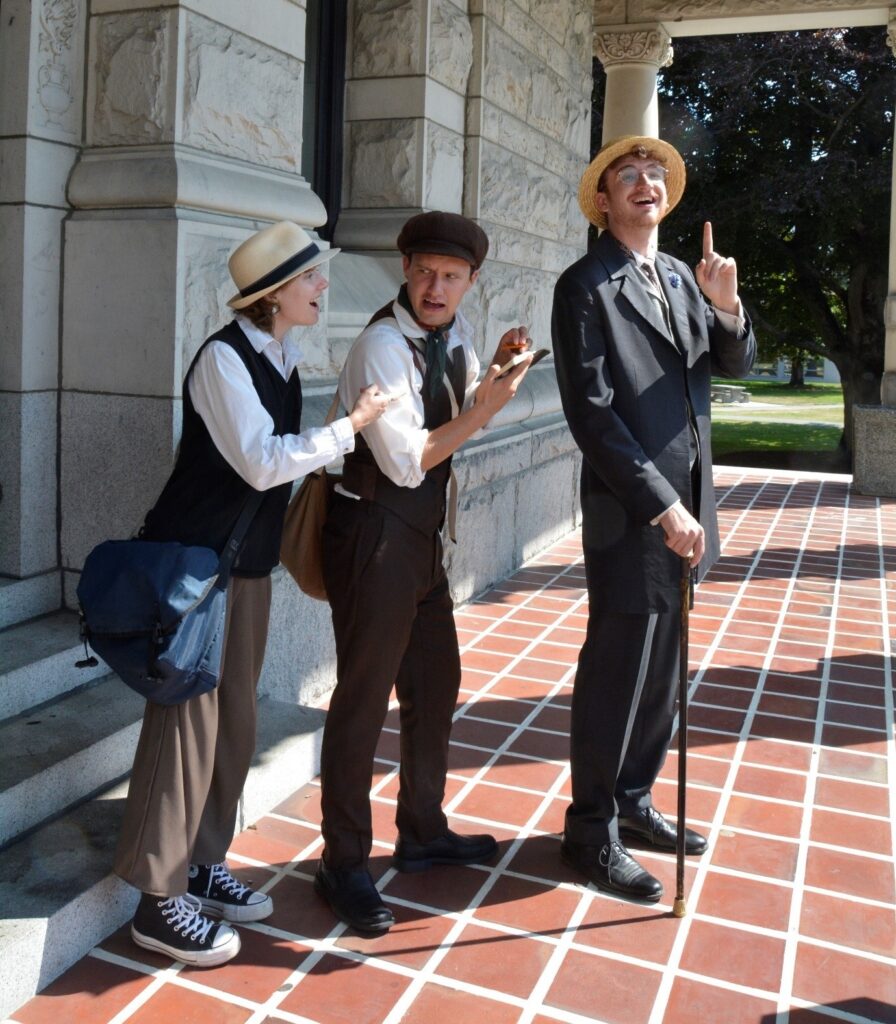
Three costumed characters from the travelling play entitled: A House for Democracy. Copyright: Legislative Assembly of BC.

Student travel grant

We are extremely excited to be launching a Student Travel Grant program in the Fall of 2025 where school groups can apply for per head funding dependent on their geographical location to receive travel dollars to support their visit to the Parliament Buildings in Victoria.

This is also based on the school group participating in a virtual classroom in advance of their visit to better prepare them for the highlights of what they will see in person.
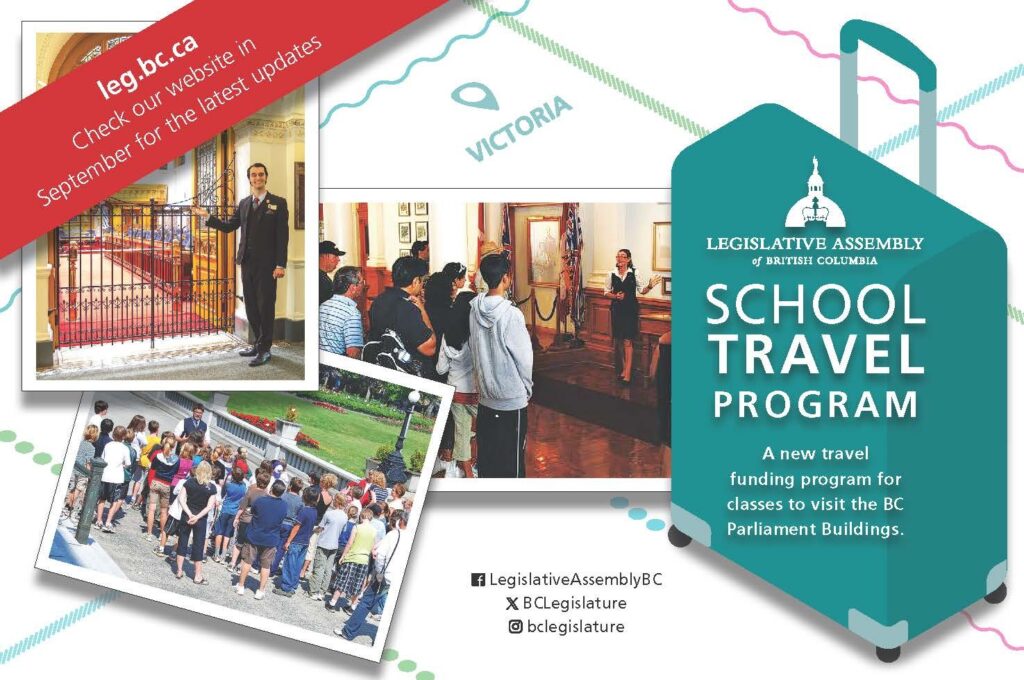
Poster for the new School Travel Program launched on Monday, September 8, 2025. Copyright: Legislative Assembly of BC.

Seasonal events

There are other special interpretative events offered throughout the year – such as Family Day in February and Christmas Lights in December where we reach out to a variety of families, choirs, and the general public to encourage more engagement with our Parliament.
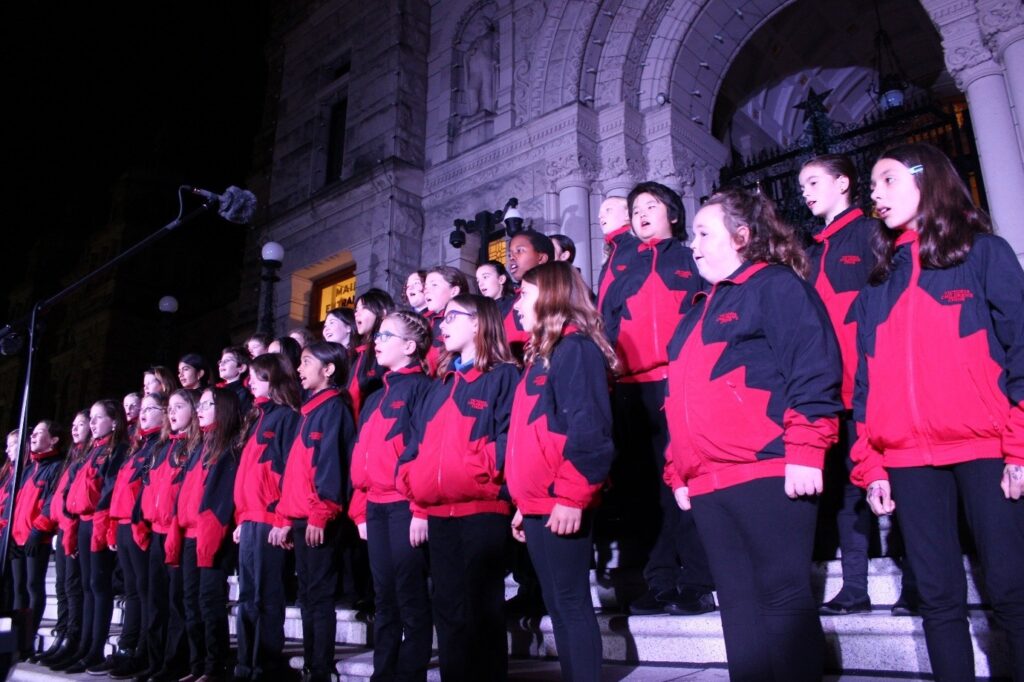
Children’s choir performing on the front steps of the BC Parliament Buildings as part of Christmas light up ceremony each December. Copyright: Legislative Assembly of BC.

More information

Karen Aitken has been the Director of the Parliamentary Education Office (PEO) at the Legislative Assembly of British Columbia since its inception in 2001.

The Parliamentary Education Office develops a wide variety of educational programs and resources on the parliamentary system of governance and the role of the Members for students, teachers and the public. The Office increases visitor awareness of the history of the Parliament Buildings and the parliamentary process through informational programs, materials and outreach initiatives.

Karen has a Bachelor’s degree in English from Carleton University and a Bachelor of Social Work from the University of Victoria together with an Early Childhood Education diploma and Royal Roads Certificate in Public Leadership. She loves working in Parliament, visiting other Parliaments and travel in general.

Find out more about the Legislative Assembly of British Columbia, Canada.

Feature image

British Columbia Parliament Buildings front panoramic. Copyright: Legislative Assembly of BC.

Article published on Friday 17 October 2025

Global map of public engagement now live!

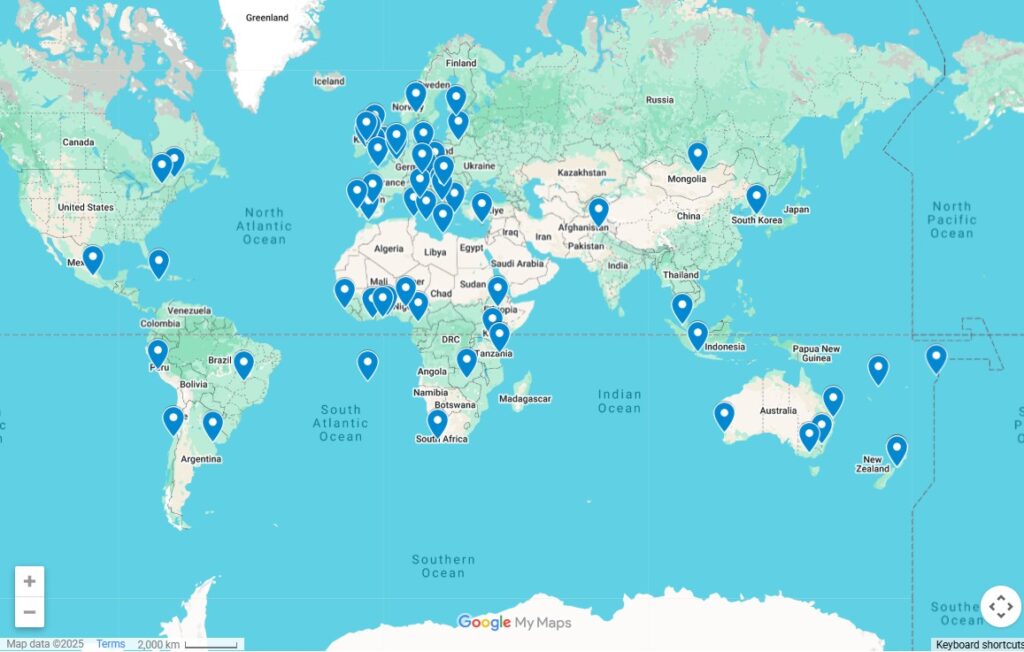
A new online map showing public engagement activities delivered by parliaments around the world was revealed at a launch event in Westminster, London, on 25 September.

This accessible global map is the outcome of a two-year research project undertaken by Dr Laura Sudulich (University of Essex, UK) as a Parliamentary Academic Fellow at the UK Parliament through its Parliamentary Office for Science and Technology, in partnership with the International Parliament Engagement Network (IPEN).

Chaired by Professor Shane Martin (University of Essex), the launch event gave attendees an insight into how the map came about and the process of creating it.

Laura gave an overview of the map and the project, and was joined by Professor Cristina Leston-Bandeira (University of Leeds and Chair of IPEN) and Dr Elise Uberoi (UK House of Commons and Deputy Chair of IPEN).

Global map of public engagement, now live on the IPEN website.

Elise Uberoi said of the launch event:

“Laura’s insightful presentation was followed by a some really interesting questions and thoughtful discussion of how the map might be used in the future. It was a great opportunity to celebrate the outcome of this exciting project.”

Cristina Leston-Bandeira added:

“As you can imagine, it’s a challenge to get a profile of what public engagement services parliaments offer all across the world. It’s great to see that, through this project, we’ve managed to collate data from 65 parliaments.”

IPEN members will get a chance to find out more about the map at an online seminar on 21 October.

The interactive map is now available to all here via the IPEN website. 

Parliaments not yet represented on the map are welcome to fill in this survey to ensure their details can be included.

Feature image

Elise Uberoi, Cristina Leston-Bandeira, Shane Martin and Laura Sudulich at the launch of the global map of public engagement in Westminster, London, September 2025.

17 October 2025

Spotlight on academic research – Petitions to the Spanish Senate: A Participatory Tool to Address Social Concerns?

This month, we are putting a spotlight on an article by IPEN member Iris Simón-Astudillo (Universidad de Valladolid) and Irene López-Alonso (Universidad Complutense de Madrid), published in Index Comunicación in July.

Petitions to the Senate: A Participatory Tool to Address Social Concerns? explores citizen participation through the lens of petitions in Spain and the extent to which they reflect public priorities.

For decades, political disaffection has been a common feature of society since citizens do not feel represented by those who govern them, which can lead to them abstaining from participating in political life.

To address this issue, Simón-Astudillo and López-Alonso decided to examine whether the problems identified by the Spanish population in the surveys undertaken by the Centro de Investigaciones Sociológicas (CIS) are related to the petitions they request to the Senate.

The researchers analysed sixty surveys and all the petitions sent to the Upper House over the course of seven full legislatures (2004-2023).

No correlation was found between the concerns of the population and the petitions submitted to the Senate. The latter do not refer to problems affecting the general population, but rather address personal and individual issues.

This led the researchers to conclude that citizens do not have sufficient knowledge to use this channel of participation appropriately, in addition to the fact that institutions do not promote it. With the distancing between representatives and represented, the population has reached a point of disconnection with institutions in which they do not feel they can have an influence.

Petitions to the Senate: A Participatory Tool to Address Social Concerns? by Iris Simón-Astudillo and Irene López-Alonso was published in Index Comunicación (nº 15 (2), pages 275-298) on 15 July 2025.

The article can be found here via open access. A link is also available in this post in IPEN’s MS Teams space, in addition to links to two other research articles by Iris Simón-Astudillo.

Image

Plenary hall of the new building of the Senate of Spain. Photo by Rastrojo. Image licensed under Creative Commons Attribution-Share Alike 4.0 International.

17 October 2025

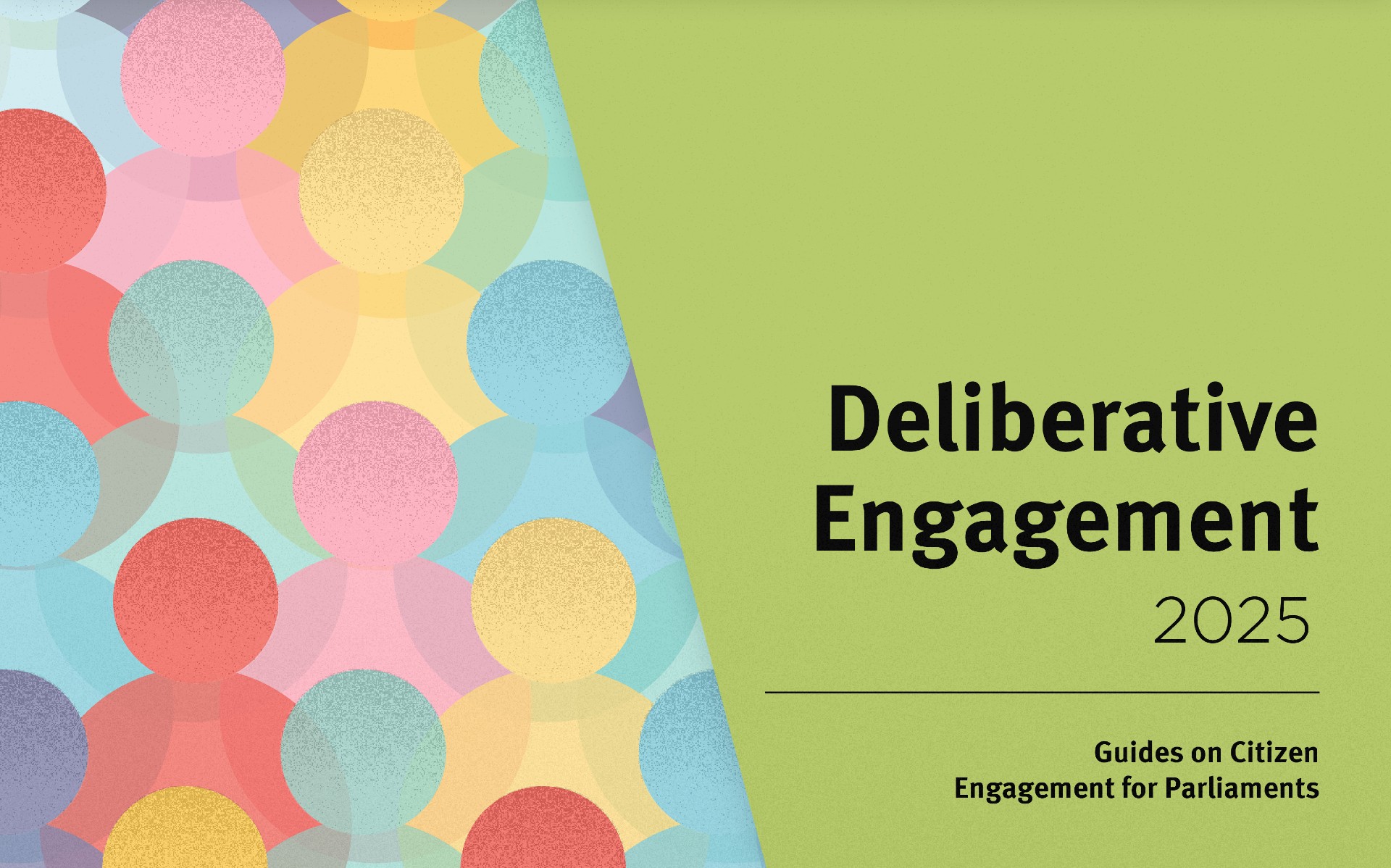
Guide on Deliberative Engagement published

A new Guide on Deliberative Engagement – part of a series of Guides on Citizen Engagement for Parliaments created by the International Parliament Engagement Network in partnership with INTER PARES – has been published.

Deliberative methods are increasingly a source of inspiration for those who seek to redress the global trend of deepening dissatisfaction in democracy.

Such methods offer parliaments the opportunity to engage citizens in rigorous in-depth consideration of complex policy problems and through this potentially enhance their own deliberations and democratic wellbeing overall.

Deliberative methods are not yet widespread among parliaments, but there are several contexts where experiments are settling into institutionalized models.

In this guide, we explore the different ways in which deliberative democracy can be applied in and by parliaments as another tool in the citizen engagement toolbox.

Read the Guide on Deliberative Engagement.

About the series

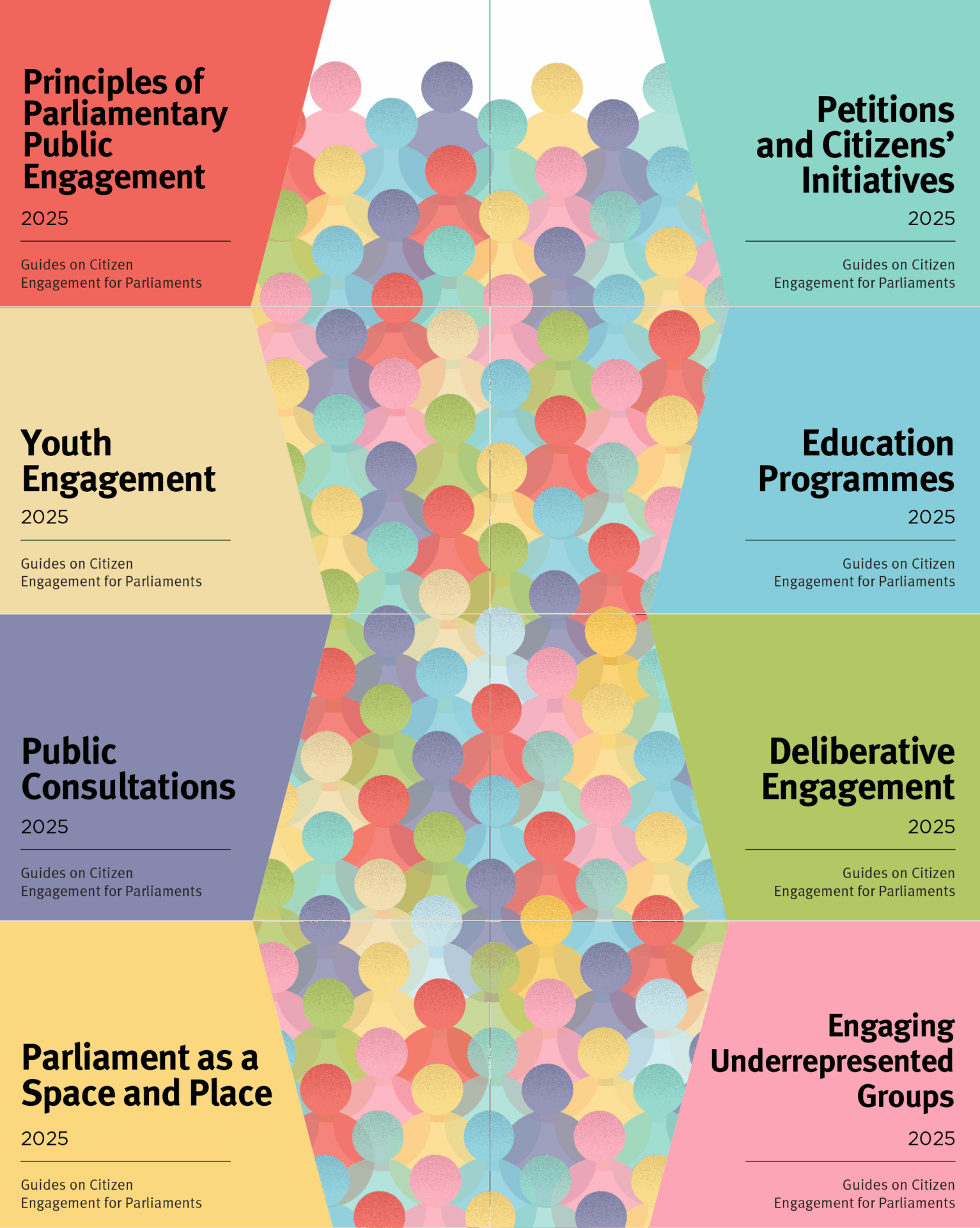
Published in August and launched on 14 October 2025, the Guide on Deliberative Engagement is the sixth in a new eight part series focusing on a range of public engagement topics to help build parliaments’ capacity to engage members of the public in their work.

The series is being created through a project collaboration between the International Parliament Engagement Network (IPEN) and INTER PARES. The Guides are produced with the financial support of the European Union as part of the INTER PARES I Parliaments in Partnership project, implemented by International IDEA.

The Guides have been developed by Cristina Leston-Bandeira (Professor of Politics at the University of Leeds and Chair of IPEN) and Juliet Ollard, (Senior Research and Engagement Officer, IPEN) in partnership with INTER PARES.

The project team have drawn from extensive academic research and parliamentary practice from across the world – including many interviews with parliamentary officials and academics, and the expert advice of our International Advisory Group and the IPEN Executive Team.

Two more Guides will be launched over the coming months.

Explore the full suite of eight Guides on Citizen Engagement for Parliaments for actionable tips and inspiration to strengthen your parliament’s engagement with the public.

Image created by Research Retold

‘Beyond the walls’ podcast discusses rethinking parliament as a public space

What do parliamentary buildings really say about democracy? Are they open, welcoming spaces for citizens – or distant symbols of power?

In a new podcast, Professor Cristina Leston Bandeira (University of Leeds and Chair of IPEN) and Anna-Maria Pawliczek (International Parliamentary Cooperation, German Bundestag) come together to address these two questions.

Timed to commemorate the International Day of Democracy – and hosted by Jessica Benton Cooney at INTER PARES – this podcast explores how parliaments function both as physical spaces and symbolic places that shape public trust, identity and participation.

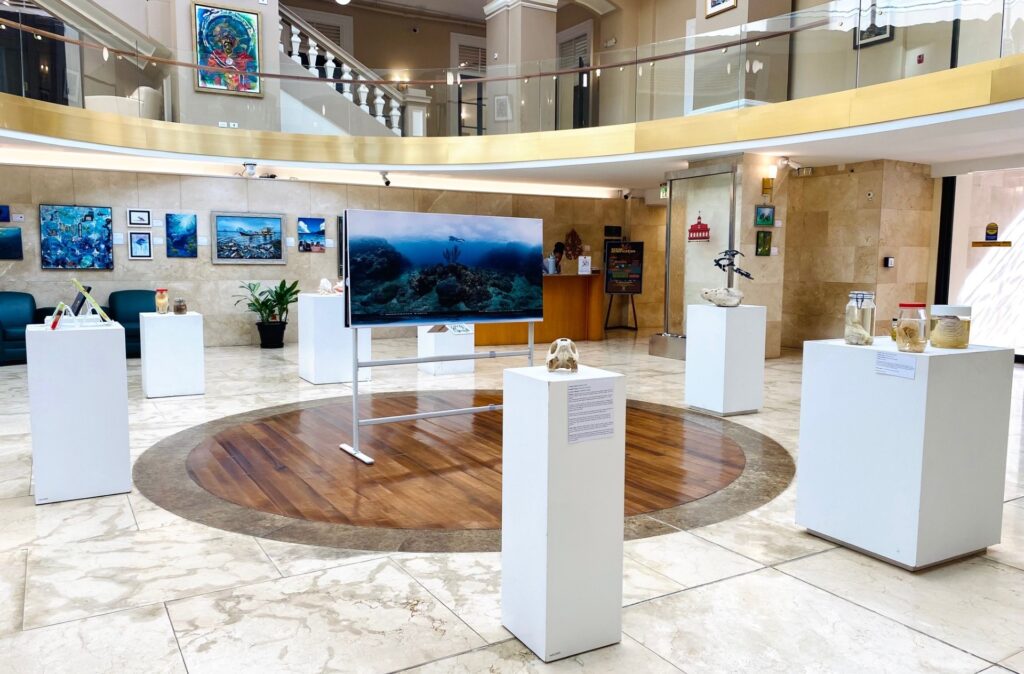
Trinidad and Tobago Rotunda Gallery. Credit: Parliament of Trinidad and Tobago.

The podcast launches Parliament as a Space and Place – the fourth in a series of eight Guides on Citizen Engagement Guides created by INTER PARES Parliaments in Partnership (implemented by International IDEA) in partnership with the International Parliament Engagement Network (IPEN), with support from the European Union.

Featuring global experts and real-world examples – from Berlin’s iconic glass dome to ‘mobile parliaments’ that bring democracy to rural communities – this episode shows how architecture and design can either build bridges between citizens and their representatives or reinforce barriers.

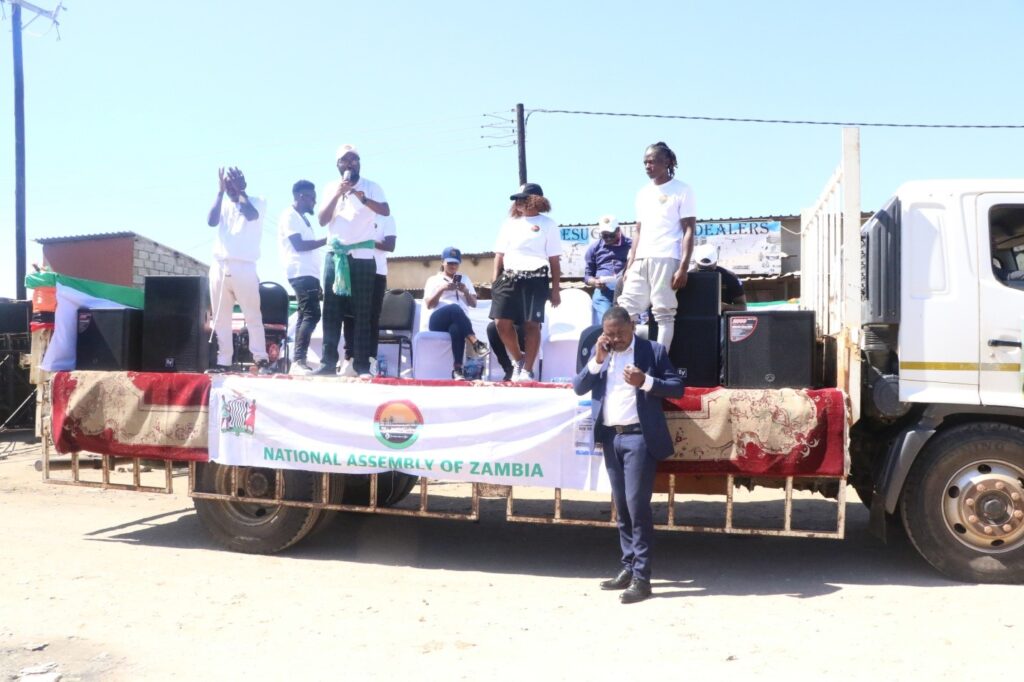
Zambian Parliament truck. Credit: National Assembly of Zambia.

Cristina Leston-Bandeira said:

“Parliamentary spaces have huge symbolic importance in shaping perceptions and experiences of parliaments. These can both strengthen connections between citizen and parliament, and hinder these.

“In this podcast, we reflect on this and how small changes can make such a difference.”

Join Cristina, Anna-Maria and Jessica as they unpack how parliaments can move beyond walls to become truly inclusive spaces of belonging, connection and democratic engagement.

Listen to the podcast.

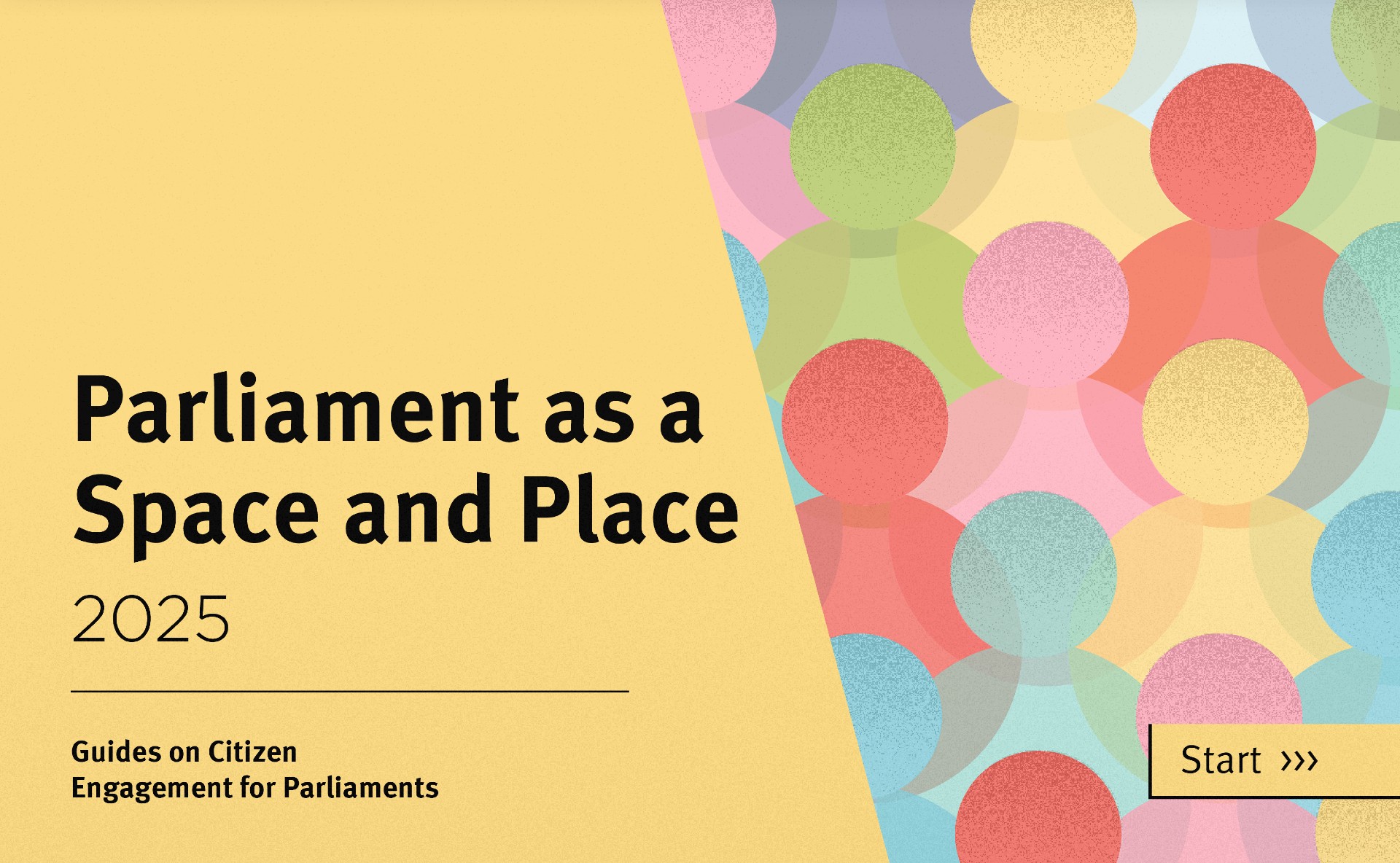
Cover page for Guide to Parliament as a Space and Place. Design by Research Retold.

Find out more about the Guide to Parliament as a Space and Place and all other guides in the series.

Feature image

Parliament of South Australia Community Education & Engagement session – demonstrating use of floor mats in outreach sessions. Credit: Parliament of South Australia.

Published on 10 October 2025.

Guide on Education Programmes published

The fifth in a new series of Guides on Citizen Engagement for Parliaments has been published, created by the International Parliament Engagement Network in partnership with INTER PARES.

Parliaments are fundamental to democracy, but it is often difficult to understand how they work. Parliaments have a responsibility to provide opportunities for citizens across different groups in society to learn about what their parliament is, what it does, and how to get involved.

Education programmes are widely offered by parliaments across the world, and there are various approaches for different (age and other) groups.

This Guide provides an overview of different approaches and considerations to help parliaments deliver meaningful and effective education programmes.

Read the Guide on Education Programmes.

About the series

Published on 14 August 2025, the Guide on Education Programmes is the fifth in a new eight part series focusing on a range of public engagement topics to help build parliaments’ capacity to engage members of the public in their work.

The series is being created through a project collaboration between the International Parliament Engagement Network (IPEN) and INTER PARES. The Guides are produced with the financial support of the European Union as part of the INTER PARES I Parliaments in Partnership project, implemented by International IDEA.

The Guides have been developed by Cristina Leston-Bandeira (Professor of Politics at the University of Leeds and Chair of IPEN) and Juliet Ollard, (Senior Research and Engagement Officer, IPEN) in partnership with INTER PARES.

The project team have drawn from extensive academic research and parliamentary practice from across the world – including many interviews with parliamentary officials and academics, and the expert advice of our International Advisory Group and the IPEN Executive Team.

The remaining three Guides will be launched over the coming months.

Explore the full suite of eight Guides on Citizen Engagement for Parliaments for actionable tips and inspiration to strengthen your parliament’s engagement with the public.

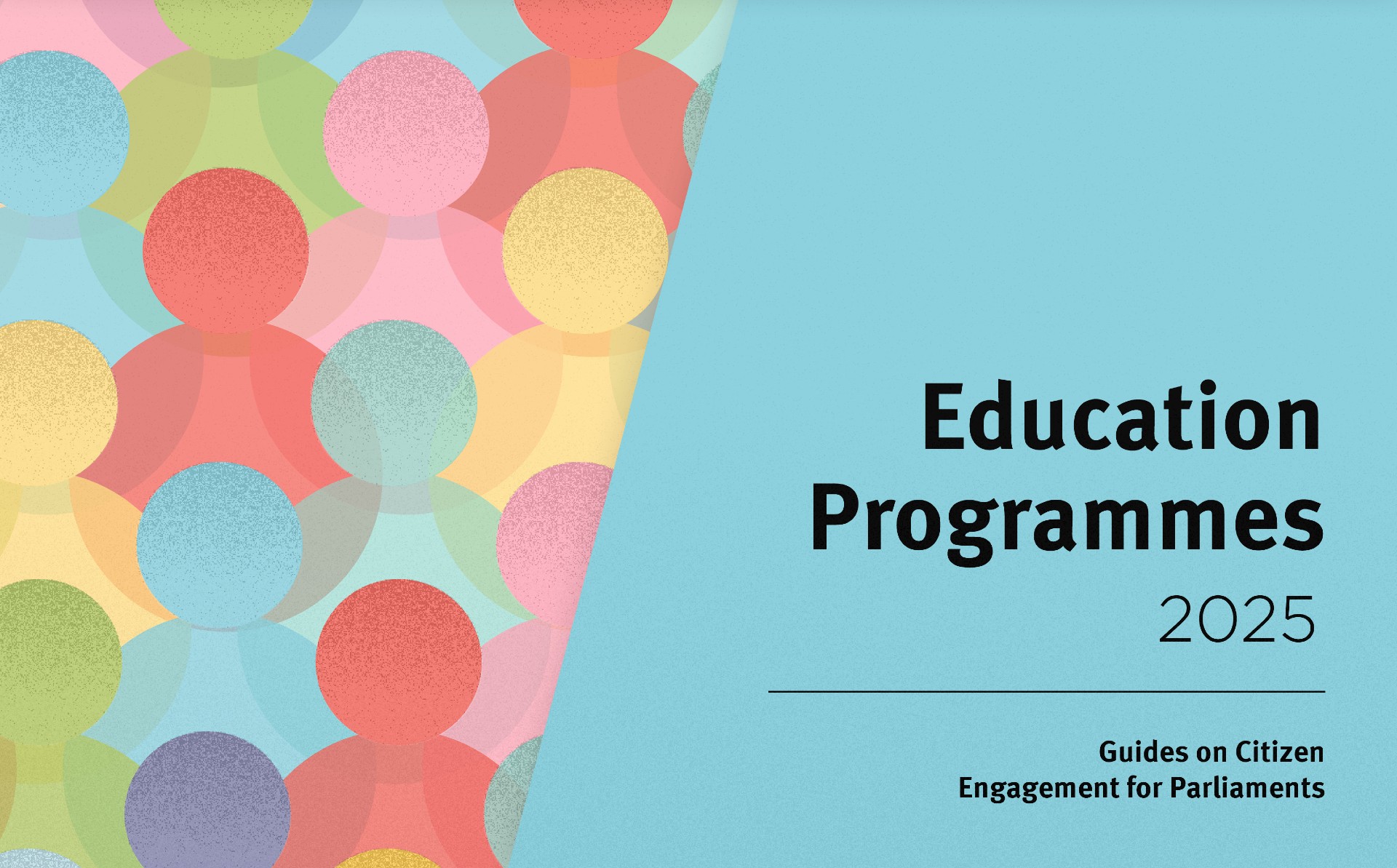
Image created by Research Retold

Spotlight on academic research – Parliament and the media

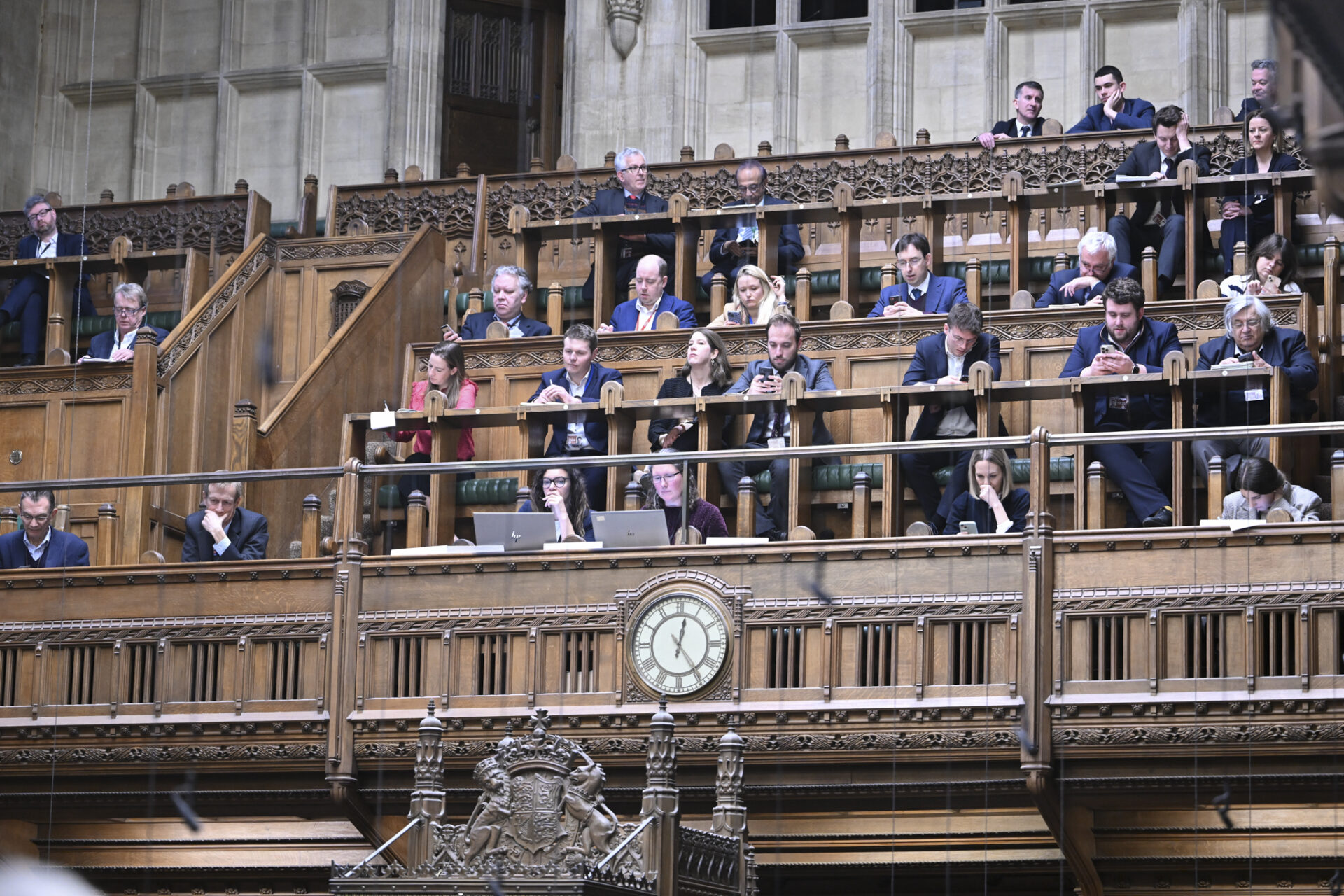
House of Commons Press Gallery. Photo © UK Parliament/Jessica Taylor

A book chapter on ‘Parliament and the Media’ is featured in the second edition of Exploring Parliament (Oxford University Press), a textbook providing an engaging and accessible introduction to the UK Parliament.

The chapter is co-authored by IPEN members Sasha Fuller, Alasdair Rendall and Anikka Weerasinghe from the UK Parliament.

Fuller, Rendall and Weerasinghe offer a summary of how the media’s relationship with the UK Parliament has evolved over the centuries – from the printing press to TikTok.

The authors ask what lessons we can learn from the past, and how they might help us better predict where we’re headed. The chapter also tries to demystify some politico speak by explaining the difference between ‘The Lobby’ and ‘The Press Gallery’.

Finally, a case study looks at how Covid-19 changed the rules of the game.

Petitions Committee sign on a wooden door

‘Parliament and the Media’ by Sasha Fuller, Alasdair Rendall and Anikka Weerasinghe was published in the second edition of Exploring Parliament (Oxford University Press) on 19 March 2025.

A copy of this chapter can be accessed by IPEN members in MS Teams.

Exploring Parliament (Second Edition) is edited by Cristina Leston-Bandeira, Alexandra Meakin and Louise Thompson. The book is available via the Oxford University Press website.

Find out about Exploring Parliament (Second Edition) in this article on the IPEN website.

Images

1. House of Commons Press Gallery. Photo © UK Parliament/Jessica Taylor
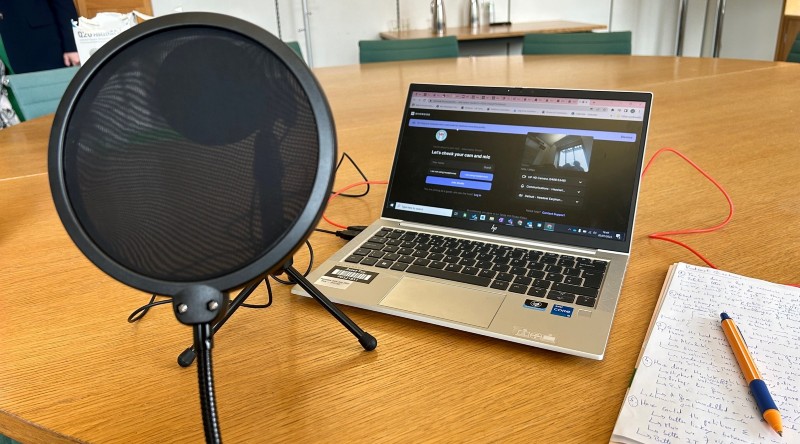
2. Preparing for a Committee Corridor podcast at the UK House of Commons. Photo courtesy of Cristina Leston-Bandeira.

Article published on 18 September 2025

Global mapping: public engagement in parliaments around the world

Globe on a table

21 October 2025

Speakers: Dr Laura Sudulich (Parliamentary Academic Fellow based at the University of Essex); Professor Cristina Leston Bandeira (Chair of IPEN and University of Leeds)

Chair: Dr Elise Uberoi (Deputy Chair of IPEN and Head of Social Policy Section, House of Commons Library) 

Details: This IPEN seminar will showcase a new accessible global map of public engagement practice

The map is the outcome of a two-year research project undertaken by Dr Laura Sudulich as a Parliamentary Academic Fellow at the UK Parliament through its Parliamentary Office for Science and Technology, in partnership with IPEN. 

Hosted on the IPEN website, this interactive map shows how parliaments across the world engage with the public. It displays data on how parliaments share information about their role and activity, educate people about parliament, and the opportunities they offer for further citizen involvement. 

Laura Sudulich will introduce the map and give an overview of how it works, how it was created and how it is intended to be used. Laura designed a questionnaire that was shared with parliaments around the world using various networks, including IPEN. 

Cristina Leston-Bandeira will reflect on how academic research on legislative organisations impacts on the activity of parliamentary officials and the functioning of parliaments. 

One of the aims of this project is to build global connections between parliaments’ efforts to inform and engage the public and those who are involved in them. Through this seminar, participants will find out more about how they can use the map as a resource to identify new connections and learning opportunities.

This online seminar will take place in MS Teams and is open to members of the International Parliament Engagement Network (IPEN).

The event follows a formal launch of the map, taking place in London on 25 September.

Find out more about the network.

Image by stokpic from Pixabay.

New accessible global map of public engagement practice launches this month

Hands, World, Map

We are excited to announce that IPEN’s latest resource – an online map showing the different public engagement activities delivered by parliaments around the world – will be launched on the IPEN website this September.

This accessible global map is the outcome of a two-year research project undertaken by Dr Laura Sudulich (University of Essex, UK) as a Parliamentary Academic Fellow at the UK Parliament through its Parliamentary Office for Science and Technology, in partnership with the International Parliament Engagement Network (IPEN).

The Mapping public engagement in parliaments across the world project involved designing a questionnaire that was shared with parliaments through different networks, including through the IPEN community. Thanks very much to everyone who helped us build this dataset.

The map will be launched in Westminster (London, UK) on Thursday 25 September (16:00-18:00 GMT+1 / UK time) at an in-person event – please get in touch with us at [email protected] if you would like to attend.

This will be followed by an online event specifically designed for IPEN members on Tuesday 21 October, 9:30-10.30 GMT+1 / UK time. Further details can be found here.

The online map will be made available in the global mapping section of the IPEN website towards the end this month.

We hope this will be a useful resource for you to find out about activities going on elsewhere and form the basis of new partnerships, collaborations and innovations.

Find out more about the Mapping public engagement in parliaments across the world project.

Image

Photo by Leeloo The First. Source: Pexels.

Article published on 18 September 2025.

Guide on Parliament as a Space and Place published

The fourth in a new series of Guides on Citizen Engagement for Parliaments has been published, created by the International Parliament Engagement Network in partnership with INTER PARES.

Parliaments are both spaces and places. As spaces, they are collections of rooms, halls, offices and grounds that are used for particular purposes. As places, they mean something to the people they represent – but they don’t mean the same thing, or as much, to everyone, and increasingly people hold negative feelings towards parliaments.

This Guide on Parliament as a Space and Place explores the idea of parliaments as spaces and places and provides guidance for staff and Members of Parliament on using spaces to develop citizens’ understanding and positive associations towards their parliament as a place.We use a wide range of examples from parliaments across the world to demonstrate how this can be done.

Read the Guide on Parliament as a Space and Place.

About the series

Launched to coincide with International Day of Democracy, the Guide on Parliament as a Space and Place is the fourth in a new eight part series focusing on a range of public engagement topics to help build parliaments’ capacity to engage members of the public in their work.

The series is being created through a project collaboration between the International Parliament Engagement Network (IPEN) and INTER PARES. The Guides are produced with the financial support of the European Union as part of the INTER PARES I Parliaments in Partnership project, implemented by International IDEA.

The Guides have been developed by Cristina Leston-Bandeira (Professor of Politics at the University of Leeds and Chair of IPEN) and Juliet Ollard, (Senior Research and Engagement Officer, IPEN) in partnership with INTER PARES.

The project team have drawn from extensive academic research and parliamentary practice from across the world – including many interviews with parliamentary officials and academics, and the expert advice of our International Advisory Group and the IPEN Executive Team.

The remaining four Guides will be published over the coming months.

Explore the full suite of eight Guides on Citizen Engagement for Parliaments for actionable tips and inspiration to strengthen your parliament’s engagement with the public.

Image created by Research Retold