Bringing children’s voices into parliament: the Lundy model in action

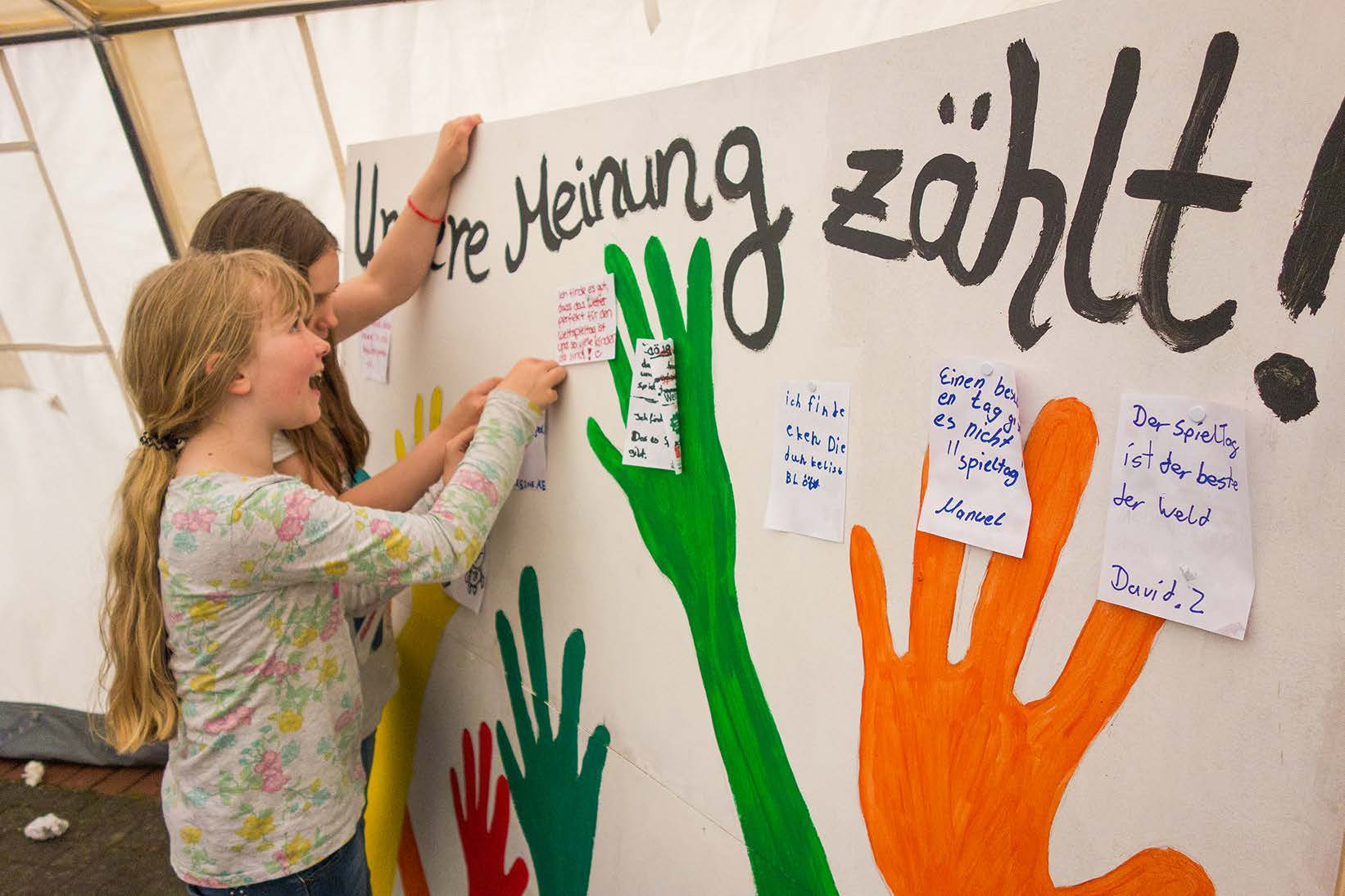
Children participating in an activity

Date and time: Tuesday 30 June, 10:00-11:00 GMT+1 / UK time; 11:00-12:00 CET 

Speakers: Professor Laura Lundy (Queen’s University Belfast) and Marta Kuljon (European Commission). 

Chair: Elise Uberoi (UK House of Commons Library and IPEN Executive Team) 

Details: Many parliaments have programmes focusing on children’s education, and some have youth parliaments, but fewer have developed systematic ways to gather the views of children on policy issues and feed these into their debates, legislation and scrutiny work. This seminar is designed as an opportunity to think through the benefits of using children’s views better, as well as potential risks, and practical ways of engaging with children to get the most from these interactions.

Professor Lundy’s model of child participation has been adopted by national and international governments and organisations. This model offers a way of practically embedding children’s right to participate, focusing both on helping children to express their views, and ensuring these have an impact. Professor Lundy will introduce her model and highlight its relevance to parliaments.

Marta Kuljon will talk about her experience of working with Professor Lundy to embed this model in the processes of the EU Children’s Participation Platform set up by the European Commission. She will comment on how it works in practice, including any challenges and outcomes so far.

This will be followed by a Q&A.

The seminar will take place in IPEN’s MS Team. If you are a member of IPEN, you will receive a calendar invite for it.

Photo credit: BDKJ Diözesanverband PaderbornCC BY-SA 3.0, via Wikimedia Commons

Overcoming public engagement challenges in post‑legislative scrutiny (PLS): lessons from wartime Ukraine and remote consultation in Nepal

The dome and a flag at the Ukrainian parliament at dusk.

Date and time: Wednesday 29 April 2026, 09.00-10.00 UK / GMT+1 ; 10.00-11.00 CET

Speakers: Maria Mousmouti (Associate Research Fellow, Sir William Dale Center for Legislative Studies, Institute of Advanced Legal Studies, University of London), Halyna Shevchuk (WFD Country Director, Ukraine), Dinesh Wagle (WFD Country Director, Nepal); Ukrainian parliamentary staffer (TBC).

Chair: Alex Scales (Evidence and Learning Manager, WFD)

Registration: This webinar is open to all IPEN members and members of WFD’s Global Community of Practice for PLS

Details: Join the first joint webinar between Westminster Foundation for Democracy (WFD) and IPEN!

Post‑legislative scrutiny (PLS) is the process by which parliaments review how a law is working in practice after it has been adopted, including whether it is being implemented as intended and whether it is achieving its policy objectives. Effective public engagement is a core part of PLS, helping parliaments understand lived experience, unintended consequences, and implementation gaps that may not be visible through formal reporting alone.

This seminar will explore two challenging but contrasting examples of public engagement within the PLS process, including in wartime Ukraine and across geographically remote provinces in Nepal. The panel will reflect on why PLS was prioritised in their context and what objectives public engagement was expected to serve. Our discussion will then explore the practical design choices, trade‑offs, and constraints that shaped public engagement in these contexts.

From Ukraine, the discussion will consider how PLS and public engagement have been pursued under conditions of war and martial law, including constraints on time, security, and participation, as well as the importance of maintaining parliamentary accountability and citizen trust during crisis. From Nepal, we will examine the challenges of engaging citizens in PLS processes across remote and hard‑to‑reach communities, where geography, infrastructure, and uneven access to technology shape who can participate and how.

This will be followed by a Q&A and further discussion on what makes for a credible and inclusive public engagement process within PLS. Together, we’ll try to identify what design choices support effective consultation, even in difficult operating environments. 

Featured image credit: G.Evgenij/Shutterstock.com

Institutionalising democratic innovation in Germany: Hallo Bundestag

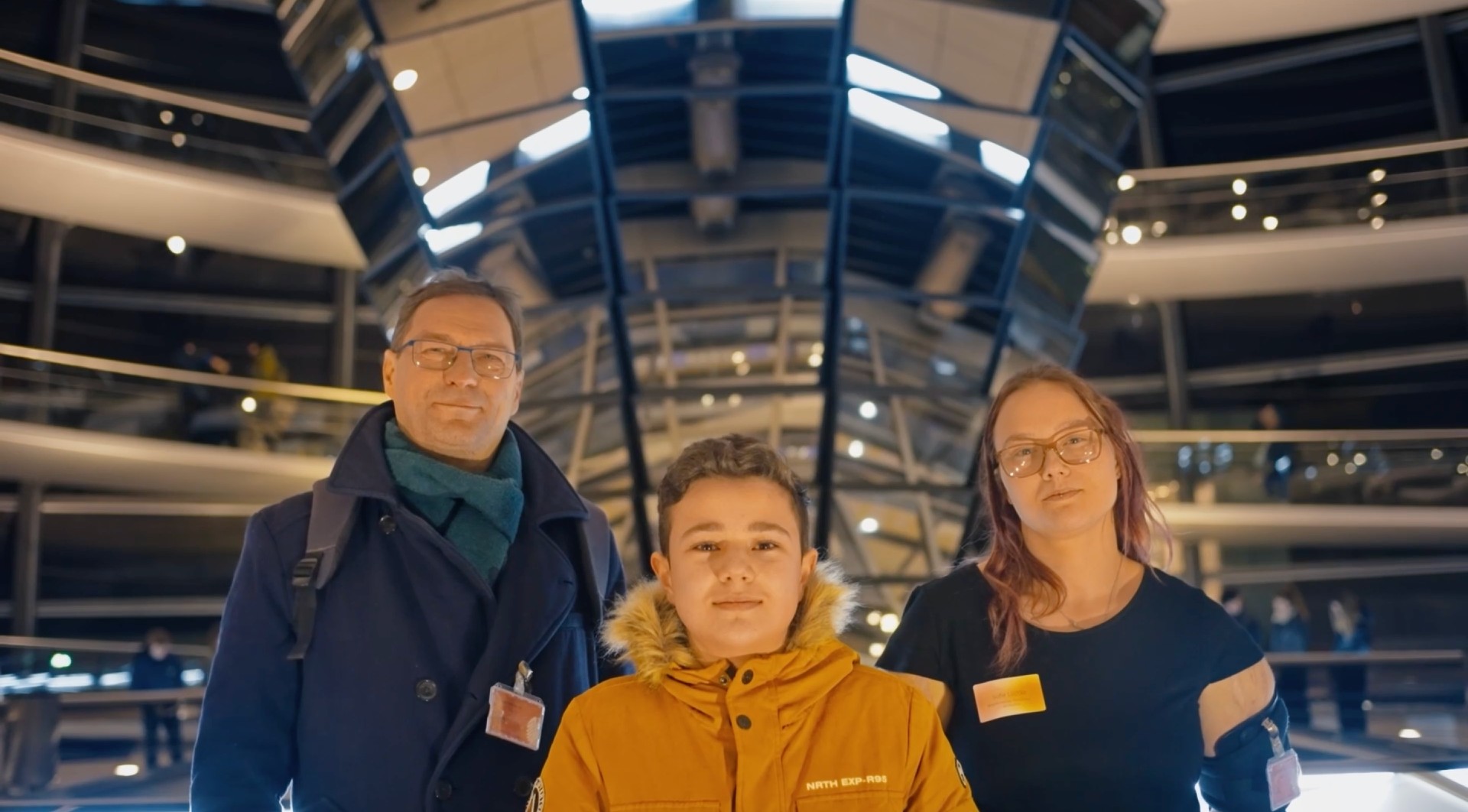
Three participants of Hallo Bundestag from all over Germany inside the German Bundestag building

22 April 2026

Speakers: Juliane Baruck and Paul Naudascher (founders & co-project leads of Hallo Bundestag)

Chair: Chris Shaw (Clerk of the Home Affairs Committee, UK House of Commons, and IPEN Executive Team)

Details:   In this IPEN seminar, we will hear how the successful Hallo Bundestag initiative is institutionalising a democratic innovation in Germany.

Hallo Bundestag is a project in Germany which explores ways in which diverse groups of people can have their voices heard in politics. It was initiated by the non-profit “Demokratie Innovation e.V.” which has run many lottery-based participation formats as part of its initiative Es geht LOS.

Juliane Baruck and Paul Naudascher will address how Hallo Bundestag will scale a deliberative format on a constituency level that strengthens representative ties between parliamentarians and randomly selected people in their respective constituencies.

Between 2026 and 2028, the project team and a network of implementation partners will organise 50 so-called ‘constituency days’ (Wahlkreistage) in 50 different constituencies all over Germany, engaging over 100 parliamentarians with over 1,200 people from all walks of life.

More information

This online seminar will take place in MS Teams and is open to members of the International Parliament Engagement Network (IPEN).

Find out more about the network.

Image

Participants of Hallo Bundestag from all over Germany have been meeting regularly in Berlin to discuss their experiences and the institutionalisation of the format. Credit: Steffen Krones.

Politicising deliberation? Media coverage of Climate Assemblies in France and the UK

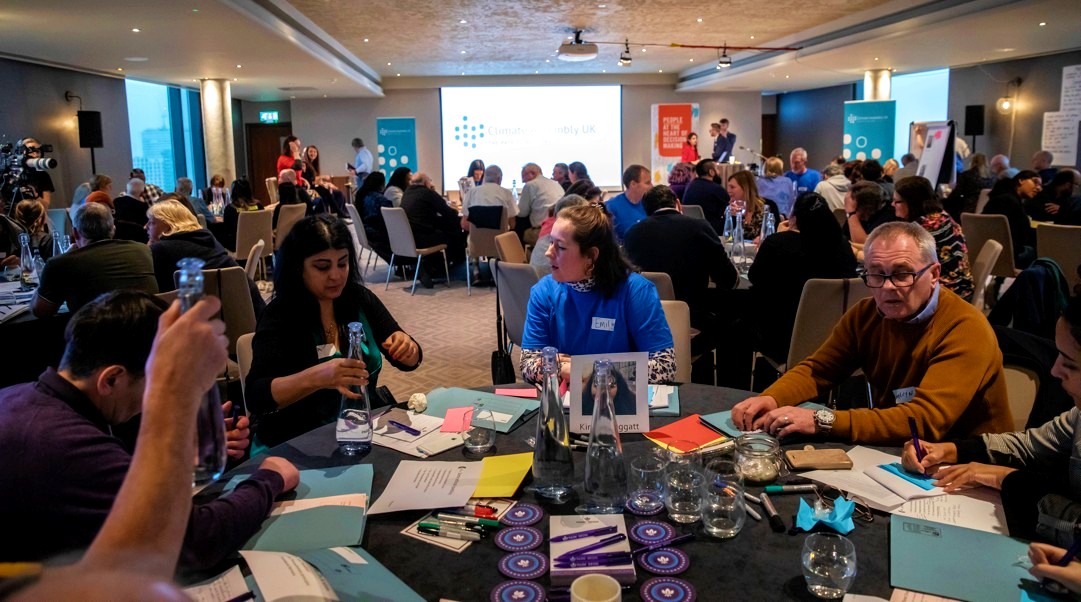
People at tables engaging in activities for UK Climate Assembly

18 March 2026

Speakers: Dr Alice Moseley (Associate Professor in Public Policy & Administration, University of Exeter), Dr Lise Herman (Senior Lecturer in Politics, University of Exeter)

Chair:  Chris Shaw (Clerk of the Home Affairs Committee, UK House of Commons, and IPEN Executive Team)

Details: This IPEN seminar will be of interest to all those concerned with promoting greater public engagement with the process and outcomes of deliberative processes in the current media environment.

Public visibility and democratic legitimacy are essential for the survival of any innovation promoted by parliaments or governments. If such innovations are to be institutionalised, it is vital that they engage citizens beyond their confines and spur deliberation within society at large. To what extent do Citizen Assemblies achieve these aims so far, and how might they be designed with these aims in mind going forward?

In this seminar, Lise Herman and Alice Moseley will use the examples of the French and UK climate assemblies to explore the ways in which the media portrayed them and framed the public discussion of their results. They will draw on a recent study by a team at the University of Exeter which centres on analysis of media output on the assemblies from different angles, including coverage of process, outcomes and potential media bias.

They argue that contradictory media coverage to support and criticise deliberative processes is essential to produce effective public engagement with democratic innovations. This seminar will provide evidential support for this endeavour and an opportunity to share experiences and research from other parts of the world.

More information

This online seminar will take place in MS Teams and is open to members of the International Parliament Engagement Network (IPEN).

Find out more about the network.

Image

Climate Assembly UK, 2020. Photo by Fabio de Paola / PA Wire.

How parliaments organise public engagement services: Brazil, Ghana and Scotland

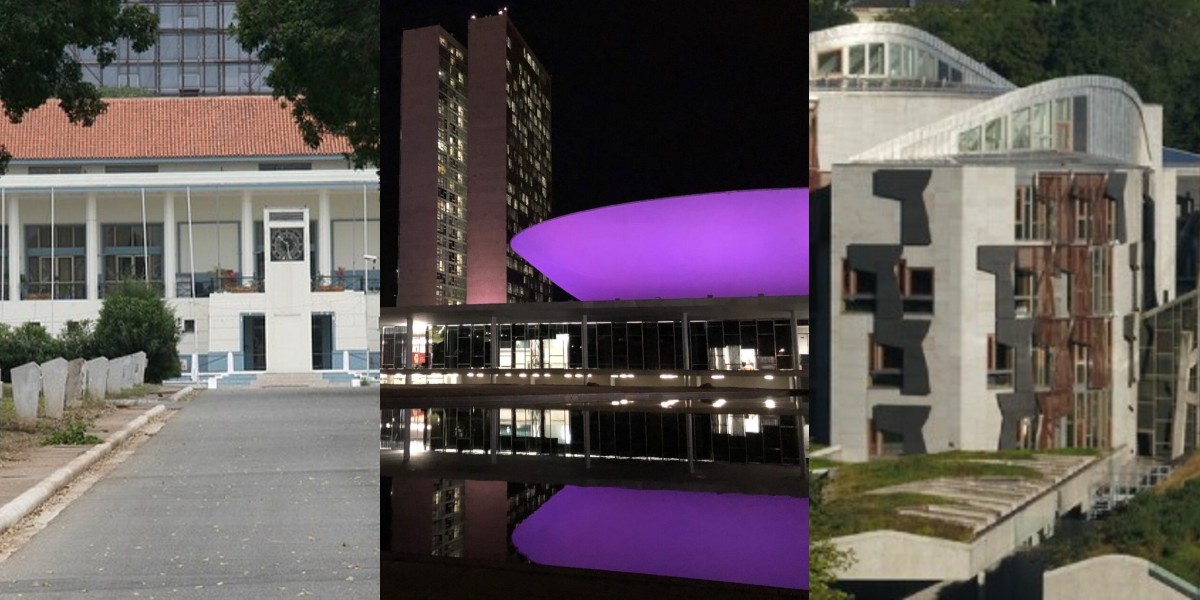
Parliament of Ghana, National Congress Palace in Brazil and Scottish Parliament

11 February 2026

Speakers: Enock Adomah (Administrator for the Department of Public Engagement, Parliament of Ghana); Sally Coyne (Head of Public Engagement Services Office, Scottish Parliament); Rodolfo Vaz (Coordinator of Digital Solutions for Citizens, Chamber of Deputies, Brazil)

Chair:  Professor Cristina Leston-Bandeira (University of Leeds and Chair of IPEN)

Details: This IPEN in-conversation seminar will explore how parliaments organise public engagement services. The seminar is a direct response to a request by one of our new members, who is currently involved in a re-development of their public engagement services.

Public engagement is understood in many different ways across parliaments, with some putting more emphasis on education, others on participation and others still on communications; or a combination of these. This results in very different types of services supporting public engagement activity. This can matter in the way public engagement relates to other activities, such as parliamentary business.

Public engagement services also vary very considerably in size across parliaments. Some parliaments may have one small team that needs to attend to every public engagement need, perhaps keeping everything well integrated and connected – to the detriment of capacity to undertake a high number of activities.

Other parliaments have separate services that address different aspects of public engagement, being able to provide a high number (and often more complex) set of activities – but perhaps resulting more in a culture of silos, where each service does their own thing.

In conversation with Cristina Leston-Bandeira, we will hear from representatives from the parliaments of Brazil, Ghana and Scotland – three different types of parliaments that have organised their public engagement services in different ways.

The in-conversation format will enable us to examine how each parliament has organised their public engagement services, the reasons for this and how effective these structures are in facilitating meaningful parliamentary public engagement services.

The seminar will end with a Q&A and discussion.

More information

This online seminar will take place in MS Teams and is open to members of the International Parliament Engagement Network (IPEN).

Find out more about the network.

Images

1. Parliament House (State House) – Parliament of Ghana. Photo by Wgsohne. CC BY-SA.
2. Palácio do Congresso Nacional, Brasília, Brazil. Photo by Cristina Leston-Bandeira.
3. Exterior view of the Scottish Parliament in Edinburgh. Photo courtesy of the Scottish Parliament.

Deliberative democracy ‘check’in’

Six speech and thought bubbles on a blue background

20 January 2026

If you are an IPEN member who uses deliberative democracy methods as part of your role in parliament or academic research, you are invited to join us for our next ‘deliberative democracy check-in’.

The aim of this IPEN group is to provide a safe space for those currently planning or involved in deliberative democracy projects to get together to seek advice, share good ideas and generally provide moral and practical support.

The ‘check-in’ is chaired by Chris Shaw (Clerk of the Home Affairs Committee, UK House of Commons, and IPEN Executive Team member) and will take place in MS Teams.

It is open to IPEN members who might be able to offer the benefit of their experience, or who just want to hear more. Full details of the topic for the January ‘check-in’ and how to register can be found in our MS Teams space.

Is your work or research connected to deliberative democracy methods?

If your work or research is connected to the theme of deliberative democracy, you are very welcome to apply to join the International Parliament Engagement Network (IPEN).

The network brings together academics, parliamentary officials and third sector representatives from across the world, to promote collaboration and encourage knowledge sharing around parliaments and public engagement.

Find out how to join the network.

Image by Ewa Urban from Pixabay

Institutionalising accessibility and inclusion: the case of the New Zealand Parliament

4 December 2025

Speaker: Stew Sexton (Senior Accessibility Advisor, New Zealand Parliament)

Chair: Cristina Leston-Bandeira (Professor of Politics at the University of Leeds and Chair of IPEN)

Details: In this seminar, Stew Sexton will outline the integrated approach the New Zealand Parliament has adopted to embed practices that enable accessible and inclusive engagement with Deaf, disabled, and neurodiverse communities. This is part a wider diversity and inclusion strategy that also enables engagement with indigenous Māori communities, ethnic minority groups and young people.

This is founded on an institutionalisation approach which depends on collaboration between the main bodies of the parliamentary administration, the Parliamentary Service and the Office of the Clerk – and through the establishment of permanent staff roles to ensure that engagement of underrepresented groups remains a priority.

This online seminar will take place in MS Teams and is open to members of the International Parliament Engagement Network (IPEN).

Find out more about the network.

Image: Parliament House, New Zealand Parliament. Courtesy of Stew Sexton.

The role of ‘lived experience’ in public engagement

18 November 2025

Speaker: Dr Clementine Hill O’Connor (Research Fellow in the Division for Social and Urban Policy at University of Glasgow)

Chair:  Professor Cristina Leston-Bandeira (University of Leeds and Chair of IPEN)

Details: In this IPEN seminar, Clementine Hill O’Connor will draw from the findings of her Research Fellowship at the Scottish Parliament to explore the role that ‘lived experience’ plays in parliamentary work, namely in scrutiny processes. By ‘lived experience’ we mean the experience of those directly affected by legislation.

There has been a growth in activity around the methods and approaches that are used to bring a wider variety of people into the work of the Scottish Parliament – a key feature is the role of ‘lived experience’ and the role it plays in scrutiny.

This increased interest in lived experience is mirrored across all levels of government, both national and local, and is an increasingly important component of policymaking processes. It has the potential to address democratic deficits, bringing a more diverse range of perspectives into policymaking, ultimately resulting in decisions that have stronger public support.

It is also understood to bring those directly affected by policy into the process, giving voice to often marginalised group. Understanding the perspectives of those who commission and use evidence from people with lived experience (i.e. the committees) is key to ensuring that it is incorporated in ways that are both effective and ethical.

Clementine will draw on three case studies of processes that incorporated lived experience into the work of Scottish Parliamentary committees and will reflect on lessons learned.

This online seminar will take place in MS Teams and is open to members of the International Parliament Engagement Network (IPEN).

Find out more about the network.

Image by Gerd Altmann from Pixabay

Strengthening trust through citizen engagement: launch of the Guides on Citizen Engagement for Parliaments

12 November 2025

Join Inter Pares and IPEN for the official launch of the Guides on Citizen Engagement for Parliaments – an innovative eight-part resource designed to help parliaments strengthen trust through meaningful citizen engagement.

Speakers: Professor Cristina Leston-Bandeira (University of Leeds and Chair of IPEN); Jonathan Murphy (Head of Program, Inter Pares); Juliet Ollard (UK Parliament); representatives from the parliaments in Germany, Zambia and Italy.

This one-hour event will:

  • introduce the new Guides on Citizen Engagement for Parliaments, created through a partnership between Inter Pares and IPEN
  • share insights from global experts and practitioners
  • highlight real-world examples of innovative engagement practices
  • reflect on how parliaments can embed citizen engagement in their daily work

Book your place

The launch event will take place on Zoom on Wednesday 12 November, 14:00-15:00 GMT / UK time; 15:00-16:00 CET.

Booking is required – please register here. You will receive a confirmation and link to the event by email.

Image design by Research Retold

Global mapping: public engagement in parliaments around the world

Globe on a table

21 October 2025

Speakers: Dr Laura Sudulich (Parliamentary Academic Fellow based at the University of Essex); Professor Cristina Leston Bandeira (Chair of IPEN and University of Leeds)

Chair: Dr Elise Uberoi (Deputy Chair of IPEN and Head of Social Policy Section, House of Commons Library) 

Details: This IPEN seminar will showcase a new accessible global map of public engagement practice

The map is the outcome of a two-year research project undertaken by Dr Laura Sudulich as a Parliamentary Academic Fellow at the UK Parliament through its Parliamentary Office for Science and Technology, in partnership with IPEN. 

Hosted on the IPEN website, this interactive map shows how parliaments across the world engage with the public. It displays data on how parliaments share information about their role and activity, educate people about parliament, and the opportunities they offer for further citizen involvement. 

Laura Sudulich will introduce the map and give an overview of how it works, how it was created and how it is intended to be used. Laura designed a questionnaire that was shared with parliaments around the world using various networks, including IPEN. 

Cristina Leston-Bandeira will reflect on how academic research on legislative organisations impacts on the activity of parliamentary officials and the functioning of parliaments. 

One of the aims of this project is to build global connections between parliaments’ efforts to inform and engage the public and those who are involved in them. Through this seminar, participants will find out more about how they can use the map as a resource to identify new connections and learning opportunities.

This online seminar will take place in MS Teams and is open to members of the International Parliament Engagement Network (IPEN).

The event follows a formal launch of the map, taking place in London on 25 September.

Find out more about the network.

Image by stokpic from Pixabay.