Date and time: Thursday 10th September, 09.30 – 10.30 GMT+1 / UK time; 10.30 – 11.30 CET
Speakers: Lily Gibbs (Political Anthropologist), Damir Neziri (WFD Deputy Regional Director, Europe and Central Asia), Alex Parsons (Democracy Lead, mySociety)
Chair: Alex Scales (WFD Evidence & Learning Manager)
Parliamentary integrityinitiatives often include measures like standards regimes, codes of conduct, registers of interests, lobbying regulations, transparency measures, ethics oversight bodies, and mechanisms designed to prevent undue influence and abuse of power. While these initiatives play an important role in safeguarding democratic governance, their relationship with public confidence is relatively under-examined. So, how can we be sure of when they enhance or undermine public confidence in politics and parliaments?
This webinar will discuss different perspectives on how parliamentary integrity initiatives contribute to public confidence in parliament and how they fit within broader efforts to strengthen public engagement, accountability and democratic resilience. A key question running through the session and the open Q&A will be: how should parliaments engage the public on issues of integrity, ethics and accountability? We will examine how the design of integrity standards and processes, as well as how parliaments communicate and discuss them, can strengthen or undermine public confidence. We will also discuss how they compare with other approaches to building stronger relationships between parliaments and citizens, and what this means for how parliaments engage with citizens.
The discussion will consider how integrity initiatives sit alongside broader efforts to improve parliamentary openness, responsiveness, representation and public participation. We will end with an open discussion and space for Q&A.
Please note: the webinar is for IPEN members and WFD staff and associates only. For any questions, please contact [email protected]
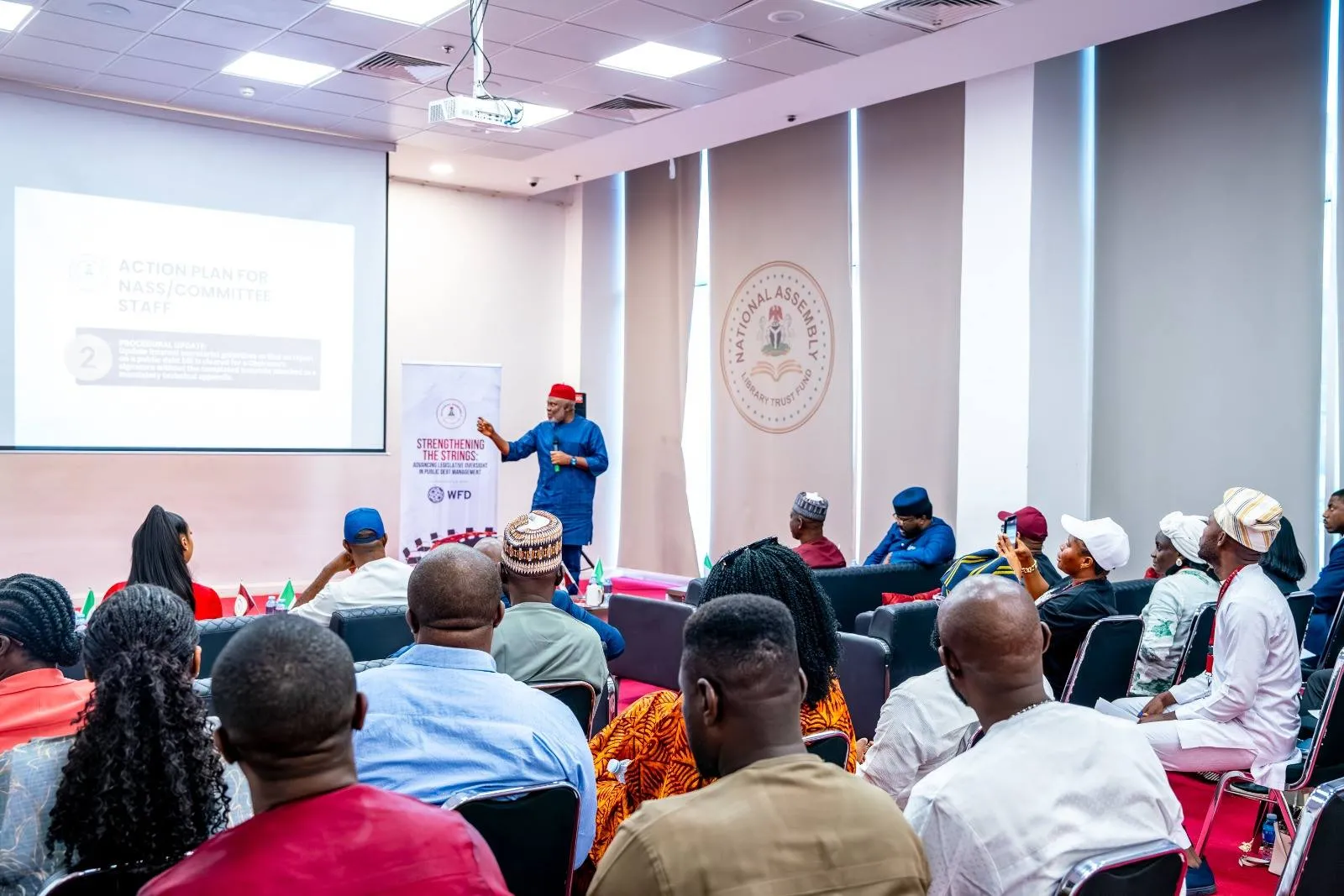
Featured Image: Public event at the National Assembly on Public Debt Management, Nigeria. Image credit: Westminster Foundation for Democracy. All rights reserved
By Dr Sarah Moulds (University of Adelaide and Vice-Chair of IPEN)
Leadership transitions provide an opportunity not only to look ahead, but also to reflect on the people whose vision, dedication and leadership have shaped an organisation’s success. As IPEN prepares for a new chapter, it is fitting that we pause to recognise the extraordinary contribution of our outgoing Chair and co-founder, Professor Cristina Leston-Bandeira, whose influence can be seen across every aspect of the network’s development and achievements.
I am thrilled (and slightly daunted by the very large shoes to fill!) to be elected as IPEN’s Vice Chair and, in accordance with IPEN’s governance arrangements, will assume the role of Chair in September 2026. More information about my vision for the future of IPEN is available on our website.
This transition also marks the end of an important chapter in IPEN’s history. Founded in 2020 as a collaboration between the Centre for Democratic Politics at the University of Leeds and the UK House of Commons Service, IPEN was established to create an international community focused on strengthening understanding and practice of parliamentary public engagement. From the outset, Cristina was a driving force behind this vision, helping to build a network that connected academics, parliamentary officials, engagement practitioners and democratic innovators in ways that had rarely been achieved before.
The International Parliament Engagement Network – a global network
Over the past six years, Cristina has guided IPEN from a promising idea into a thriving international network with a growing global membership and an increasingly influential voice in debates about parliamentary engagement and democratic renewal. Under her leadership, IPEN has expanded its reach across continents, developed a vibrant programme of events and knowledge exchange activities, and created valuable opportunities for collaboration between research and practice.
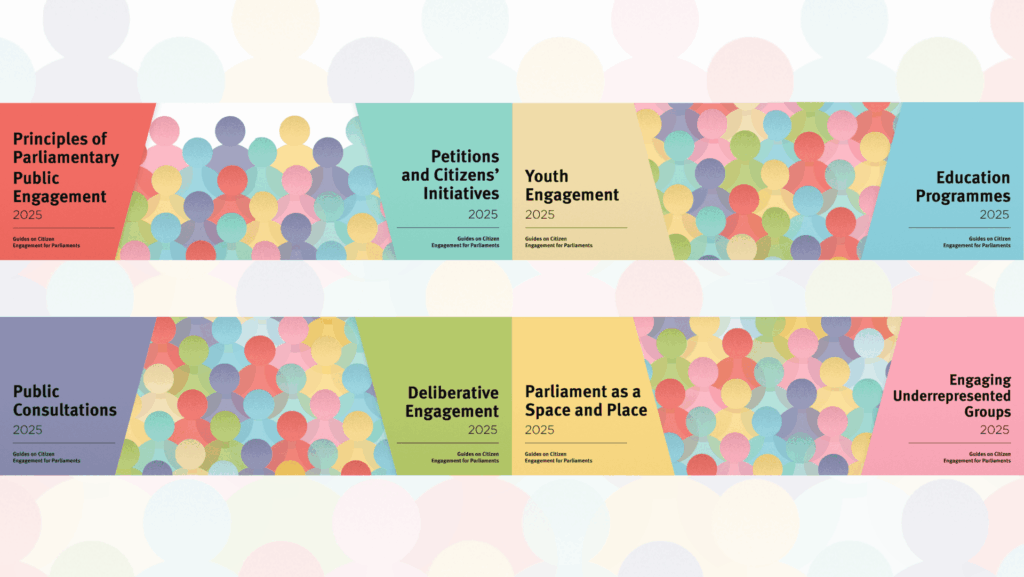
One of Cristina’s most significant achievements has been her commitment to ensuring that IPEN delivers practical resources that support parliaments around the world. A particularly notable example is the publication of IPEN’s Guides on Citizen Engagement for Parliaments, developed in partnership with Inter Pares (and funded by the European Union) which bring together international evidence, expertise and practical lessons to help legislatures strengthen their engagement with citizens. These guides exemplify Cristina’s long-standing belief that research should not simply analyse democratic institutions, but actively contribute to improving them.
Guides on Citizen Engagement for Parliaments – Design by ResearchRetold
Cristina has also played a central role in establishing and nurturing strategic partnerships that have enhanced IPEN’s international profile and impact. Between 2022 and 2025, IPEN co-hosted the Public Engagement Hub of the Inter-Parliamentary Union‘s Centre for Innovation in Parliament, creating an important global platform for sharing knowledge and best practice in parliamentary engagement. The Inter-Parliamentary Union remains a valued partner of the network, reflecting the strong relationships that Cristina helped to cultivate. More recently, IPEN welcomed the Westminster Foundation for Democracy as a key partner, opening new opportunities for collaboration and extending the network’s reach even further.
Beyond these tangible achievements, Cristina’s greatest legacy may be the culture she has built within IPEN. Members consistently speak of her generosity, enthusiasm and ability to bring people together around a shared purpose. Whether supporting early-career researchers, connecting practitioners across jurisdictions, or championing innovative ideas, Cristina has fostered a collaborative and inclusive community that has become one of IPEN’s defining strengths.
Cristina chairing IPEN’s first seminar ever, July 2020
Her influence extends beyond the network itself. As a leading scholar of parliamentary studies and public engagement, Cristina’s research and public-facing work have contributed to important conversations about the future of democratic institutions. The growing recognition of both her work and IPEN’s contributions, including references in discussions around parliamentary modernisation and democratic innovation, is testament to the impact of her leadership.
While Cristina is stepping down as Chair from September 2026, the foundations she has created will continue to shape IPEN for many years to come. The network’s growth, reputation, partnerships, practical resources and strong sense of community all reflect her vision and commitment. It is no exaggeration to say that IPEN would not be the organisation it is today without her leadership.
I would like to extend my deepest thanks to Cristina for her outstanding service, leadership and friendship. I look forward to the next chapter of IPEN’s journey, building on the remarkable foundations that Cristina has helped create.
Keep an eye out on Microsoft Teams and LinkedIn for information about how to continue to acknowledge and celebrate Cristina’s contribution.
By Conor Reale (Parliamentary Education Officer, Oireachtas) and Tara Kelly (Clerk of the Joint Committee on Education and Youth, Oireachtas)
Engaging young people in parliamentary democracy is a core priority for the Houses of the Oireachtas, and nowhere is this more evident than in the work of the Joint Committee on Education and Youth. In recent years, the Committee has developed a distinctive and meaningful approach to involving young people directly in parliamentary scrutiny, ensuring that their lived experiences and perspectives inform national policy discussions.
This spotlight highlights how the Education Committee embeds youth voice in its work, the principles guiding this approach, and the positive impact it has had on both Members and young participants. The practice is also referenced as an example of meaningful engagement in the IPEN Guide on Youth Engagement in Parliaments (p. 12).
Why Youth Engagement Matters
Education policy has a uniquely direct impact on young people’s daily lives. Decisions made in this space affect their learning environments, wellbeing, future opportunities, and sense of belonging in society. Recognising this, the Education Committee has embraced a core principle: those most affected by policy should have opportunities to share their experience with policymakers.
By opening its deliberations to students, learners, and youth organisations, the Committee aims to:
Bring lived experience into Parliamentary discourse
Model transparency and accessibility
Support civic literacy and participation
Enrich Members’ understanding of emerging issues in education
How the Committee Engages Young People
1. Inviting Young Experts to Committee Hearings
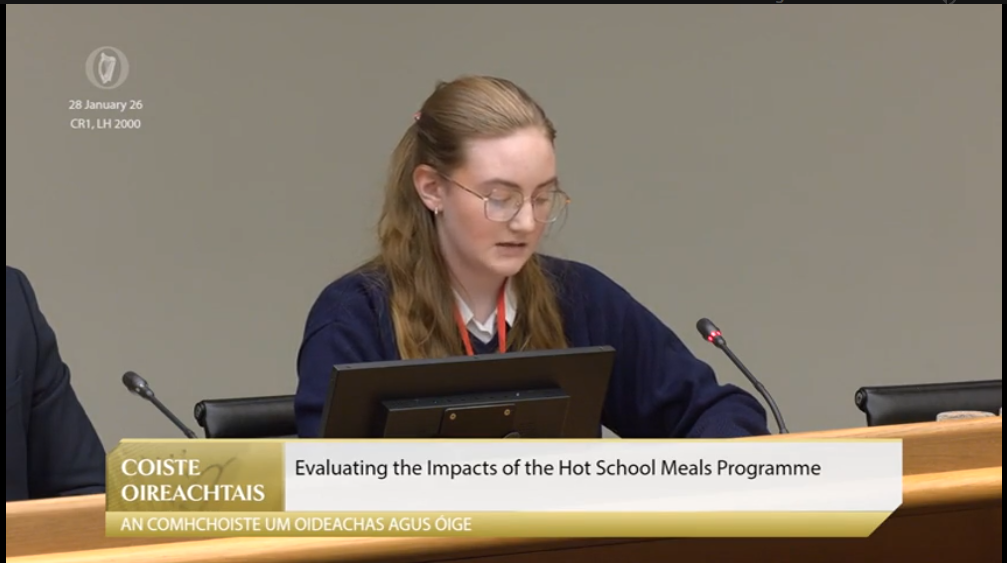
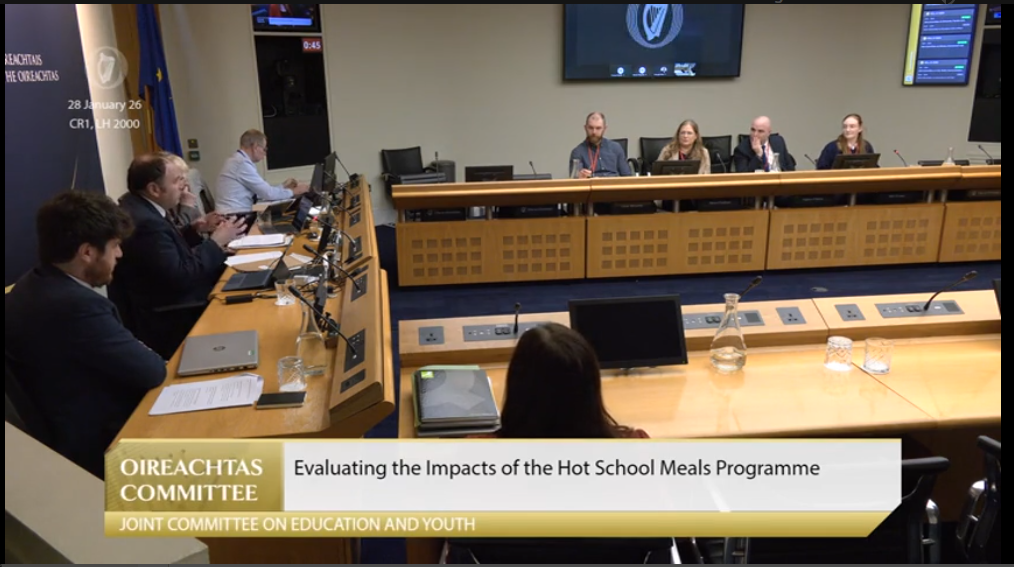
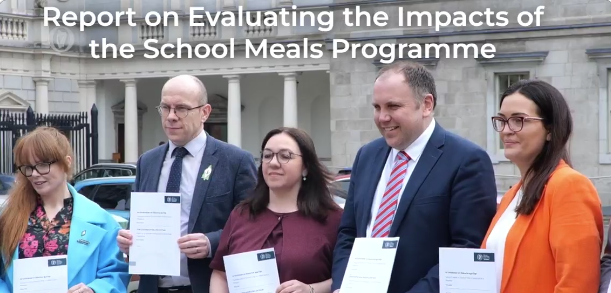
One of the most impactful approaches is the Committee’s practice of inviting young people to speak directly at public hearings. A recent example has seen young people presenting their views on the topic of Hot School Meals. These sessions follow the same format as any expert witness appearance, signalling that the Committee values youth input as evidence, not tokenism. Members frequently refer back to young people’s testimonies during debates, questions to Ministers, and report drafting, often including their recommendations. See for example the recent report on the provision of school meals: https://data.oireachtas.ie/ie/oireachtas/caighdeanOifigiul/2026/2026-03-26_report-on-evaluating-the-impacts-of-the-school-meals-programme_en.pdf
Overview of the Joint Committee on Education and Youth at the Oireachtas – Photo Credit: Houses of Oireachtas
2. Collaboration with Youth Organisations
The Committee works closely with organisations such the Irish Second-Level Students’ Union (ISSU), youth advocacy networks, and school communities. These partnerships help:
Identify young people interested in contributing
Ensure accessibility and safeguarding
Provide preparation and support
Amplify the outcomes of engagement
These relationships ensure young participants feel informed, prepared, and confident when stepping into the parliamentary environment.
3. Integrating Education Committee Engagement into Civic Education
Beyond the hearings themselves, the Committee’s youth engagement model reinforces broader Parliamentary education efforts. Teachers, youth workers, and students increasingly view Committee engagement as an extension of active learning: a real‑world opportunity to see democracy in action.
This aligns closely with the Oireachtas Education Programme’s goal of helping young people understand:
How laws are made
How Committees hold Government to account
How individuals and groups can participate in democracy
Launch of Report Evaluating the Impacts of the School Meals Programme – Photo credit: Houses of Oireachtas
What We’ve Learned
Across these engagements, several key lessons have emerged:
Young people are articulate, informed, and highly capable contributors to policy debate.
Preparation and support are essential for meaningful participation.
Committee members benefit from insights that may not surface through traditional submissions.
Youth engagement can reshape how parliaments think about evidence, expertise, and representation.
Perhaps most importantly, youth witnesses consistently express that they feel heard, respected, and valued—often citing the experience as transformative in shaping their confidence and sense of agency.
Looking Ahead
As parliaments worldwide explore new models for involving young people, the Education Committee’s approach demonstrates that authentic engagement is not only possible, but deeply enriching for legislative work. The Houses of the Oireachtas remain committed to evolving this practice, continuing to embed youth voice at the heart of Irish parliamentary democracy.
You can read more out about meaningful youth engagement by parliaments in the guide IPEN developed in partnership with Inter Pares: Guide on Youth Engagement. The Guide includes this case study from the Oireachtas plus others from around the world. The Guide is part of a series of eight different Guides on Citizen Engagement for Parliaments.
Date and time: Tuesday 22 September 14:00-15:00 GMT+1 / UK time; 15:00-16:00 CET
Speakers: Laurian Hubbard (Head of Engagement Services, Welsh Parliament); Laura Williams (Head of Communications, Welsh Parliament)
Chair: Cristina Leston-Bandeira (University of Leeds and Deputy Chair of IPEN)
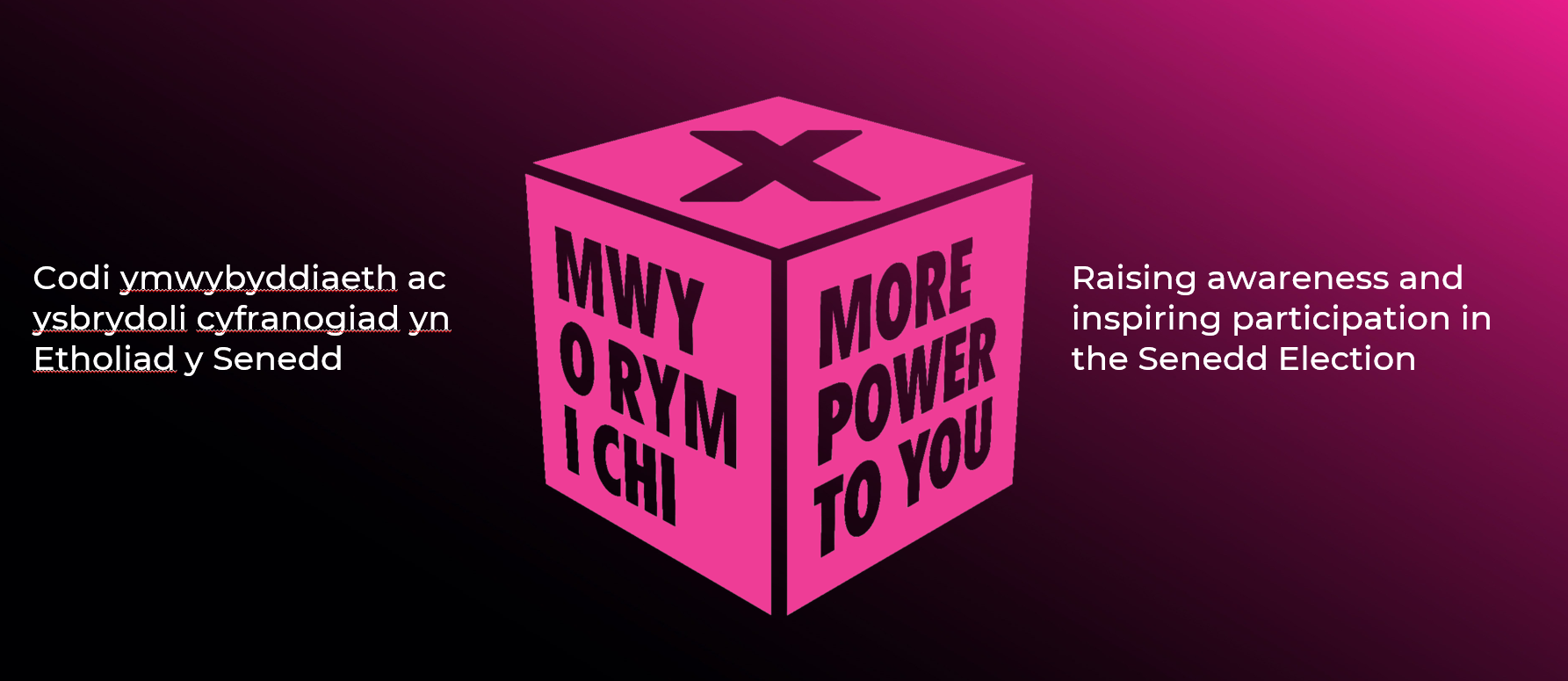
Details: This seminar will explore how the Senedd (Welsh Parliament) has developed a shared communications and engagement strategy to strengthen awareness, understanding and participation in Welsh democracy.
By bringing together communications and engagement expertise, the Senedd has adopted a more integrated approach to reaching and connecting with citizens across Wales, with a focus on making democratic participation more accessible, relevant and meaningful.
As an extension of this wider strategy, the seminar will examine the dynamic and innovative participation campaign delivered ahead of the May 2026 Senedd election. The presentation will explore how the campaign was developed and delivered, the impact of a joined-up communications and engagement approach, and the lessons learned.
The seminar will then open up for questions and comments from the audience, an opportunity to share practices from other parliaments.
by Alex Scales, Franklin De Vrieze, Halyna Shevchuk, Maria Mousmouti and Tetiana Feshchuk
Below, we share five lessons on parliamentary public engagement in post-legislative scrutiny (PLS), drawing on experience from Westminster Foundation for Democracy (WFD), the Verkhovna Rada of Ukraine and provincial assemblies in Nepal.
Globally, PLS is increasingly becoming part of how parliaments listen to citizens, learn about how laws work in practice, and act to improve legislative quality and oversight. Rather than focusing only on how laws are passed, PLS asks more grounded questions: What is the impact of this law, and is it working as intended, for whom, and why (or why not)?
Whilst there is no single blueprint for how parliaments undertake PLS (find different examples of practice here), effective public engagement is a cornerstone. When public engagement is deep and meaningful, it helps PLS inquiries generate the insights and ownership required to meaningfully inform legislative reforms or implementation. When public engagement is done poorly or not at all, PLS becomes a technical exercise, diminishing the voice of citizens and leading to perceptions that parliaments and law-making are disconnected from people’s lives.
Drawing on a recent WFD-IPEN webinar that discussed public engagement challenges in PLS, this blog distils five practical lessons for parliamentary public engagement practitioners, drawing on experience from Ukraine and Nepal. In Ukraine, the nature of parliamentary work is profoundly challenging as citizens’ attention is primarily focused on personal security and well-being; in Nepal, the remoteness of many regions limits accessibility, which is often exacerbated by climate threats. While the contexts differ, the challenges and trade-offs discussed will be familiar across many parliaments.
Lesson 1: Effective public engagement is a design challenge, not a technical one
One of the clearest lessons from both Ukraine and Nepal is that there is no “right” engagement model for PLS, since every public engagement approach involves trade‑offs. Online engagement can dramatically increase reach, but often privileges more connected or confident voices; in‑person engagement builds trust and legitimacy, but is resource‑intensive, time-consuming and reaches fewer people. Likewise, surveys can be a useful tool to gather public opinion efficiently, whereas field visits help generate understanding and context. Rather than seeing these tensions as problems to address, it’s important to view these as design trade-offs that public engagement officials will need to consciously manage.
To understand the real impact of legislation, it’s important that parliaments don’t try to maximise participation at all costs. Effective public engagement is more about aligning methods with purpose, context, resources and political realities, as outlined in the Guide on the Principles of Parliamentary Public Engagement, and a sharp awareness of how a balanced design can provide a relevant evidence base to support legislative reform.
Lesson 2: Structural constraints are not exceptions – they are operating environment
In Nepal, geography, infrastructure, seasonality, and political coordination shape where and how engagement can happen, or not. In Ukraine, war‑time conditions and martial law impose restrictions on movement, public access to parliament, electricity supply and working patterns. In both cases, these barriers represent ongoing challenges that need to be managed and taken into account when planning engagement activities.
Public engagement strategies that assume ideal conditions rarely survive first contact with reality. Instead, practitioners should adopt hybrid and adaptive approaches, combining online and in-person engagement with flexible timelines. Designing with constraints in mind and under active review has proved far more effective than trying to work around them later.
Lesson 3: Trust and relevance matter more than volume
It’s important to identify and mitigate key structural barriers to public participation, such as low trust in institutions and limited public awareness of laws. In some cases, PLS has functioned as a form of delayed consultation, offering people their first opportunity to comment on legislation already affecting their lives. It’s therefore essential that officials provide the right conditions for them to participate, which requires proactive and consistent communications, before, during and after any engagement that addresses structural barriers head-on. Outreach needs to be politically-informed, with particular attention to why systematically marginalised voices may be reluctant or unable to participate.
Our experience from Ukraine and Nepal reveals that when laws are perceived to be highly relevant to people’s daily priorities, engagement rises. In Ukraine, where people are understandably focused on personal security and wellbeing, PLS inquiries on labour and energy legislation saw steep rises in engagement levels. But the choice of topic alone doesn’t explain this shift. People were more willing to engage when they understood why they were being asked for input, how their views would be used, and what difference engagement might make, as outlined as best practice in the Guide on Engaging Underrepresented Groups. Transparency about purpose and limits helped manage expectations and sustain credibility in the short and longer term.
Additionally, in contexts where public trust in political institutions is under pressure, field visits can help counter perceptions that elected representatives are distant from everyday public concerns by creating visible opportunities for direct engagement.
Lesson 4: Having a clear purpose and question design are critical to promote participation
We’ve learnt that poorly designed questions risk driving weak engagement, often stemming from diffuse engagement priorities. Long questionnaires, legal language, excessive open‑ended questions, and one‑size‑fits‑all surveys tend to discourage participation. This is especially true in fragile or crisis‑affected settings, where public attention is naturally divided by other priorities.
By contrast, our experience suggests that participation improves markedly when practitioners:
Kept surveys short and realistic (around 10–15 minutes)
Used plain, accessible language
Limited open‑ended questions
Tailored questions to what specific stakeholder groups could meaningfully contribute
In Ukraine, carefully designed questionnaires helped committees gather tens of thousands of responses during wartime, while still producing usable insight. Therefore, treat establishing a clear inquiry purpose and a clear question design as a critical factor, core to good public engagement. This lesson, alongside others, is reflected in WFD’s PLS Manual for Parliaments: Parliamentary innovation through post-legislative scrutiny
Lesson 5: Public engagement builds credibility when it shapes learning and action
We’ve seen that effective public engagement changes how legislators think and act, not just what appears in committee reports. In Nepal, field engagement has influenced and supported Members of Provincial Assemblies to raise issues in the Assembly that extend beyond the immediate PLS inquiry, bringing in broader concerns encountered during these visits, including the everyday challenges faced by citizens. In Ukraine, public engagement activities (such as hearings on children’s and youth sports on 30th April 2024 and 16th October 2025) have helped to reshape committee perspectives by grounding discussions in how laws are working in practice, highlighting gaps in awareness, uneven implementation, and resource constraints, and informing committee recommendations and proposals to amend legislation.
These sorts of behavioural impacts often extend beyond the immediate inquiry. When engagement is designed as a learning process, rather than a data collection exercise, it strengthens PLS as a tool for adaptive oversight. Public engagement begins to build understanding, which supports legislators to see clearly how laws are experienced and inform action.
Institutionalising PLS through laws, committee work plans, rules, and procedures helps to protect this kind of responsive governance from political changes. However, it’s not enough to only formalise PLS in parliamentary business: PLS engagement must continue to demonstrate value to parliamentarians, staff, civil society, and citizens, or it risks becoming a tick‑box exercise. Credibility depends on relevance, transparency, and visible use of public input.
Summary
PLS is reshaping how parliaments relate to the public: by creating structured opportunities to listen, learn, and act on evidence and lived experience, parliaments are better placed to act in the public interest. For public engagement practitioners, the task is not to eliminate trade-offs, but to navigate them with purpose and design engagement activities that align with requirements, context and local realities. Together, this focus encourages the type of engagement and learning that leads to action.
Date and time: Tuesday 30 June, 10:00-11:00 GMT+1 / UK time; 11:00-12:00 CET
Speakers: Professor Laura Lundy (Queen’s University Belfast) and Marta Kuljon (European Commission).
Chair: Elise Uberoi (UK House of Commons Library and IPEN Executive Team)
Details: Many parliaments have programmes focusing on children’s education, and some have youth parliaments, but fewer have developed systematic ways to gather the views of children on policy issues and feed these into their debates, legislation and scrutiny work. This seminar is designed as an opportunity to think through the benefits of using children’s views better, as well as potential risks, and practical ways of engaging with children to get the most from these interactions.
Professor Lundy’s model of child participation has been adopted by national and international governments and organisations. This model offers a way of practically embedding children’s right to participate, focusing both on helping children to express their views, and ensuring these have an impact. Professor Lundy will introduce her model and highlight its relevance to parliaments.
Marta Kuljon will talk about her experience of working with Professor Lundy to embed this model in the processes of the EU Children’s Participation Platform set up by the European Commission. She will comment on how it works in practice, including any challenges and outcomes so far.
This will be followed by a Q&A.
The seminar will take place in IPEN’s MS Team. If you are a member of IPEN, you will receive a calendar invite for it.
By Elise Uberoi and Anne-Lise Harding, UK House of Commons Library
Misinformation is a critical challenge for modern democracies: it has the potential to damage the relationship between citizens and their parliament, undermining trust and democratic legitimacy. Improving these relationships between parliaments and their citizens is central to the activities of members of IPEN (International Parliament Engagement Network). Here, we consider how different parliaments have responded to the challenge of misinformation.
Data and methods
We submitted a request for information to the European Centre for Parliamentary Research and Documentation (ECPRD), asking parliaments if they see misinformation as a threat and why, how they address it, and how involved politicians have been in shaping these initiatives. We received responses from Austria, Estonia, the European Parliament, France, Georgia, Germany, Poland, and Portugal. We also asked IPEN members for their views and interviewed officials from the New Zealand and Irish Parliaments and the Canadian Library of Parliament.
We are keen to learn how other parliaments conceive and address misinformation, so please do get in touch if you have any thoughts. But for now, here is what we have found.
What is misinformation?
We use misinformation loosely here to capture intentionally spreading false information (disinformation), unintentionally spreading false information (misinformation), and information that misrepresents some truth to generate false inferences with malicious intent (malinformation). This is because intent can be difficult to establish, and because the effects of false information may be felt regardless of its intentionality.
How do parliaments understand the threat of misinformation?
Storm, Credit: texaus1, CC BY 2.0
The parliaments we heard from all agreed that misinformation poses a threat.
Some emphasised how misinformation entails security risks, notably when hostile foreign countries spread false information to manipulate parliamentarians and parliamentary staff, but also public opinion, to increase confusion and polarisation. This could undermine public trust in democratic institutions, influence voter behaviour and interfere with democratic processes, including reasoned, evidence-based debate and scrutiny (Estonia, European Parliament, France, Germany (Bundesrat)). The German Bundestag groups the security threat posed by disinformation with those posed by espionage, cyberattacks and sabotage.
The above also already points to a second way of thinking about misinformation, as an epistemic threat that can interfere with the need for political decision-making to be based on facts, and for political reporting to be factually accurate (Austria). Canadian officials noted how the advent of generative AI makes it harder to distinguish fact from fake, including for images and videos. Meanwhile, Oireachtas officials noted the historical link between partisan politics and misinformation, with misinformation previously spreading through face-to-face interactions.
The importance of facts for political decisions is well captured in this quote from a speech by the Speaker of the French National Assembly to the Speakers of the G7 Parliaments (September 2025): “Our duty, as legislators, is to give truth the means to defend itself. This is a condition for the survival of our parliamentary democracies.”
How do parliaments respond to misinformation?
Parliaments consider misinformation in committee activity and plenary debates, with particular attention to misinformation relating to elections. In many cases, responses to misinformation are delivered through government ministries and associated bodies.
For example, the Service de vigilance et protection contre les ingérences numériques étrangères (VIGINUM) in France aims to analyse foreign disinformation campaigns, and alert authorities and the public to these. In Germany, the Federal Ministry of the Interior hosts a working group and a task force that coordinate relevant activity across ministries. And in Ireland, there is a national counter disinformation strategy prepared and implemented under the auspices of the Department of Culture, Communication and Sport. Meanwhile in Austria, the parliamentary administration initiated relevant activities themselves, including a strong focus on providing accurate information and explaining the dangers of misinformation.
The main components of responses to misinformation in most parliaments were education and legislation, while some also emphasised correcting false information and cyber security measures.
Education
Parliaments highlighted that education plays a key role in countering misinformation. This includes educating MPs, parliamentary staff and the public about topical issues.
This is done by providing accurate and freely accessible information, written by experts and subject to proportionate quality assurance processes (Austria, France, Canadian Library of Parliament). This entails having robust research processes that assess methodologies and sources, to maintain accuracy and impartiality (Ireland). Having accurate information readily available, they hope, means misinformation is less likely to take hold.
Some parliaments also produce briefings and other resources on misinformation to help raise awareness of key issues (Austria, Estonia, Germany, Ireland).
Moreover, many parliaments provide training to MPs, their staff, and in some cases the public, on information literacy, helping them recognise the characteristics of false information, including deepfakes (Estonia, France, Georgia, Germany, Poland). Parliaments are also developing training and guidelines for their staff on the responsible use of AI (Canadian Library of Parliament, New Zealand).
In New Zealand, researchers responding to requests for information by parliamentarians include information on the methods and sources they use, effectively teaching their customers about the characteristics of good information. They present an overview of the facts, include alternative views and, when requested, trace the origins of false information.
Legislation
Parliaments have also introduced legislation to counter misinformation. This has mostly focused on regulating digital markets and the media.
The EU has introduced legislation covering various aspects of misinformation, including most significantly the Digital Services Act. This act aims to combat the viral spread of false content, including by requiring social media companies to offer transparency about their algorithms and requiring very large online platforms to develop some mitigations against key misinformation risks.
In France, the creation of deepfakes is banned, and media can be stopped from airing foreign propaganda. In Poland, regulation has focused on blocking access to illegal content.
Portugal has taken a more direct approach to legislating against misinformation. Individuals were granted protection from disinformation under the Portuguese Human Rights Charter in the Digital Era, with opportunities for redress through a regulator. However, following a Constitutional Court ruling, this act was amended to provide protection from disinformation to society, rather than individuals.
Some countries note how some forms of misinformation are covered by criminal law, for example the offence of foreign agents spreading false information with the aim of harming Poland or its allies in the Polish Penal Code (Poland), and more generally, libel and defamation offences (Poland, Georgia).
Corrections
Most parliaments do not actively monitor and correct misinformation. However, Austria and Estonia attempt to refute misinformation on the work of parliament and government in media and social media where possible. In France, the Sénat launched a website that dispels common myths about the senate and its senators.
Cyber security
In addition to training related to cyber security, some parliaments are taking steps to enhance their IT systems. For example, Austria is developing digital watermarks to avoid the use of their video archive for deepfakes. In Germany (Bundesrat), documents are only archived after they are signed so they cannot be manipulated. Poland is taking additional measures to protect parliamentary IT systems. Meanwhile in Ireland, the cyber security team is proactively providing information to staff through information and update emails and training.
Hoover Dam. Credit: Bureau of Reclamation, CC BY-SA 2.0
Conclusions
Parliaments recognise the threat misinformation poses to democracy and its processes. Their responses cover different dimensions, emphasising education, regulating digital communications, correcting false information and improving cyber security. These approaches aim to make it harder for false information to be created, spread and believed, and to provide reliable information to take its place.
Better information about parliaments should help citizens gain greater awareness of their roles and work, which is often seen as a first step towards greater engagement and participation. And it seems plausible that citizens who are knowledgeable and engaged would be less likely to believe false information about their parliaments.
Given this link between awareness and engagement, it is worth noting that none of the people we heard from in our study mentioned their parliaments’ wider public engagement work. It is this work that IPEN celebrates and promotes: the different ways parliaments try to help citizens understand what they are about, but also bringing the voices of their citizens into their processes, giving people opportunities to be heard, ensuring democracy is not only about evidence-based decision making but also about reflecting the views of the people. Parliaments’ public engagement activities and misinformation work overlap in aiming to build trust in parliamentary democracy and maintaining democratic legitimacy. Recognising this shared aim may help to further align and improve activities and outcomes.
IPEN hosted a seminar last month on the topic of politicisation of deliberative democracy initiatives. The seminar explored arguments around the institutionalisation and the politicisation of deliberative mini-publics, and the relationship between the two.
Our speakers, Professor Alice Moseley and Dr Lise Herman from Exeter University, showed that how the media portrayed the French and UK climate assemblies helped to frame the focus and nature of public discussion of their results.
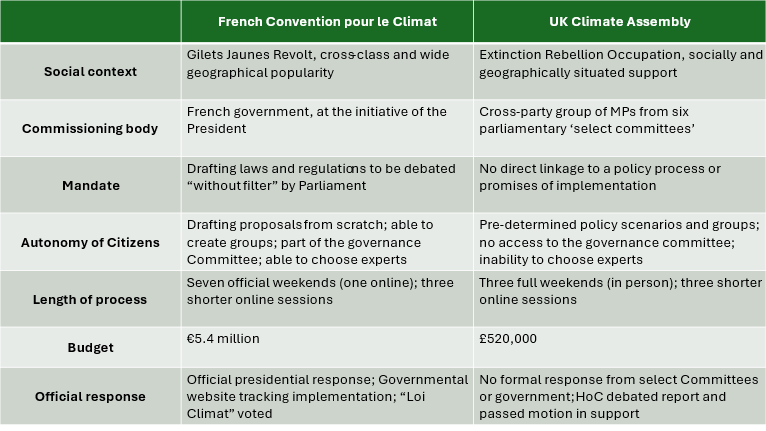
Alice and Lise set out different perspectives around the presentation of deliberative mini-publics (DMPs) as politicised processes. Whilst many commissioners of DMPs sought to frame them as apolitical, the presenters supported the view that politicisation – more public debate and contestation around DMPs – was actually crucial to increasing their effectiveness, not least in allowing the public to challenge existing policies and the status quo. They argued that oppositional media coverage was helpful to increasing public engagement and securing a bigger impact than they currently appeared to achieve. This under-achievement was partly due to their largely ad hoc, rather than institutionalised, nature. In comparing the French and UK climate-based citizens’ assemblies, the presenters set out the differences in media coverage in the context of the more political origins of the French Assembly – established by President Macron’s government – against those of the UK Climate Assembly, which was established by cross-party committees of Parliament.
The speakers summarised the key differences between the two assemblies in Table 1.
Table 1: Explaining differences in politicisation
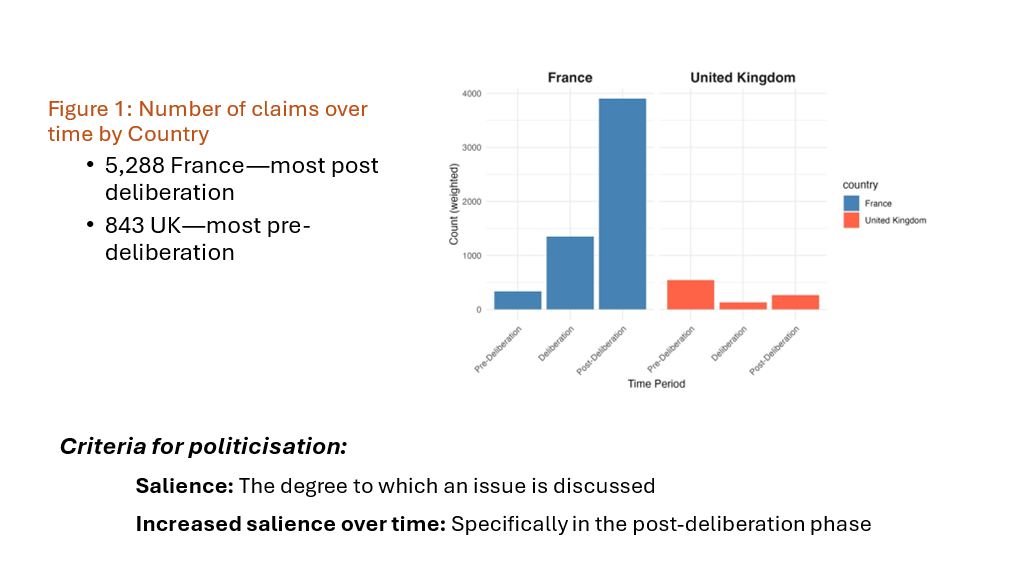
The seminar covered how politicisation was measured and set out how the French Assembly secured more engagement from political actors and more diverse media coverage. The more politicised coverage in the French media focussed more on impact, whilst the UK coverage tended to centre on the process itself.
Ultimately, they argued, if DMPs were properly institutionalised, through law or codification, debate could focus on outputs and citizens might secure more of an agenda-setting role in the choice of subject to be considered.
During a rich subsequent discussion, the importance of the commissioning body was emphasised: only the Government could provide the mandate which could link DMP outcomes to actual decision making. Full transparency with regard to how the outputs would be used was vital for both legitimacy and public confidence.
There was a good discussion around the use of the term “politicisation”, which had a slightly different nuance in a parliamentary than an academic context, but the overall sense was that public debate around DMPs was vital to increase their legitimacy, provided that this didn’t put greater institutionalisation at risk. The cross-party approach to institutionalisation in Scotland was mentioned.
Finally, there was discussion on how regulatory bodies may use DMPs for different purposes, such as evidence gathering, in order to bolster accountability. The seminar was chaired by Chris Shaw, member of the IPEN Executive Board and a clerk in the UK Parliament, and attended by 26 participants, from a range of countries and organisations.
Date and time: Wednesday 29 April 2026, 09.00-10.00 UK / GMT+1 ; 10.00-11.00 CET
Speakers: Maria Mousmouti (Associate Research Fellow, Sir William Dale Center for Legislative Studies, Institute of Advanced Legal Studies, University of London), Halyna Shevchuk (WFD Country Director, Ukraine), Dinesh Wagle (WFD Country Director, Nepal); Ukrainian parliamentary staffer (TBC).
Chair: Alex Scales (Evidence and Learning Manager, WFD)
Post‑legislative scrutiny (PLS) is the process by which parliaments review how a law is working in practice after it has been adopted, including whether it is being implemented as intended and whether it is achieving its policy objectives. Effective public engagement is a core part of PLS, helping parliaments understand lived experience, unintended consequences, and implementation gaps that may not be visible through formal reporting alone.
This seminar will explore two challenging but contrasting examples of public engagement within the PLS process, including in wartime Ukraine and across geographically remote provinces in Nepal. The panel will reflect on why PLS was prioritised in their context and what objectives public engagement was expected to serve. Our discussion will then explore the practical design choices, trade‑offs, and constraints that shaped public engagement in these contexts.
From Ukraine, the discussion will consider how PLS and public engagement have been pursued under conditions of war and martial law, including constraints on time, security, and participation, as well as the importance of maintaining parliamentary accountability and citizen trust during crisis. From Nepal, we will examine the challenges of engaging citizens in PLS processes across remote and hard‑to‑reach communities, where geography, infrastructure, and uneven access to technology shape who can participate and how.
This will be followed by a Q&A and further discussion on what makes for a credible and inclusive public engagement process within PLS. Together, we’ll try to identify what design choices support effective consultation, even in difficult operating environments.
More than 30 million people have signed at least one petition addressed to the UK Parliament, representing over a third of the country’s population. This figure illustrates the potential of electronic petition platforms to expand citizen participation in the parliamentary agenda.
This point was highlighted by Cristina Leston-Bandeira, Professor at the University of Leeds and Chair of the International Parliament Engagement Network, during the webinar “Right to petition: international experiences to revitalise citizen power in digital democracy”, organised by Political WatchSpain on 3 February. The event brought together specialists, institutional representatives, and international experts to discuss how the right to petition can be strengthened in the context of digital democracy.
During her intervention, Leston-Bandeira presented the UK Parliament’s e-petitions system, developed to link citizen petitions to parliamentary activity. As she explained, these tools have significantly broadened opportunities for citizen participation, although they also pose challenges in managing large volumes of petitions and ensuring that diverse groups of citizens engage in the participatory process.
The discussion took place alongside the presentation of a report by Miguel Ángel Gonzalo, Director of Documentation at the Congreso de los Diputados (Spain) and Professor at the Universidad Complutense de Madrid. According to Gonzalo, the main challenge is to connect citizen petitions with parliamentary decision-making, as otherwise “the right to petition becomes merely decorative”.
The data presented highlight the limitations of the current system in Spain. During the current legislature, the Congress of Deputies has received 386 citizen petitions, of which 380 were referred to other institutions without generating direct parliamentary consequences. In the Senate, 53% of petitions are archived outright. Moreover, the Congress Petitions Committee meets very infrequently—around one and a half hours per legislature—far less than other parliamentary committees.
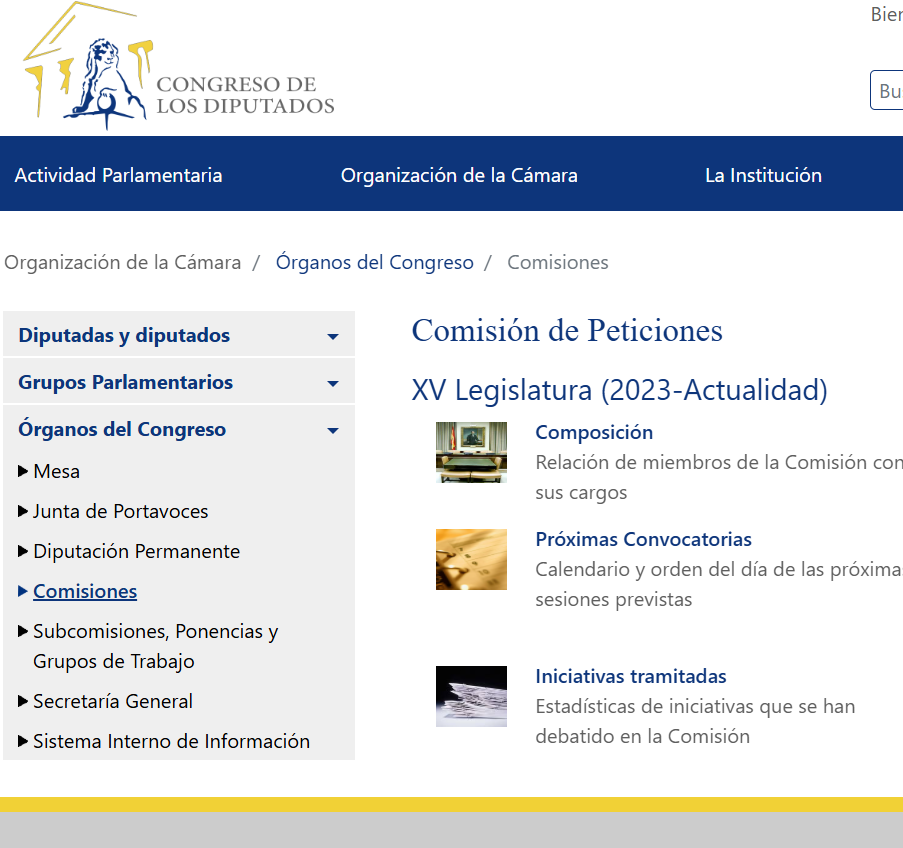
Website of the Petitions Committee of the Spanish Congress
The event also featured other international experts, including Maarja-Leena Saar, responsible for Estonia’s petition portal Rahvaalgatus.ee, who emphasised the importance of institutional independence in petition platforms to build public trust. Likewise, Alberto Alemanno, founder of The Good Lobby, warned of the persistence of an institutional culture that often resists translating citizen petitions into concrete action.
Among the main conclusions of the discussion was the need to modernise the Spanish petitions system through accessible digital tools, clear mechanisms of accountability and procedures that connect citizen demands with the parliamentary agenda. As participants noted, the success of petitions lies not solely in solving specific problems but also in their ability to bring neglected issues onto the public agenda and open spaces for democratic deliberation.