

Revitalising the right to petition in Spain: international lessons

Statue of a lion in front of the building of the Spanish Congress

More than 30 million people have signed at least one petition addressed to the UK Parliament, representing over a third of the country’s population. This figure illustrates the potential of electronic petition platforms to expand citizen participation in the parliamentary agenda. 

This point was highlighted by Cristina Leston-Bandeira, Professor at the University of Leeds and Chair of the International Parliament Engagement Network, during the webinar Right to petition: international experiences to revitalise citizen power in digital democracy, organised by Political Watch Spain on 3 February. The event brought together specialists, institutional representatives, and international experts to discuss how the right to petition can be strengthened in the context of digital democracy. 

During her intervention, Leston-Bandeira presented the UK Parliament’s e-petitions system, developed to link citizen petitions to parliamentary activity. As she explained, these tools have significantly broadened opportunities for citizen participation, although they also pose challenges in managing large volumes of petitions and ensuring that diverse groups of citizens engage in the participatory process. 

The discussion took place alongside the presentation of a report by Miguel Ángel Gonzalo, Director of Documentation at the Congreso de los Diputados (Spain) and Professor at the Universidad Complutense de Madrid. According to Gonzalo, the main challenge is to connect citizen petitions with parliamentary decision-making, as otherwise “the right to petition becomes merely decorative”. 

The data presented highlight the limitations of the current system in Spain. During the current legislature, the Congress of Deputies has received 386 citizen petitions, of which 380 were referred to other institutions without generating direct parliamentary consequences. In the Senate, 53% of petitions are archived outright. Moreover, the Congress Petitions Committee meets very infrequently—around one and a half hours per legislature—far less than other parliamentary committees. 
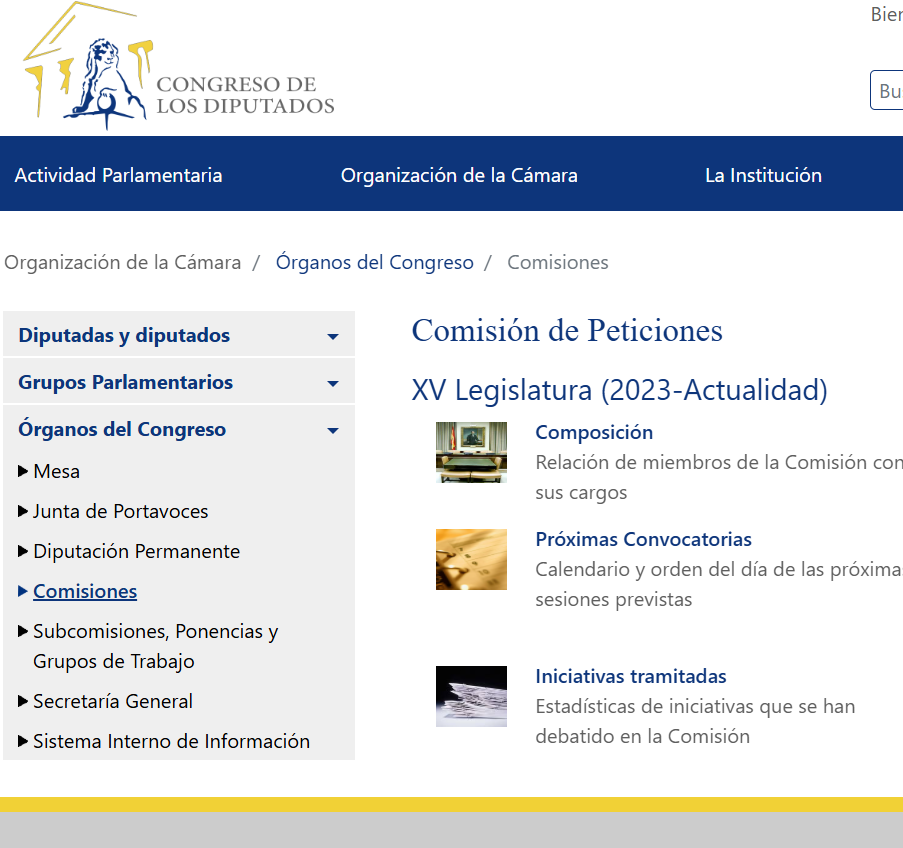
Print screen of the website for petitions at the Spanish Congress.
Website of the Petitions Committee of the Spanish Congress

The event also featured other international experts, including Maarja-Leena Saar, responsible for Estonia’s petition portal Rahvaalgatus.ee, who emphasised the importance of institutional independence in petition platforms to build public trust. Likewise, Alberto Alemanno, founder of The Good Lobby, warned of the persistence of an institutional culture that often resists translating citizen petitions into concrete action. 

Among the main conclusions of the discussion was the need to modernise the Spanish petitions system through accessible digital tools, clear mechanisms of accountability and procedures that connect citizen demands with the parliamentary agenda. As participants noted, the success of petitions lies not solely in solving specific problems but also in their ability to bring neglected issues onto the public agenda and open spaces for democratic deliberation. 

Image credit: By Epaminondas Pantulis – Flickr, CC BY 2.0, https://commons.wikimedia.org/w/index.php?curid=341871 
Connecting Communities to Petitions

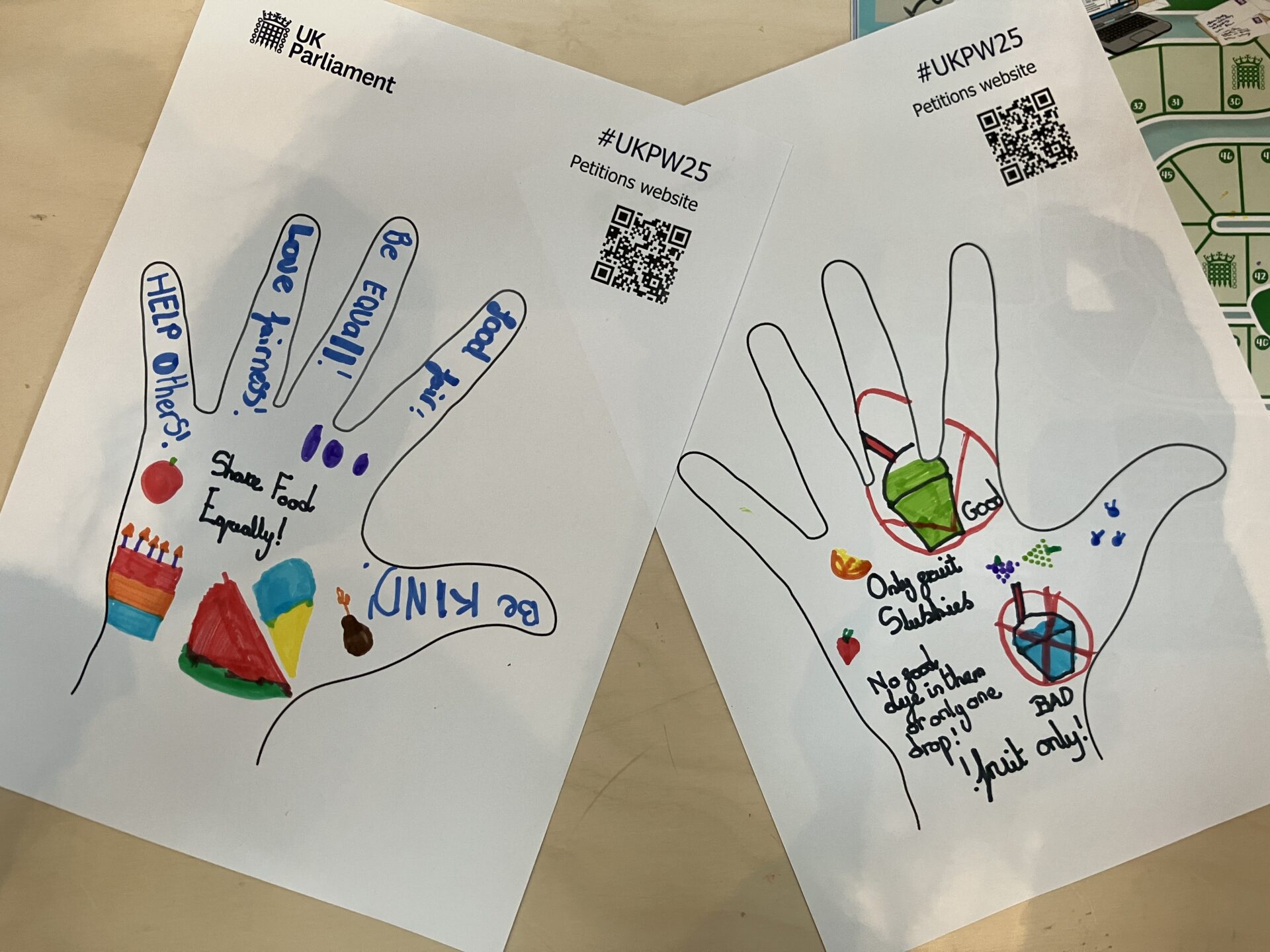
Two worksheets, each with the symbol of UK Parliament Week, and each with a large drawing of a hand which is coloured and commented on with ideas for petitions.

Over the past year, the UK Parliament has celebrated the 10 year anniversary of its e-petitions platform. As part of this, its Education and Engagement Outreach team developed a bespoke programme on e-petitions for its annual UK Parliament Week programme to better establish connections between communities and petitions.

UK Parliament Week 2025 with the Outreach Team

The UK Parliament runs an annual outreach programme every November, which lasts about a week. Known as the UK Parliament Week, it consists of a series of events and activities across the UK that connects people with Parliament and democracy.

For UK Parliament Week 2025, the Education and Engagement Outreach team delivered a bespoke programme exploring the Power of Petitions. The theme marked the 10‑year anniversary of e‑petitions, the digital tool that enables the public to raise issues with Parliament.

In response, the team focused on educating classrooms and communities about how petitions work and how they can break down barriers to participation.

Bespoke activities

For school and college assemblies, the team developed interactive quizzes exploring e‑petitions, their rules, and the role of signatories, using real‑life examples from the past decade and linking directly to the e‑petitions website.

They also created a card sort game inspired by historic petitions from the Parliamentary Archives, highlighting the long‑standing relationship between public voices and social change.

Worksheet listing photos and titles of historical and more recent petitions, with adjacent dates, and post stick notes
Using historical petitions to connect with petitions – Copyright UK Parliament

The final part of the programme featured a creative activity for workshops, SEND groups, and community organisations, through which participants illustrated their own petition ideas on an outline of their hand (see feature image). This encouraged creative self‑expression and reinforced the historic link between signatures and democratic participation.

Reaching audiences nationwide

In one week, the team reached 11,248 young people through 81 interactive school and college sessions. Beyond education settings, they engaged 239 community participants, working with organisations including The King’s Trust, Mencap, and the Third Age Trust to make petitioning Parliament accessible to all.

“It was great using the new Petitions resources during November as they brought a different focus to my sessions and really showed the groups I worked with how they could directly engage with Parliament in a meaningful way. Many of the groups signed petitions during the workshop and one even started to set their own up.”  – Rachael Dodgson, Outreach Officer for the North West

Screen in a classroom featuring a visual representation of Mr Blobby and a thumbs down, next to a sentence proposing for Mr Blobby to be crowned the next King of the UK. Standing in front of the photo is an outreach officer enthusiastically showing with his hands thumbs up and thumbs down.
Communicating about petitions through interactive quizzes – Copyright UK Parliament

Linking to research

These educational outreach activities align with Professor Leston‑Bandeira’s recommendations on reducing barriers to parliamentary engagement by “disseminating the value of petitioning to all citizens.” They also support deeper collaboration with classrooms and community networks nationwide, contributing to the development of a “citizen‑focused parliamentary petitions system” that helps communities to understand and engage with Parliament (Leston‑Bandeira, 2024).

Learn more

To learn more about where they went, what they delivered, and life as a UK Parliament Outreach Officer, explore the team’s visual story: Outreach’s Parliament Week 2025

Feature image: Using creative approaches to connect communities to petitions – Copyright UK Parliament