
IPEN in 2026: all change ahead

In 2026, IPEN is changing. The network has been growing and maturing, and this year will see some big changes.

Communications and events

We are sadly saying goodbye to one of our core team, Fiona Blair, as funding for the Communications and Events Coordinator role has come to an end. You will have seen Fiona sending our newsletters, organizing our seminars and developing our communications. She has helped IPEN grow from a small volunteer-led group of committed engagement enthusiasts into a burgeoning professional network that is widely recognized for its expertise.

Fiona will continue to be a member in IPEN, whilst moving into a Project Manager role for an arts-based research project that works with marginalised communities. Thank you to Fiona for all your hard work, and we wish you all the best in your next endeavours.

Without Fiona, IPEN will be moving back to being volunteer-led. This means fewer events and communications, but more opportunities for you to get involved. Activities will be delivered more directly by the IPEN Executive Team, partners (including the Westminster Foundation for Democracy) and IPEN members.

We need your ideas on anything IPEN, including topics to cover in seminars, speakers to hear from, funding opportunities and innovative practices to cover in our newsletter. And we’d love it if you could help deliver IPEN activities. Get in touch by email at [email protected] or via MS Teams.

IPEN Chair

This isn’t the only change we are expecting this year. After more than five extremely productive years, our brilliant Chair – Professor Cristina Leston-Bandeira – is preparing to stand down later in the year.

Under Cristina’s leadership, IPEN grew from an idea to an established reality. Her expertise, warmth, commitment and deep understanding of both research and practice have enlightened and inspired the IPEN community. We aim to honour her legacy with an event later in the year, where we will also celebrate the new Chair taking over. Cristina will remain in IPEN after this date in the role of Deputy Chair.

The IPEN Executive Team is in the process of electing a Vice Chair, who will be in place for 6 to 12 months, to learn the ropes before taking over as Chair later this year. We will let you know the outcome as soon as we can. Details about the election process as well as IPEN’s governance arrangements will be shared in MS Teams soon. If you are interested in joining the Executive Team, or would like to find out more about its work, do get in touch.

Image

Image by Murali nath from Pixabay

19 January 2026

IPEN joins forces with the Westminster Foundation for Democracy

This year, IPEN and the Westminster Foundation for Democracy will draw on our shared expertise to enhance collaboration, knowledge exchange, and good practice on public engagement with parliaments around the world.

Working in more than 50 countries and territories globally, Westminster Foundation for Democracy (WFD) is the UK public body dedicated to strengthening democracy around the world.

By combining WFD’s experience in democracy support with IPEN’s international network of parliamentary practitioners, we will co-develop a series of seminars and work together on future editions of the IPEN newsletter.

These initiatives will provide practical tools and foster global dialogue to help parliaments engage more effectively with all the people they serve and represent. Stronger public engagement leads to better representation, improved law-making and increased public trust – key ingredients in resilient and successful democracies.

For more information, please email [email protected].

19 January 2026

Five things about IPEN #1 – Public Engagement Toolkit

In this new series, we’re looking back over the past five years at some of the great things that have come about as a result of the network. First up is our Public Engagement Toolkit.

This resource came out of IPEN’s Public Engagement and its Impact on Parliaments conference, hosted online across different time zones on 20 March 2021.

60 participants attended an interactive session to explore principles and challenges of public engagement, with a view of establishing a toolkit on public engagement. The toolkit was co-designed at the session using visual thinking methods to draw out key themes. 

Hosted in the ‘resources’ section of the IPEN website, this collaborative toolkit includes a set of principles to guide effective public engagement practice by parliaments. 

The Public Engagement Toolkit is structured around three key questions:

  • What is public engagement?
  • What is effective engagement?
  • How do we evaluate public engagement?

Explore the Public Engagement Toolkit.

We’re interested to hear from you if you’ve used the toolkit – get in touch with us at [email protected] with any comments or feedback.

Image: IPEN’s Public Engagement Toolkit. Design by Nifty Fox.

Spotlight on academic research – Parliament and Public Engagement


A book chapter by IPEN members Cristina Leston-Bandeira (Chair of IPEN and University of Leeds), Emma McIntosh (UK House of Commons Service) and Ben Pearson (UK House of Commons Service) is featured in the second edition of Exploring Parliament (Oxford University Press).

Public engagement has become a key role for parliaments, as expectations for openness, accessibility and participation between elections have increased and the value of the public’s participation in parliamentary inquiries has been recognised.

This chapter explores how the UK Parliament performs this role. It shows how it has developed from generic education and public information services in the 1970s into a far more complex and targeted operation today.

The authors begin by outlining how this role has developed, identifying key milestones such as the creation of the e-petitions system. The authors then analyse parliament’s provision of information and education activities. They highlight the work of the Education Centre and the Outreach Team, followed by consultation and participation activities, which reviews select committee and chamber engagement, together with e-petitions.

The chapter concludes with an evaluation of the impact of public engagement and point to key challenges for the future, including reaching out beyond the so-called ‘usual suspects’. A case study demonstrates how public engagement with parliament can shape policy change, in this case in the area of menopause policy.

‘Parliament and Public Engagement’ by Cristina Leston-Bandeira, Emma McIntosh and Ben Pearson was published in the second edition of Exploring Parliament on 19 March 2025.

A copy of this chapter can be accessed by IPEN members in our MS Teams space.

Exploring Parliament (Second Edition) is a textbook providing an engaging and accessible introduction to the UK Parliament, Edited by IPEN members Cristina Leston-Bandeira, Alexandra Meakin and Louise Thompson. The book is available via the Oxford University Press website.

Find out about Exploring Parliament (Second Edition) in this article on the IPEN website.

Image

Engaging with the UK Parliament on policy. Photo by Cristina Leston-Bandeira.

19 January 2026

Spotlight on academic research – Spaces and Places at the UK Parliament

This month we’re putting the spotlight on another book chapter from the second edition of Exploring Parliament (Oxford University Press), a textbook providing an engaging and accessible introduction to the UK Parliament.

Co-authored by IPEN members Kate Anderson (UK House of Commons), Alexandra Meakin (University of Leeds) and Alex Prior (London South Bank University), ‘Spaces and Places in Parliament’ explores why parliamentary buildings are important and the evolution of the parliamentary estate at Westminster.

The chapter looks at how parliamentary buildings are used and by whom, and reflects on the future of parliamentary spaces and places.

The authors also discuss the plans to rebuild the Palace of Westminster – the Restoration and Renewal programme – in a case study exploring the question of accessibility in the UK Parliament.

‘Spaces and Places in Parliament’ by Kate Anderson, Alexandra Meakin and Alex Prior was published in the second edition of Exploring Parliament (Oxford University Press) on 19 March 2025.

A copy of this chapter can be accessed by IPEN members in our MS Teams space.

Exploring Parliament (Second Edition) is edited by Cristina Leston-Bandeira, Alexandra Meakin and Louise Thompson. The book is available via the Oxford University Press website.

Find out about Exploring Parliament (Second Edition) in this article on the IPEN website.

Image

UK Parliament, London, UK. Photo by Cristina Leston-Bandeira.

18 December 2025

Podcast – Deliberative Practices: A Path to Better Governance

A new podcast hosted by European Policy Institute (EPI) zooms in on the significance of citizen engagement in parliamentary processes.

In conversation with Ardita Vejseli, Professor Cristina Leston-Bandeira (University of Leeds and Chair of the International Parliament Engagement Network) discusses the need for deliberative practices to rebuild public trust and ensure that parliaments remain relevant in modern democracies.

Cristina outlines the importance of translating citizen recommendations into actionable policies, the effectiveness of various deliberative methods, and strategies for engaging underrepresented groups.

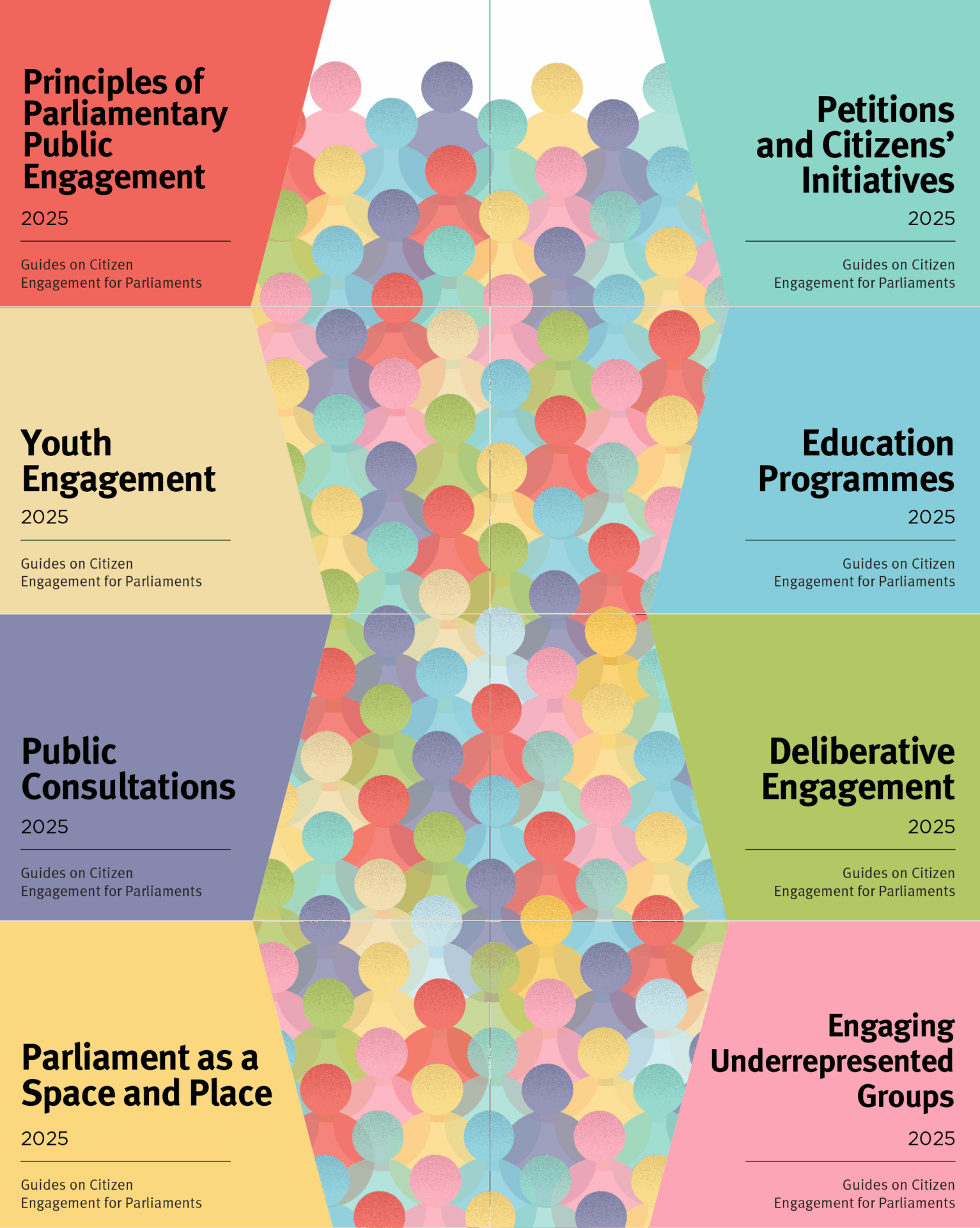
The podcast addresses issues of citizen engagement covered in the series of eight Guides on Citizen Engagement for Parliaments.

Listen to the podcast.

About the Guides

The Guides on Citizen Engagement for Parliaments were developed by Professor Cristina Leston-Bandeira and Juliet Ollard at the International Parliament Engagement Network (IPEN) in collaboration with INTER PARES | Parliaments in Partnership – the EU’s Global Project to Strengthen the Capacity of Parliaments (with the financial support of the European Union).

Find out more and access all eight Guides.

18 December 2025

Guest blog: Eight Ways Parliaments Can Rebuild Trust Through Citizen Engagement

This blog post by Jessica Benton Cooney (Senior Communications Consultant for Inter Pares) was originally published in Medium on 30 October 2025, and has been recreated here with permission.

Trust in democracy is declining worldwide, and parliaments — the essential link between citizens and state decision-making — are no exception. While citizen engagement is more critical than ever, practical, actionable guidance for how parliaments can effectively involve the public has been hard to find.

To meet this urgent challenge, International IDEA’s Inter Pares — Parliaments in Partnership project and the International Parliament Engagement Network (IPEN), with support from the European Union, co-created a series of eight interactive Guides on Citizen Engagement for Parliaments.

These guides are more than a resource; they are toolkits built on extensive global research, with the aim of shifting the focus from “citizens as spectators” to “citizens as active participants.” Recognizing that citizen engagement is core to democratic resilience, these guides offer a wide range of actionable, evidence-based frameworks for meaningful interaction, deliberation, and co-creation.

For members of parliament, parliamentary staff, civil-society and international development partners, and scholars, this suite provides a holistic roadmap for innovation, helping parliaments worldwide redefine their role in this challenging era. Read on to learn more about the guide series.

A Complete Toolkit for Citizen Engagement

Each of the eight guides tackles a vital dimension of engagement. Together, they form a comprehensive playbook for parliaments ready to reconnect with the people they serve.

Cover image for Guide on Principles of Parliamentary Public Engagement

1. Principles of Parliamentary Public Engagement

This foundational guide establishes the core framework for all engagement. It identifies and explains eight key principles — including purpose, inclusion, and impact — that ensure programs move beyond box-ticking to become ethical, strategic, and genuinely integrated into the DNA of legislative work.

“At the heart of the lack of engagement with parliaments is a growing lack of understanding how they are important in a functioning democracy. I’m excited how these guides tackle rebuilding this trust and how they show us to think smart about the use of our resources.” — Caroline Wallis, Research lead/Kaiarahi Tira Rangahau, Parliament of New Zealand

2. Youth Engagement

Essential for democracy’s future, this guide focuses on creating two-way, meaningful partnerships. It reviews models from youth reference groups and specialized committees to youth parliaments, aiming to empower young citizens as “agents of change” who contribute to political life and debate now, not just as future voters.

“The guide is timely for the National Assembly of Zambia, reinforcing its commitment to deepen public participation and ensure that the voices of the youths are not only heard but truly shape the future of the nation.” — Bridget Kalaba, Deputy Director, Parliamentary Reforms Department, National Assembly of Zambia.

3. Petitions and Citizens’ Initiatives

Learn how to transform formal citizen demands into constructive action. This guide provides practical steps for designing petitions and citizens’ initiatives systems that are accessible, transparent, and outcome-oriented, ensuring public concern can directly shape the legislative agenda and hold the institution accountable.

“The Citizen Engagement Guides offer fresh and practical insights that I can’t wait to share with my team at the Brazilian Senate. They’re a powerful tool to help us strengthen civic participation and rethink how we connect people to the legislative process.” — Alisson Bruno Dias de Queiroz, Coordinator of the e-Cidadania Program, Federal Senate of Brazil

4. Education Programmes

Moving beyond basic civics, this guide details how parliaments can develop high-quality, targeted programs to deepen public understanding of their work and relevance. Investing in these initiatives strengthens legitimacy and fosters a more informed citizenry equipped for participation.

“Supporting young people’s democratic participation is not just a right — it’s a smart investment in a sustainable democracy. The Education Programme Guide streamlines the organization of our 28-year long internship program for university students, helping us better engage youth and build a more resilient democratic society.” — Natália Švecová, Director of the Parliamentary Institute, Chancellery of The National Council of The Slovak Republic

5. Public Consultations

This resource is vital for ensuring decisions are informed by the needs of society. It presents four main consultation approaches — from online forums to discussion-based methods — and offers guidance for implementation, making consultations a strategic tool for improving the quality and legitimacy of legislation.

“Public consultations play an increasing role in contemporary parliaments. The Public Consultations Guide offers an invaluable toolkit for building positive and interactive relationships between citizens and parliamentary institutions. A lot of interesting and inspiring practices are showcased from several parliaments around the world. The Guide is an indispensable support for everybody committed to help parliaments to better represent and engage with citizens.” — Giovanni Rizzoni, the Head of Unit for Parliamentary Cooperation and Capacity Building at the Italian Chamber of Deputies.

6. Parliament as a Space and Place

This guide examines how the physical buildings and virtual platforms of parliament can be leveraged to foster connection. By making the institution more welcoming, accessible, and understandable through its spaces, within parliamentary estates and in communities, parliaments can build emotional attachment and a crucial sense of belonging among citizens.

“At the base of the German Bundestag (Parliament) Dome, the plenary chamber can be seen from above, so every visitor can watch into an ongoing plenary session… This symbolizes the awareness of and responsibility towards the population and the voters.” — Anna-Maria Pawliczek, Senior Officer, Division Int 4, International Exchange Programs, International Parliamentary Cooperation, German Bundestag

A special podcast featuring the Citizen Engagement Guide on Parliament as a Space and Place explores how design — from iconic buildings to mobile parliaments — can transform institutions into welcoming spaces of belonging and connection. Listen to it here.

7. Deliberative Engagement

Focused on quality over quantity, this guide explores methods like citizen assemblies and juries. It provides a framework for designing processes that bring diverse groups together for intensive, informed discussion, incorporating nuanced, evidence-based public input into complex policy areas.

“I’m really excited about the citizen engagement guides, especially the Guide on Deliberative Engagement, which is packed with practical insights on embedding public deliberation into parliamentary work — this is exactly what I aim to do in my work here at the Scottish Parliament.” — Alistair Stoddart, Senior Participation Specialist, Scottish Parliament

8. Engaging Underrepresented Groups

This guide provides frameworks for proactive inclusion, focusing on strategies to identify and overcome barriers faced by marginalized and seldom-heard communities. This commitment to deep inclusion is critical for fulfilling parliament’s role as a representative body that reflects the entire society.

“Inclusion is the cornerstone of sustainable development. In the true spirit of leaving no one behind, it is critical to facilitate the engagement of the underrepresented. Their voices matter. The guide on Engaging Underrepresented Groups is a practical and vital resource that will facilitate this important process.” — Kagiso Molatlhwa, Programme Specialist, Youth and Gender, UNFPA Botswana. Former Executive Director, Botswana Council of NGOs (BOCONGO)

Turning Engagement into Effective Governance

These guides represent a timely, well-grounded, and pragmatic toolkit for legislative institutions globally. They address critical worldwide democratic challenges and offer a new playbook for all parliaments, regardless of their size or resources. They are founded on the principle that the health of democratic society depends on the strength of the relationship between its institutions and its people. Citizen engagement is, therefore, not an optional reform, but the essential work of democracy itself.

Through embracing this framework, legislative bodies can move beyond simply restoring trust to become stronger, more legitimate, and better equipped to govern in an increasingly complex world.

For both practitioners and scholars, the series offers a rich resource to reflect on how engagement can be effectively shaped, measured, and embedded in parliamentary culture.

About the Guides

The guides were developed by Cristina Leston-Bandeira, Professor of Politics at the University of Leeds and Chair of IPEN, and Juliet Ollard, Senior Research and Engagement Officer, IPEN, in partnership with Inter Pares. The project team drew from extensive academic research and parliamentary practices from across the world — including many interviews with parliamentary officials and academics, and the expert advice of the International Advisory Group and the IPEN Executive Team.

About the blog post author

Jessica Benton Cooney is the Senior Communications Consultant for Inter Pares, which is funded by the European Union and implemented by International IDEA. Previously, she was the Team Lead and Senior Strategic Communications Specialist for USAID’s Bureau for Democracy, Human Rights, and Governance.

INTER PARES, an EU-funded project by International IDEA, strengthens parliaments’ legislative, oversight, budgetary, administrative and representative functions.

Read Jessica’s blog post on Medium (published on 30 October 2025).

Republished here on the IPEN website on 27 November 2025

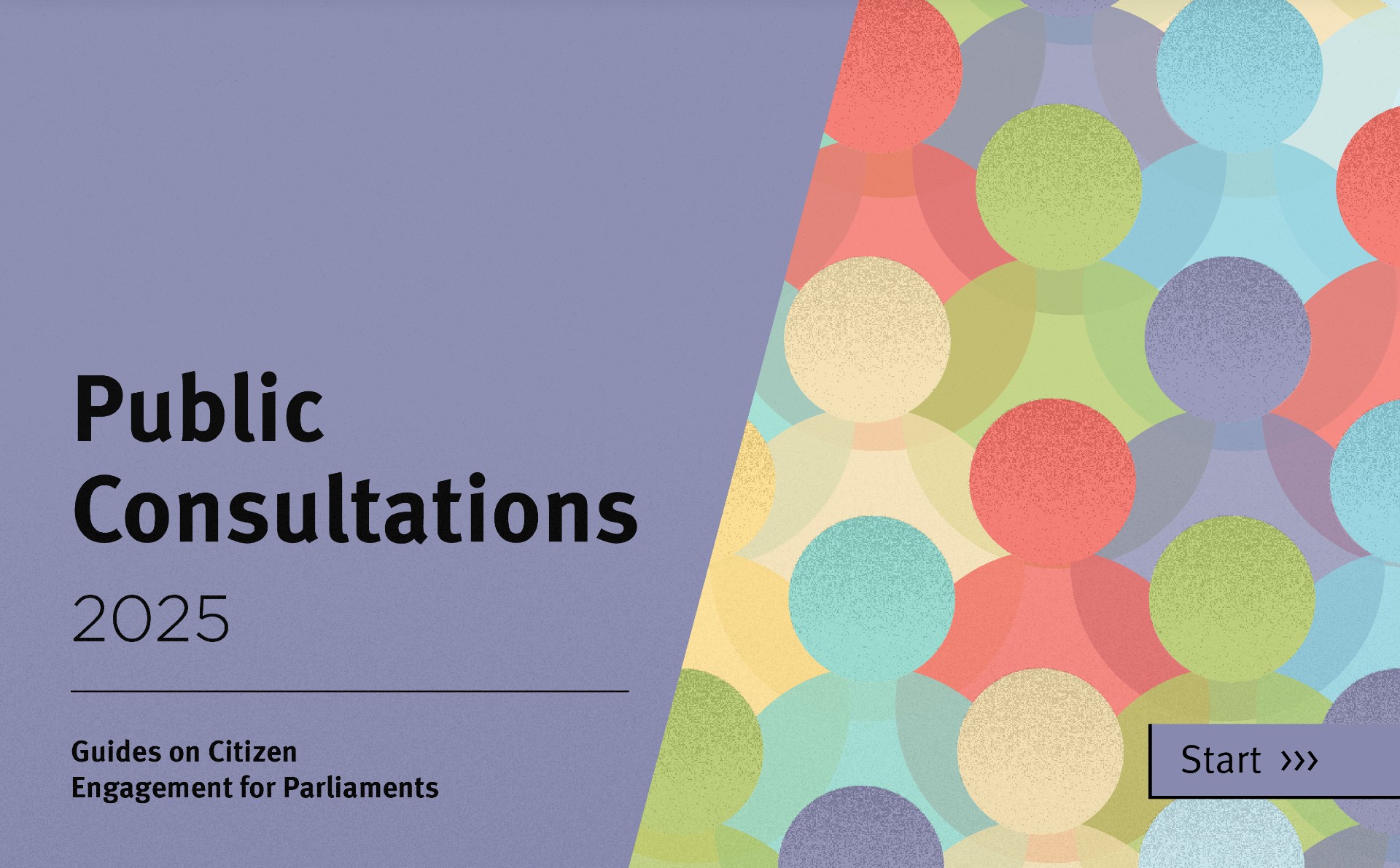
Guide on Public Consultations published

A new Guide on Public Consultations has been published – the last in a series of eight Guides on Citizen Engagement for Parliaments, created by the International Parliament Engagement Network in partnership with INTER PARES.

Public consultation is essential to ensuring that parliaments’ decisions meet the needs of the societies they represent.

In democracies, citizens have the right to a say on decisions that affect them. On a more instrumental level, citizens are also a vital source of information that can help to guide legislation and policymaking to better outcomes.

Public consultations can be carried out in many different ways and can be used to gather contributions from specific groups and communities as well as the ‘general public’.

Drawing from a wide range of examples from parliaments across the world, this Guide presents four main consultation approaches for Members of Parliament and staff to consider when thinking about how to consult members of the public in the course of their work.

Read the Guide on Public Consultations.

Giovanni Rizzoni (Head of Unit for Parliamentary Cooperation and Capacity Building at the Italian Chamber of Deputies) said:

“Public consultations play an increasing role in contemporary parliaments. The Public Consultations Guide offers an invaluable toolkit for building positive and interactive relationships between citizens and parliamentary institutions.

“A lot of interesting and inspiring practices are showcased from several parliaments around the world. The Guide is an indispensable support for everybody committed to help parliaments to better represent and engage with citizens.”

About the series

Published in August and launched on 11 November 2025, the Guide on Deliberative Engagement is the last in a new eight part series focusing on a range of public engagement topics to help build parliaments’ capacity to engage members of the public in their work.

The series as been created through a project collaboration between the International Parliament Engagement Network (IPEN) and INTER PARES. The Guides are produced with the financial support of the European Union as part of the INTER PARES I Parliaments in Partnership project, implemented by International IDEA.

The Guides have been developed by Cristina Leston-Bandeira (Professor of Politics at the University of Leeds and Chair of IPEN) and Juliet Ollard, (Senior Research and Engagement Officer, IPEN) in partnership with INTER PARES.

The project team have drawn from extensive academic research and parliamentary practice from across the world – including many interviews with parliamentary officials and academics, and the expert advice of our International Advisory Group and the IPEN Executive Team.

Explore the full suite of eight Guides on Citizen Engagement for Parliaments for actionable tips and inspiration to strengthen your parliament’s engagement with the public.

Image created by Research Retold

Deepening citizen connection through outreach at the Parliament of Ghana

by Enock Adomah

In this article, IPEN member Enock Adomah explores how the Parliament of Ghana continues to expand its reach and impact through its Department of Public Engagement.

Background to public engagement in Ghana

In 2021, the Parliament of Ghana’s vision to strengthen its relationship with citizens led to the creation of the Department of Public Engagement.

Established following a strategic decision by the Parliamentary Service Board, the Department represents a forward-looking reform aimed at enhancing efficiency and promoting inclusive service delivery within the Parliamentary Service.

The strategic direction behind its establishment was to optimise productivity and ensure focused public engagement.

Hon. Mohammed Issah Bataglia, Member of Parliament for Sissala East, in a group picture with staff of the Department of Public Engagement, Parliament of Ghana. Photo: Ghana Parliamentary Broadcasting Photography Team.

The Department of Public Engagement became fully operational in March 2023 and continues to expand its reach and impact. Its mandate is to promote public understanding of Parliament’s work, strengthen citizen participation, and build strategic partnerships with a wide range of stakeholders.

Through its initiatives, the Department facilitates impartial analysis of parliamentary discussions, promotes dialogue, and bridges the gap between Parliament and the public.

Outreach with the Traders Advocacy Group. Photo: Ghana Parliamentary Broadcasting Photography Team.

Expanding reach through the Outreach Unit

A major milestone in this journey was the establishment of the Outreach Unit on 3 March 2025.

This new Unit reflects Parliament’s renewed commitment to bringing governance closer to the people. As one of four dynamic units under the Department—alongside Visits & Tours, Education & Communication, and the Citizens’ Bureau—the Outreach Unit plays a vital role in deepening Parliament’s community presence.

Its core focus is to forge meaningful connections with diverse groups, ensuring that every segment of society feels represented and heard in the democratic process.

Since its establishment, the Unit has initiated targeted engagements with key interest groups and community institutions to better understand their concerns and perspectives on parliamentary and national issues.

Hon. Mohammed Issah Bataglia, Member of Parliament for Sissala East, with the Abossey Okai Spare Parts Dealers Association after the outreach program, alongside some participants. Photo: Ghana Parliamentary Broadcasting Photography Team.

Engagements with key groups

During August and September 2025, the Outreach Unit conducted engagement activities with various groups, including the Traders Advocacy Group in Accra, the Abossey Okai Spare Parts Dealers—one of the largest spare parts dealers in Accra—and the Mempong School of the Deaf.

The initiative is based on the concept of “Parliament on Wheels” and is referred to in the local Ga language as “Ayalolo”, which means “We are moving”.

The programme brings Parliament directly to the people, providing stakeholders with opportunities to learn about the parliamentary process, the role of Members of Parliament in lawmaking and oversight, and ways in which citizens can actively engage with governance.

Outreach with the Traders Advocacy Group. Photo: Ghana Parliamentary Broadcasting Photography Team.

Traders Advocacy Group

The Outreach Unit’s engagement with the Traders Advocacy Group at the Makola market offered a platform for market leaders and small business owners to share their views on economic policies, taxation and business regulations discussed in Parliament.

The interaction underscored the importance of Parliament’s role in shaping legislation that affects local trade and entrepreneurship.

Participants commended Parliament for opening its doors to traders and called for continuous dialogue to ensure that the voices of the informal sector are reflected in national policy decisions.

Outreach with the Traders Advocacy Group. Photo: Ghana Parliamentary Broadcasting Photography Team.

Abossey Okai Spare Parts Dealers

At Abossey Okai, one of Ghana’s largest automobile parts markets in Accra, the Outreach Unit met with members of the Spare Parts Dealers Association to discuss issues affecting the automotive trade, import duties and the sustainability of small businesses.

The dealers shared their expectations for more consultative policymaking and expressed appreciation for Parliament’s efforts to engage them directly.

The meeting highlighted how structured outreach can demystify parliamentary work and promote compliance with national laws through mutual understanding.

Staff of the Department of Public Engagement and the participants of the Abossey Okai Spare Parts Dealers. Photo: Ghana Parliamentary Broadcasting Photography Team.

Secondary Technical School for the Deaf – Mampong, Akuapem North

In a gesture that emphasised inclusion and accessibility, the Unit also engaged students and staff of the Secondary Technical School for the Deaf in Mampong, Akuapem North.

During the interaction, the team educated the students on how persons with disabilities can actively participate in the work of Parliament, including opportunities to engage in legislative processes, oversight functions and public consultations.

MP for Akuapem North Constituency, Hon. Samuel Awuku, and students of Mampong Senior High Technical School for the Deaf. Photo: Ghana Parliamentary Broadcasting Photography Team.

Sign language interpreters were employed throughout the session to ensure effective communication and meaningful participation by all attendees.

The engagement provided a platform for students to ask questions, interact with parliamentary staff, and gain insights into the structure, functions and relevance of Parliament in national development.

The visit inspired the students by demonstrating that their voices and contributions matter in governance. It reinforced Parliament’s commitment to ensuring that persons with disabilities are fully included in national decision-making processes.

Group picture with the teachers and students of Mampong Senior High Technical School for the Deaf at the forecourt of the Ghana Chamber Building. Photo: Ghana Parliamentary Broadcasting Photography Team.

Bridging parliament and the people

Through these outreach activities, the Department of Public Engagement continues to affirm its belief that democracy thrives when citizens are informed, involved and inspired. The engagements have not only broadened Parliament’s understanding of citizens’ concerns but have also deepened public trust and collaboration.

As the Department continues to develop, the creation of the Outreach Unit represents a major step forward—connecting Parliament and the people, one conversation at a time.

Leader of the Traders Advocacy Group presenting a policy document to the Director of the Department of Public Engagement, to be forwarded to the Committee on Trade for consideration in Parliament. Photo: Ghana Parliamentary Broadcasting Photography Team.

More information

Enock Adomah is Administrator for the Department of Public Engagement at the Parliament of Ghana.

Find out more about the Parliament of Ghana.

Further examples of the work of the Outreach Unit can be found in the new Guide on Engaging Underrepresented Groups, alongside other examples from around the world. This publication is one of a series of eight Guides on Citizen Engagement for Parliaments, developed by the International Parliament Engagement Network (IPEN) in partnership with Inter Pares I Parliaments in Partnership.

Feature image

Supt./Mrs. Effia Tenge (Retd), Director of the Department of Public Engagement, Ghana Parliament, engaging with the Traders Advocacy Group of Ghana (TAGG). Photo: Ghana Parliamentary Broadcasting Photography Team.

10 November 2025

Spotlight on academic research – Temitayo Odeyemi on democracy and public trust in Africa

An article on democracy and public trust in Africa by Dr Temitayo Odeyemi (Research fellow, University of Birmingham and member of the IPEN Executive Team) has been published in The Conversation.

Temitayo Odeyemi is a political scientist whose work in comparative politics focuses on political institutions and democratic engagement in Africa. His broader research builds on his PhD on institutional development and legislative public engagement in Nigeria.

In this article, Odeyemi cites pan-African research network Afrobarometer‘s Citizen Engagement, Citizen Power (released in July 2025) which reports that over 60% of Africans are dissatisfied with how democracy works in their countries. Temitayo says:

“Support for democracy remains high, but belief in its effectiveness is fading, especially when citizens feel excluded from meaningful participation in decisions that affect them.

“Put simply: the crisis of participation results from people being absent from the room when decisions that affect them are made. This article sets out practical ways parliaments can bring citizens in.”

“If parliaments legislate without the people, citizens will seek a voice elsewhere.”

Temitayo discusses how the Afrobarometer report shows that citizens are not turning away from democracy itself but are turning away from democratic institutions that don’t include them.

He illustrates the cost of disengagement with two recent examples in Kenya (where mass protests erupted after parliament passed controversial tax measures without adequate public consultation) and Nigeria (where lawmakers reinstated a colonial-era national anthem in a single day, bypassing public input).

Temitayo concludes that:

“Participation can reconnect citizens to democracy and restore trust in governance. But only if it is meaningful, sustained and inclusive.

“The events in Kenya and Nigeria demonstrate the risks of exclusion. If parliaments legislate without the people, citizens will seek a voice elsewhere – through protests, populist movements, or authoritarian alternatives.”

You can read Temitayo Odeyemi’s article – 60% of Africans don’t believe democracy is working in their interests – how parliaments can fix the problem – in The Conversation (published on 1 September 2025).

More information

Temitayo’s article has also been published in French – read it here.

A media interview with Temitayo Odeyemi hosted by Newzroom Africa TV in South Africa is available here on YouTube.

Hear more about Temitayo’s research in this interview with IPEN member Dr Beatriz Rey, published on 29 October in Modern Parliament (“ModParl”), a newsletter from POPVOX Foundation.

10 November 2025