Exploring the multifaceted identities of Politics and Society teachers in Ireland

by Conor Reale

In this article, IPEN member Conor Reale from the Houses of the Oireachtas (Irish Parliament) discusses his doctoral research into the complex role of teachers’ civic identity in Ireland, in addition to the layers of complex, complementary and contradictory voices which make up that identity.

Introduction

In the ever-evolving landscape of education, the role of teachers extends far beyond the confines of the classroom. For Politics and Society teachers in Ireland, this role is particularly complex, as they navigate the intricate interplay between their professional responsibilities and their personal beliefs about citizenship and civic engagement.

My recent doctoral research – titled ‘A Different Sameness’: Exploring the multifaceted identities of politics and society teachers in Ireland – delves into this fascinating dynamic, offering insights that are both reflective and practical.

The heart of the study

At its core, my research investigates how Politics and Society teachers perceive and enact their roles as civic actors. Situated within the interpretivist paradigm, the study employs phenomenological analysis and the Listening Guide method to explore the complex interplay between teachers’ professional roles and their personal beliefs about citizenship and civic engagement. This approach allowed me to capture the nuanced and multifaceted nature of civic identity among these educators.

Youth assembly in Ireland

The Listening Guide: A methodological approach

The Listening Guide, developed by Carol Gilligan and colleagues, is a qualitative research method that emphasises the importance of voice and relational context in understanding participants’ experiences. This method involves multiple “listenings” or readings of interview transcripts to uncover the layers of meaning within participants’ narratives. The process is designed to reveal the complexities and contradictions in how individuals construct their identities.

Step 1: Listening for the plot

The first step involves listening for the plot, where the researcher attends to the stories that participants share. This step focuses on identifying the main themes, emotional tones and narrative structures that define each participant’s account. By doing so, it sets the stage for deeper analysis.

Step 2: I-Poems and dialogical engagement

In the second step, the researcher constructs I-Poems by extracting all the “I” statements from the transcripts and organising them into stanzas. This technique highlights the participants’ voices and reveals their thoughts, desires, conflicts, and silences. The I-Poems provide a unique lens through which to understand the participants’ self-perceptions and internal dialogues.

Step 3: Contrapuntal voices

The third step involves listening for contrapuntal voices, where the researcher identifies the different voices within the narratives and examines how they interact. This step uncovers the tensions, harmonies, and dissonances in the participants’ stories, providing a richer understanding of their experiences.

Step 4: Synthesising multiple listenings

The final step involves synthesising the multiple listenings to create a comprehensive analysis of the data. This step integrates the insights gained from the previous steps and constructs a holistic narrative that captures the complexity of the participants’ civic identities.

Voices of civic identity

Through the Listening Guide, several distinct voices emerged in my research, each contributing to the multifaceted nature of civic identity among Politics and Society teachers: foundational, pedagogical, vulnerable and reflective voices.

Foundational voices represent the core beliefs, values, and experiences that form the foundation of teachers’ civic identities. They are deeply rooted in personal history, early educational influences, and the socio-political environments in which the teachers were raised. Foundational voices provide the initial framework through which teachers conceptualize democracy and citizenship.

Pedagogical voices reflect the methods, strategies, and pedagogical decisions that teachers employ to instil democratic values and civic responsibility in their students. These voices are characterised by a shift from personal introspection to professional action, where foundational beliefs are translated into classroom practices.

Vulnerable voices reveal the uncertainties, disillusionments, and conflicts that teachers experience in their professional roles. These voices highlight the challenges and tensions that arise as teachers navigate their civic identities within the constraints of institutional and societal expectations.

Reflective voices capture the ongoing process of self-examination and critical reflection that teachers engage in as they develop and refine their civic identities. These voices underscore the importance of continuous growth and adaptation in the teaching profession.

These voices are represented in the figure below.

Personal journeys and professional roles

One of the most compelling aspects of the study is the exploration of how personal experiences shape civic identity. Many teachers cited their family backgrounds, community involvement, and early political influences as pivotal in forming their civic identities. For instance, some participants spoke about the impact of their parents’ involvement in politics or community service, while others highlighted the role of community organisations in fostering a sense of volunteering and community engagement.

These personal experiences are not static; they evolve over time, influenced by life milestones such as leaving home, completing education, entering the workforce, and even acquiring housing. This dynamic nature of civic identity underscores the importance of continuous reflection and adaptation in the teaching profession.

The classroom as a civic space

In the classroom, Politics and Society teachers strive to empower their students by fostering critical thinking, encouraging student voice, and promoting active citizenship. This involves creating authentic learning opportunities and engaging students in community-based projects. Teachers aim to connect students with their communities, model civic engagement, and promote a sense of responsibility and agency.

However, this is not without its challenges. Teachers often face disillusionment with national politics, the marketisation of education, and discrepancies between school values and lived experiences. These challenges impact their professional and civic identities, highlighting the need for supportive school environments and reflective practices.

Reflective practice and continuous growth

Reflective practice emerged as a crucial element in the development of civic identity. Teachers’ civic identities are influenced by their experiences of class, both personally and professionally. Reflective practice helps teachers navigate these complexities and integrate their identities into their teaching. This continuous self-examination and negotiation of identity are essential for fostering democratic citizenship among students.

Looking ahead

The journey of exploring civic identity is ongoing, and there is much more to uncover. Future research could delve deeper into the long-term development of teachers’ civic identities, the intersectionality of teacher identities, and the impact of institutional policies on civic education. By continuing to explore these themes, we can better support educators in their roles as civic actors and enhance the effectiveness of civic education.

In conclusion, the multifaceted identities of Politics and Society teachers in Ireland offer a rich tapestry of insights into the interplay between personal beliefs and professional roles. By fostering reflective practices, promoting inclusive teaching, and supporting continuous growth, we can empower teachers to navigate the complexities of civic education and inspire the next generation of engaged and responsible citizens.

About the author

Conor Reale is the Parliamentary Education Officer for the Houses of the Oireachtas in Dublin. Previously a second level teacher Conor joined the Oireachtas in 2017 on secondment before moving into the role permanently in 2022.

Conor commenced his doctoral studies with Dublin City University in 2020 and completed his doctorate in 2024. This was the first study of its kind in Ireland and examined the development of civic identity in Politics and Society teachers. The research also introduced the Ériu conceptual framework as a way of understanding the multi faceted nature of this development.

Conor Reale’s doctoral thesis is available to read online at Dublin City University’s Research Repository, DORAS: ‘A Different Sameness’: Exploring the multifaceted identities of politics and society teachers in Ireland.

Images

1. Primary Teachers Summer Course 2025 exploring the role of student councils. Copyright Houses of the Oireachtas Service.
2. Participants from Politics In Action during a visit to Leinster House. Copyright Houses of the Oireachtas Service.
3. A speaker during a debate in a Committee Room as part of Dáil na nÓg or Youth Parliament. Copyright Houses of the Oireachtas Service/Maxwells Photography.
4. Delegates to the Youth Assembly inside the Dáil Chamber listening to Eric Ehigie, Longford, speaking. Copyright Houses of the Oireachtas Service/Maxwells Photography.
5. Diagram representing the Voices of Civic Identity as expressed by Politics and Society Teachers in Ireland (Reale, 2024).
6. Delegates taking part in a workshop during Dáil na nÓg. Copyright Houses of the Oireachtas Service/Maxwells Photography.
7. Primary Teachers Summer Course 2024 exploring the role of student councils. Copyright Houses of the Oireachtas Service.
8. Primary Teachers Summer Course 2024 exploring the role of student councils. Copyright Houses of the Oireachtas Service.
9. Taoiseach Simon Harris T.D speaking to delegates during Dáil na nÓg. Photo CC BY 2.0.

Article published on 30 July 2025
Guide on Petitions and Citizens’ Initiatives published

Cover for Guide on Petitions and Citizens' Engagement

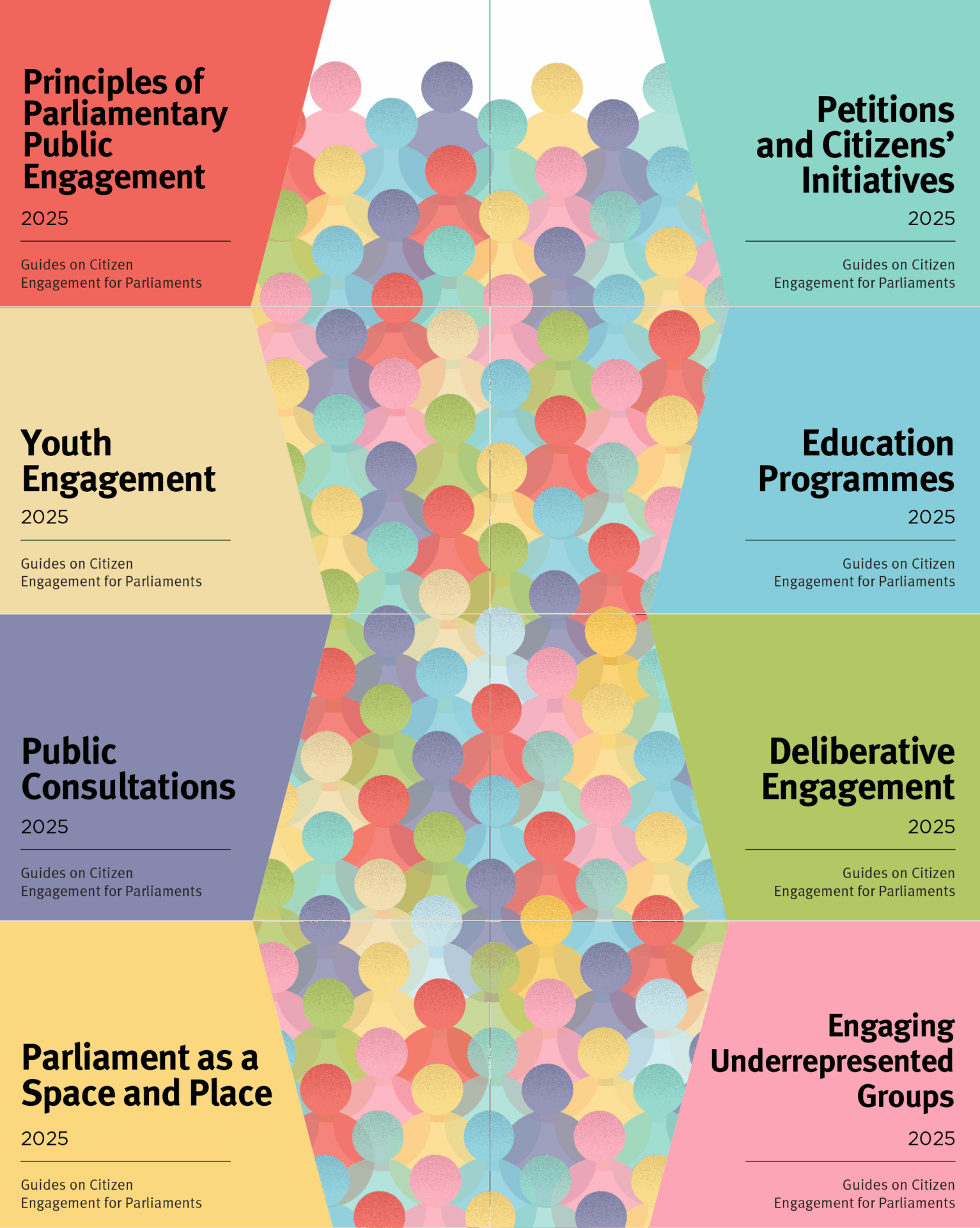
The second in a new series of Guides on Citizen Engagement for Parliaments was published on 15 July.

Petitions and citizens’ initiatives (CIs) are the most prevalent participation tools offered by parliaments. They provide a formal mechanism for citizens to raise issues directly to decision-makers in parliament and government and they can enhance participation in democracy.

This new Guide to Petitions and Citizens’ Initiatives provides an overview of the wide range of systems that exist across parliaments and identifies key questions to help parliaments consider which type of system best suits their context.

We review the purpose of petitions and CI systems, their benefits and challenges, the type of impact they can have on citizens and parliamentary decisions.

This Guide is therefore for parliamentary officials and Members of Parliament (MPs) who want to understand how to improve or implement a petitions or citizens’ initiatives system in their own context.

Read the Guide on Petitions and Citizens’ Initiatives.

About the series

Published on 15 July 2025, the Guide on Petitions and Citizens’ Initiatives is the second in a new eight part series focusing on a range of public engagement topics to help build parliaments’ capacity to engage members of the public in their work.

The series is being created through a project collaboration between the International Parliament Engagement Network (IPEN) and INTER PARES. They are produced with the financial support of the European Union as part of the INTER PARES I Parliaments in Partnership project, implemented by International IDEA.

The Guides have been developed by Cristina Leston-Bandeira (Professor of Politics at the University of Leeds and Chair of IPEN) and Juliet Ollard, (Senior Research and Engagement Officer, IPEN) in partnership with INTER PARES.

The project team have drawn from extensive academic research and parliamentary practice from across the world – including many interviews with parliamentary officials and academics, and the expert advice of our International Advisory Group and the IPEN Executive Team.

A further six Guides will be published over the coming months.

Explore the full suite of eight Guides on Citizen Engagement for Parliaments for actionable tips and inspiration to strengthen your parliament’s engagement with the public.

Image created by Research Retold

Guide on Principles of Parliamentary Public Engagement published

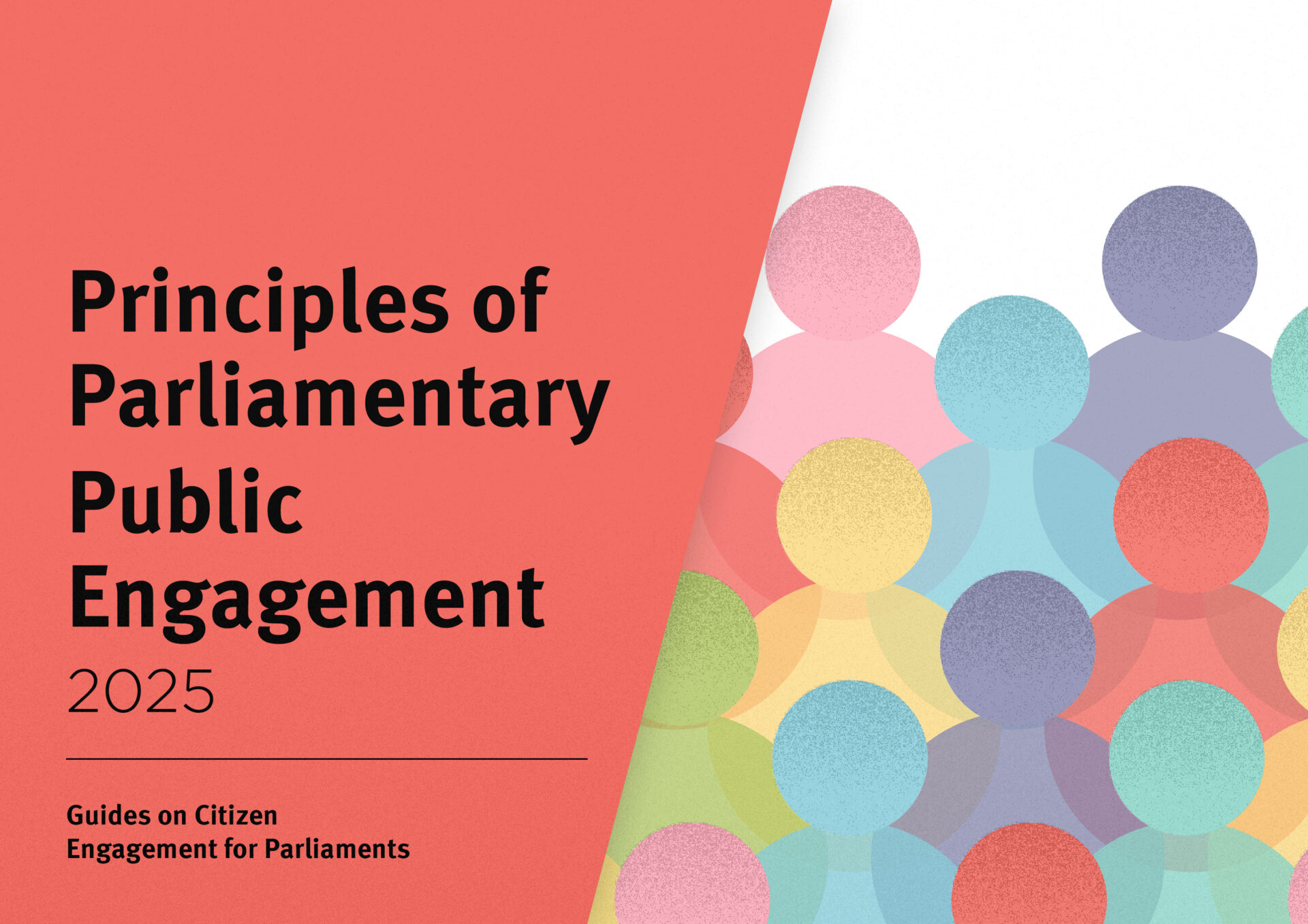
Cover image for Guide on Principles of Parliamentary Public Engagement

The first in a new series of Guides on Citizen Engagement for Parliaments was published on 30 June.

There is an increasing understanding among parliaments that their relationship with citizens needs to go beyond the ballot box. With trust in institutional politics declining around the world, public engagement is an essential tool for safeguarding parliamentary democracy into the future.

Public engagement includes many different types of activities, from education about parliamentary processes to participation in parliamentary business.

In this new Guide on Principles of Parliamentary Public Engagement – created by the International Parliament Engagement Network in partnership with INTER PARES | Parliaments in Partnership – we take a step back and consider the core principles that should drive public engagement activities in general.

The Guide identifies eight parliamentary public engagement principles:

  • Purpose
  • Inclusion
  • Openness and transparency
  • Collaboration and empowerment
  • Ethical standards
  • Planning and resourcing
  • Integration and coordination
  • Impact and evaluation

Examples from a wide range of countries and political systems – with different levels of resources, including older, newer, larger and smaller parliaments – are showcased to illustrate each principle.

Read the Guide on Principles of Parliamentary Public Engagement.

About the series

Published on 30 June 2025, the Guide on Principles of Public Engagement is the first in a new eight part series focusing on a range of public engagement topics to help build parliaments’ capacity to engage members of the public in their work.

The series is being created through a project collaboration between the International Parliament Engagement Network (IPEN) and INTER PARES. They are produced with the financial support of the European Union as part of the INTER PARES I Parliaments in Partnership project, implemented by International IDEA.

The Guides have been developed by Cristina Leston-Bandeira (Professor of Politics at the University of Leeds and Chair of IPEN) and Juliet Ollard, (Senior Research and Engagement Officer, IPEN) in partnership with INTER PARES.

The project team have drawn from extensive academic research and parliamentary practice from across the world – including many interviews with parliamentary officials and academics, and the expert advice of our International Advisory Group and the IPEN Executive Team.

A further seven Guides will be published over the coming months.

Explore the full suite of eight Guides on Citizen Engagement for Parliaments for actionable tips and inspiration to strengthen your parliament’s engagement with the public.

Image created by Research Retold

‘A lovely place they’ve found’: Crafting belonging at the Scottish Parliament

Images of craft materials on a purple background

By Robert Atler and Adrianne Harte

In this article, IPEN members Robert Atler (Visitor Services Manager) and Adrianne Harte (Visitor Services Officer) at the Scottish Parliament explain how Crafternoons – a roster of different craft activities linked to the work of the Scottish Parliament that runs every Saturday – developed out of a desire to connect with local communities and help make the Scottish Parliament an everyday part of life for those in Scotland.

Introduction

The Visitor Services team at the Scottish Parliament delivers a wide range of functions throughout the year—from guided tours and educational talks to managing public access to parliamentary business.

In recent years, we’ve been exploring new ways to connect with our local communities and develop services that make the Parliament a more welcoming and inclusive space for our closest neighbours. Among these initiatives, our craft activities have become a cornerstone of community engagement, offering creative and meaningful ways for visitors to interact with the Parliament.

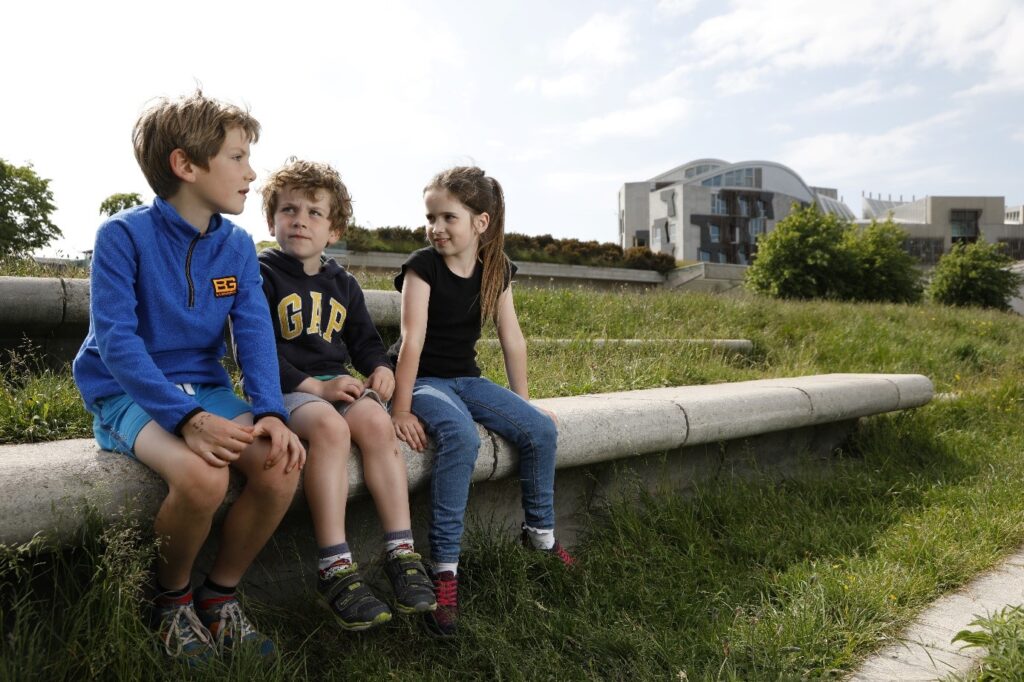
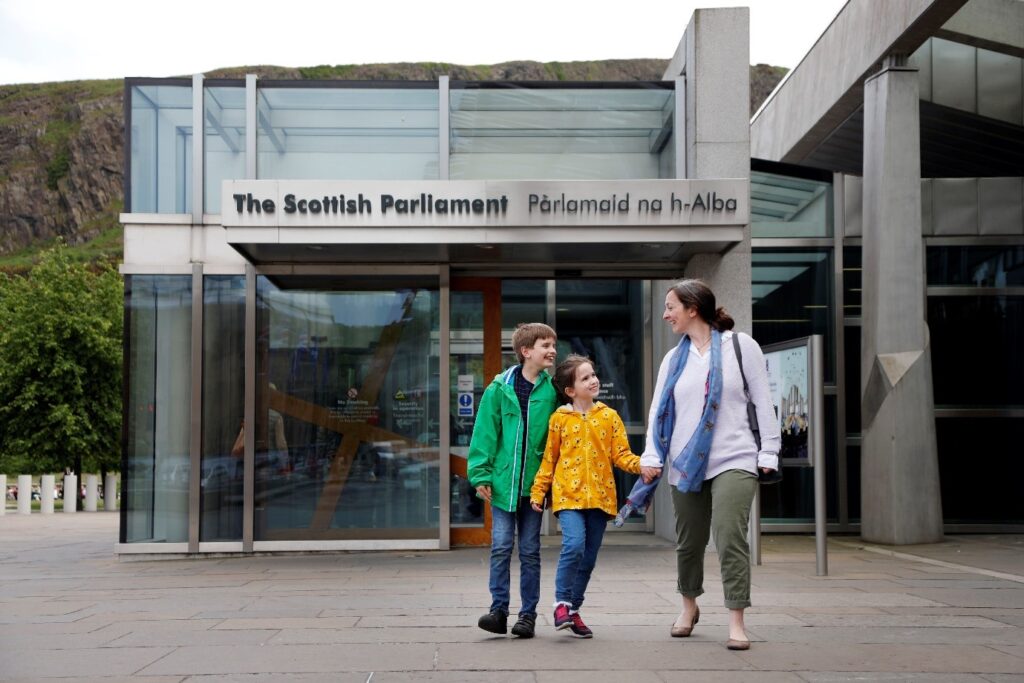
Three children sitting on a wall with the Scottish Parliament in the background

Can we do something like this?

This one question started a chain reaction that we could never have anticipated. Well one of us did anticipate it, and that is where this all begins.

During the February recess in 2024 the Visitor Services team at the Scottish Parliament visited The Burrell Collection in Glasgow. A wonderful experience to say the least, but one part of the experience stood out. In the main hall a table had been set up with crafts, swarmed with enthusiastic children, and even more enthusiastic members of Visitor Services.

I caught up with my colleague Adrianne, busily working away on a valentine’s card and asked, “Can we do something like this?”. Her response was a wry smile and an emphatic “yes”.

After the fact this interaction slipped my mind, little did I realise the chain reaction that had started.

The next time that Adrianne and I spoke on the matter, she had produced an extensive series of resources with over fifty parliamentary themed craft concepts that brought the idea of craft and parliament together.

Adrianne had spoken to visitors and connected with visitor attractions across Edinburgh who were already delivering similar programmes to ensure these activities would meet the accepted best-practice standards. Every question I raised was met with a carefully thought-out response, every challenge countered, until at the end I was left with one notion. We could do this. We had a plan, but we needed a chance to trial it.

Craftivity

The Debating Chamber is the heart of the visitor experience and visitors come from all over the world to get the chance to experience this unique and outstanding architectural wonder.

Learning that your star attraction is going to be closed for seven days is never the highlight of anyone’s calendar, but on this occasion, it was an opportunity. We took this chance, and trialled a week of “Craftivity”, a mix of crafts and craft-adjacent activities. We surveyed every attendee and the feedback was unanimous; this was a wonderful experience.

Based on this feedback, we refined our offer and in December, we went live with a weekly craft offering aimed at families and young people, or “Crafternoon”. The feedback from attendees was overwhelmingly positive and we went from thinking ‘is this something we could do’, to ‘how can we take this further’.

We continued to invest and survey. By March 2025 we had added additional resources and new activities, and pushed ourselves further than we had previously with any other engagement activity. So when I was asked about investing in a laser cutter to create further resources – including a smaller model parliament – what would have been historically a “no”, became the more pleasantly curious, “Maybe”.

Every craft we have delivered has been based on the work that occurs in the parliament, the history and culture of Scotland, and explicit requests from visitors. Indeed, we have included new activities, such as our Duplo blocks, as a direct response to this feedback. Our offer, which was initially limited to Saturdays, has now expanded to include parliament recess periods and school holidays.

We ended up welcoming over five hundred people to Crafternoons during the Easter break of 2025 – a mix of families with young children and travellers looking for free experiences – and most importantly, we were seeing return visits from people in our community. I’m reminded of a letter that was sent to the last governor of Queensberry House when it was a care home (now part of the parliament complex) that talked about how it had served the community and one line has always stayed with me, “they all vote, that’s a lovely place they’ve found”.

Our commitment to creating a resource for people to come in, and enjoy parliament, to understand that this is a place where they are welcome and wanted is all part of us aiming to meet this important legacy and hoping that they all leave thinking “that’s a lovely place they’ve found”.

A bumpy road

This is not to say that there have been no challenges.

The launch of Crafternoons initially drew thirty-seven people, mostly families who had wandered into the building and happened to see there was something going on, total across four sessions in its first month. This modest success felt like a failure in the face of our ambition. There was doubt within our team that it would be a sustainable offer long-term.

The target demographics for Crafternoons had no idea it existed. The solution was an inter-departmental effort with our Parliament Communications team. Through a mix of sustained social media advertising, listings in local ‘what’s on’ websites and utilising trusted sources of information for the Edinburgh area for parents, it really resonated with local families and younger people looking for something relaxed to do on a weekend, and our numbers steadily started to grow.

Along with a growing network of word-of-mouth recommendations we now average forty visitors a session, mostly local families, and some curious tourists.

As much as this project began with an idea in one person’s head, its success is due to a willingness to collaborate not only within our team, but with others in the organisation and the community we are trying to serve.

By keeping community and collaboration at the heart of this project, we have found an eager and enthusiastic audience who have discovered that they are not only allowed to be in the parliament but explicitly wanted there.

This project helps normalise the Scottish Parliament as part of daily life in Scotland. We are very excited to see how this project will continue.

About the author and Visitor Services at the Scottish Parliament

Robert Atler is the Manager of Visitor Services at the Scottish Parliament and co-founder of the Parliament’s craft activities initiative, alongside Adrianne Harte, the creative lead and fellow member of the Visitor Services team.

With extensive experience in the wider tourism sector, both Robert and Adrianne bring a wealth of knowledge and creativity to their roles. Together, they have developed innovative and engaging ways to connect visitors with the work and spirit of the Scottish Parliament.

Find out more about Crafternoons at the Scottish Parliament.

Images

Photos © Scottish Parliament Corporate Body (SPCB).
Crafternoons poster and image courtesy of the Scottish Parliament.

Article published: 27 June 2025

Spotlight on academic research – Going Viral: Managing Inquiries with Thousands of Submissions and Substantial Public Interest

Green spotlight

A paper by IPEN members Stephen Fujiwara, Jessie Halligan and Kara McKee from the Parliament of New South Wales, Australia, has been published in the Australasian Parliamentary Review.

The article investigates the challenges faced by New South Wales Legislative Council committees undertaking inquiries with significant public interest.

It examines the logistical hurdles associated with receiving, reviewing and considering thousands of submissions, managing heightened public and media expectations, and the strain placed on small secretariat teams with limited resources.

To illustrate these challenges, Fujiwara, Halligan and McKee review three case studies: the inquiries into the provisions of the Reproductive Health Care Reform Bill 2019, the Voluntary Assisted Dying Bill 2021, and the inquiry into birth trauma.

The article also outlines resource constraints, strategies for enhancing efficiency and some potential solutions, along with recommendations for process improvements to handle high interest inquiries more effectively.

‘Going Viral: Managing Inquiries with Thousands of Submissions and Substantial Public Interest’  by Stephen Fujiwara, Jessie Halligan and Kara McKee was published in the Australasian Parliamentary Review, Volume 40, Issue 1 in May 2025.

The article can be found here via open access.

Stephen, Jessie and Kara also discussed their experiences of managing parliamentary inquiries with thousands of submissions and substantial public interest at an IPEN seminar on 22 May 2025.

Image

Photo by Pixabay

Article published: 27 June 2025

Chair of IPEN awarded Political Studies Association Sir Isaiah Berlin Prize

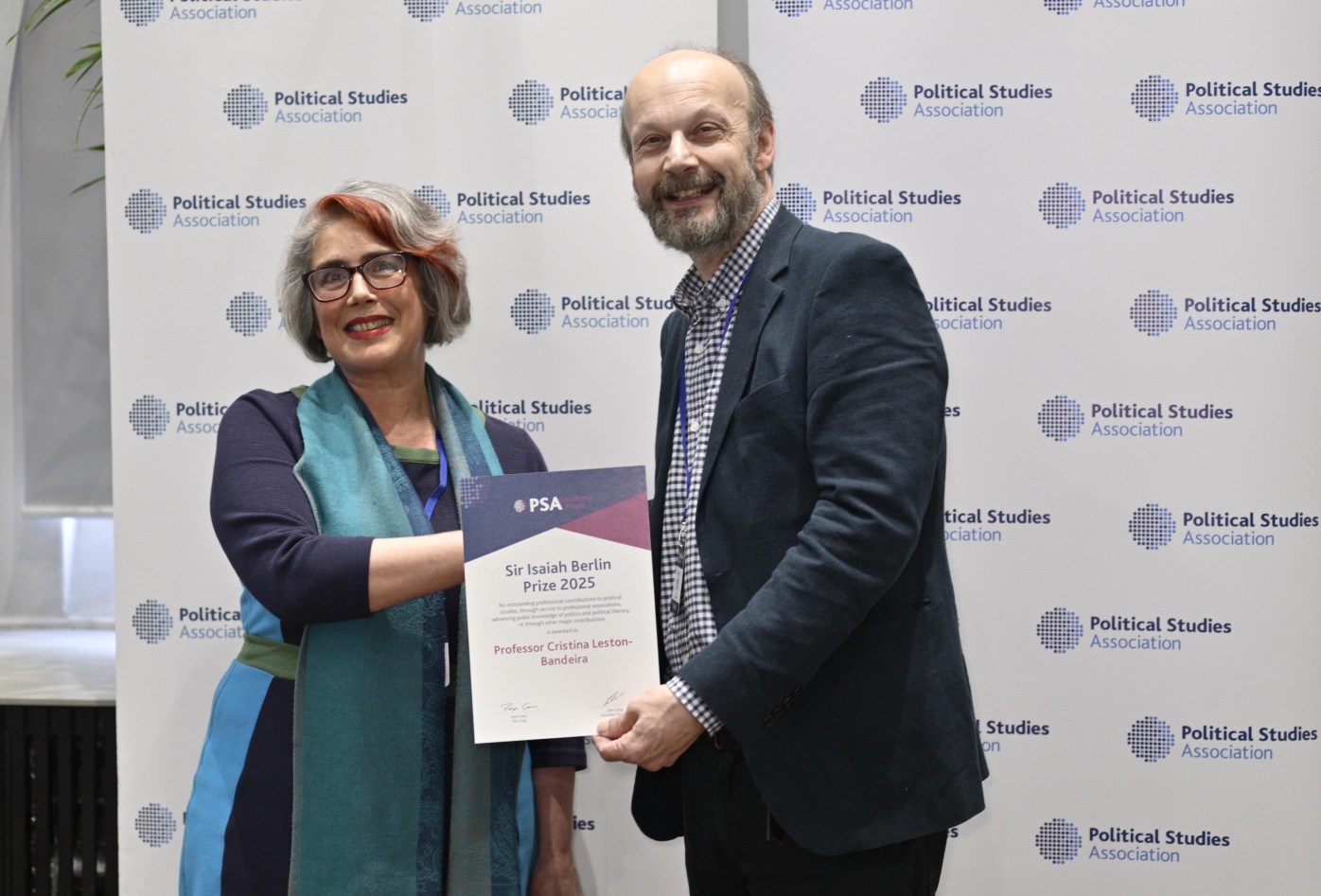
Cristina Leston-Bandeira – Professor of Politics at the University of Leeds and Chair of IPEN – has been awarded the Sir Isaiah Berlin Prize 2025 ‘for outstanding professional contributions to political studies’ by the Political Studies Association (PSA).

Founded in 1950, the PSA is a professional association that aims ‘to promote the development of political studies and to encourage education and the advancement of learning in the art and science of government’.

Cristina was recognised for being ‘instrumental in promoting the relationship between parliaments and citizens’ and for ‘her pioneering work on symbolic representation and public engagement’ which has ‘profoundly shaped the subfield of parliamentary and legislative research in the UK and beyond’.

Her work on parliamentary studies and her role as Chair of the International Parliament Engagement Network have particularly helped to advance ‘public knowledge of politics and political literacy’.

Cristina was presented with this year’s Sir Isaiah Berlin Prize at an awards ceremony at the PSA’s 75th Anniversary Annual International Conference in Birmingham, UK, on Monday 14 April.

Image

Cristina Leston-Bandeira receiving the Sir Isaiah Berlin Prize at the PSA’s 75th Anniversary Annual International Conference in Birmingham, UK, on Monday 14 April.

Article published: 26 June 2025

Spotlight on public engagement practice – E-Cidadania uses AI to tag citizen responses in hearings in Brazil

Spotlight

This month we’re putting a spotlight on how interactivity has been enhanced on the Portal e-Cidadania (e-Citizenship Portal) at the Senado Federal (Brazil) with the use of Artificial Intelligence (AI).

The e-Citizenship Program is co-ordinated by IPEN Executive Team member, Alisson Bruno Dias de Queiroz at the Senado Federal. Created in 2012, the portal provides a platform for citizens to propose new ideas for legislation and participate in public hearings. This information is then processed for Senators to consider.

During a recent parliamentary recess, the Portal improved the visualization of citizen participation in interactive events — usually public hearings — held by the Senate over the last eleven years. Now, even questions from citizens answered indirectly during past events are identified and marked in the video of the event.

Servers, outsourced workers and commissioners were involved in the endeavor to use AI to analyze more than 1,800 events held between 2013 and 2024. The scanning of more than 23,000 participations generated a result of more than 2,700 questions identified as answered indirectly.


Alisson Bruno said:

“Questions that are read during the event and answered directly are already marked in the video, at the time they are read or answered. When there are no questions read, so that the event does not go blank, we started this process of marking indirect answers using AI last year.

“With the campaign, we also cover older events, but since it is still a manual process, and sometimes there are 100 to 200 questions at the event, not all of them go through this search.”

The team generates a series of commands, called prompts, so that the AI ​​can compare the questions asked with the transcript of the event. In addition, all results are reviewed by humans before being published on the website.

The objective of the campaign was to provide citizens with clearer feedback on their contributions, encouraging active participation in the legislative process and, thus, promoting the advancement of society through this interaction with the Legislature.

More information

Find out more in this news story on the Senado Federal (Brazil) website.

Watch a recording of one of our Public Engagement Hub webinars from 2023 where Alisson Bruno joins with Rodolfo Vaz (Coordinator of Digital Solutions for Citizens, Brazil) to discuss processing high volumes of inputs from citizen engagement in parliamentary business in Brazil.

Images

1. Image by Gerd Altmann from Pixabay

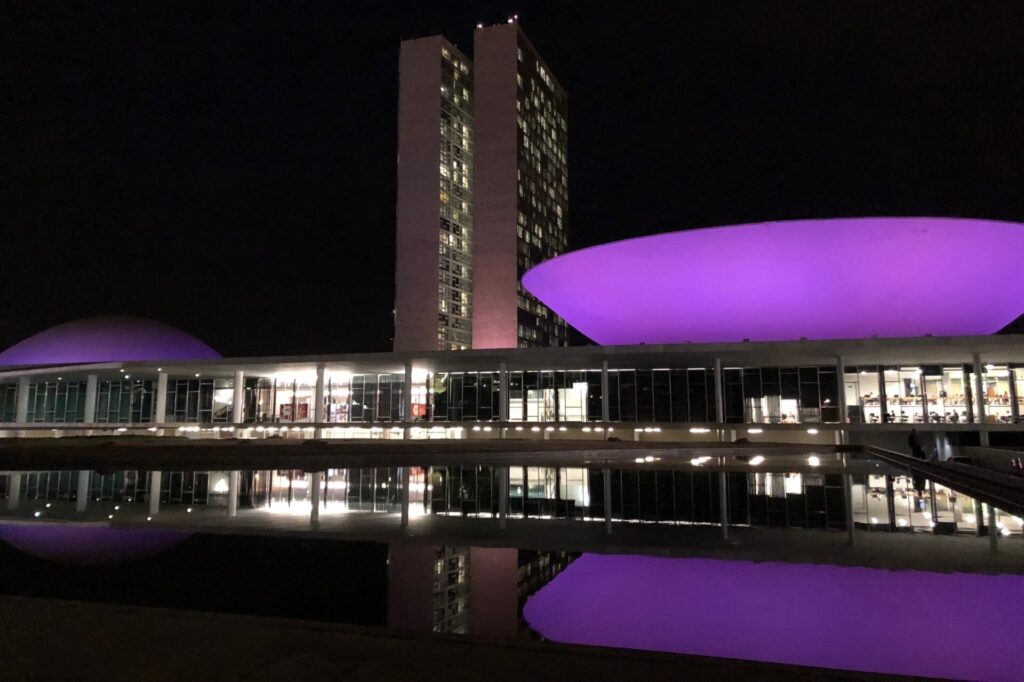
2. Palácio do Congresso Nacional, Brasília, Brazil. Photo by Cristina Leston-Bandeira.

Article published 25 April 2025

IPEN case studies and quick guide on theme of Youth Parliaments now available

Resources on the theme of Youth Parliaments are now available for members in our IPEN MS Teams space.

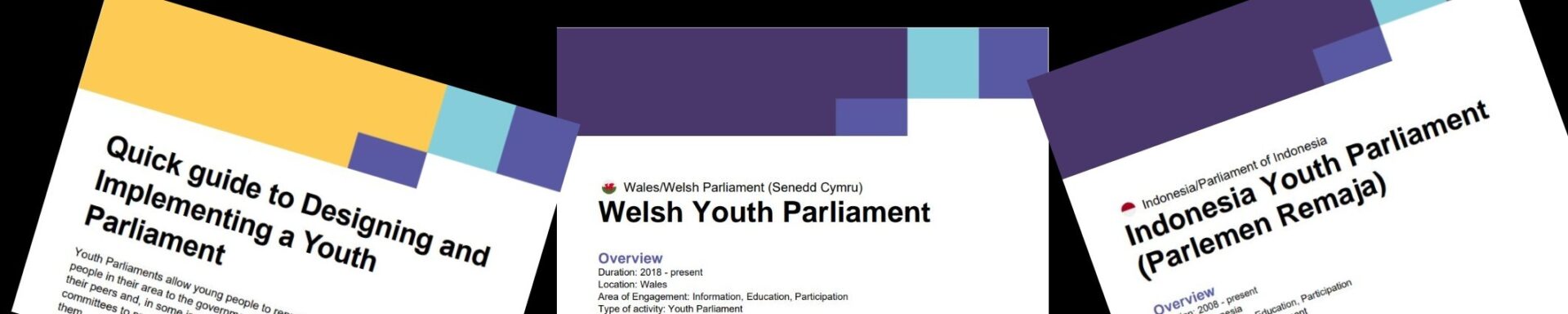
They include two case studies, written by Emma Brewis (Postgraduate Researcher at the University of Leeds) alongside IPEN members from the Senedd Cymru (Welsh Parliament) and the Parliament of Indonesia.

Emma has also put together the first of our quick guides which shares insights and tips on setting up and running youth parliaments.

Explore the resources

The following case studies and quick guides can be accessed by IPEN members in the files section of Channel 1.1: Toolkits, Case Studies and Quick Guides in MS Teams:

  • Case Study – Indonesia Youth Parliament
  • Case Study – Welsh Youth Parliament
  • Quick Guide to Youth Parliaments

Create your own case study / quick guide

If you would like to share your work as a case study or are interested in working with us to create more quick guides, then we would love to hear from you. These can be on any theme connected to public engagement with parliament.

More information can be found here on the IPEN website.

Critical Conversation – Youth Parliaments

We’ll be holding our second Critical Conversation event in a couple of months time on the theme of youth parliaments. This event will be open to all IPEN members – please look out in MS Teams and future newsletters for information, date and times.

For these events, we are keen to discuss real life issues and challenges that practitioners face on specific themes related to public engagement with parliament.

If there’s a particular aspect relating to youth parliaments (or anything connected to involving young people in decision making) that you’d like to propose for this event, then please email us at [email protected]. It could be some advice you’re looking for, a particular problem you are trying to solve, or practice you’d like to share.

Join IPEN

If your work or research is connected to youth parliaments, you are very welcome to apply to join the International Parliament Engagement Network (IPEN).

The network brings together academics, parliamentary officials and third sector representatives from across the world, to promote collaboration and encourage knowledge sharing around parliaments and public engagement.

Find out more and join IPEN.

Images

1. IPEN case studies and quick guide on the theme of Youth Parliaments.

2. Welsh Youth Parliament Residential in the Chamber, 26 November 2022 Senedd Ieuenctid Cymru, Gyfarfod Preswyl yn y Siambr, 26 Tachwedd 2022. Licensed under the Creative Commons Attribution 2.0 Generic license.

3. IPEN brings together academics, parliamentary officials and third sector representatives from across the world.

Page published on 25 April 2025

Second edition of Exploring Parliament edited by IPEN members has been published

The second edition of Exploring Parliament – a textbook providing an engaging and accessible introduction to the UK Parliament – has been published by Oxford University Press.
 
Exploring Parliament is edited by IPEN members Professor Cristina Leston Bandeira (University of Leeds), Dr Alexandra Meakin (University of Leeds) and Dr Louise Thompson (University of Manchester). The book includes contributions from 73 authors – a mix of academics and practitioners, including many members of IPEN.
 
Exploring Parliament brings in theory, combined with practice, through a series of short chapters accompanied by case studies which make the subject come to life, plus features such as a glossary of parliamentary terms.

Four of the chapters are specifically relevant to IPEN’s focus, on spaces and places, the media, public engagement and trust.

Exploring Parliament – book launch event

Exploring Parliament will be launched at a hybrid event on Thursday 15 May, starting at 17:30 GMT+1 / UK time.
 
At this event, the editors will make opening remarks, reflecting on the book’s unique approach. A panel of the book’s authors will discuss their chapters and insights, followed by a Q&A session.
 
The event will be chaired by Dr Hannah White, Director and CEO at the Institute for Government.
  
Book your place to attend the book launch online.

Book to attend in person.

Find out more about the second edition of Exploring Parliament on the Oxford University Press website.

About the editors

Professor Cristina Leston-Bandeira is a Professor of Politics at the University of Leeds. She has worked on parliaments for nearly 30 years. She is Chair of the International Parliament Engagement Network and a previous Chair of the UK Study of Parliament Group (2019-22). Professor Leston-Bandeira’s research focuses on public engagement with parliament, having published widely on the topic and having secured funding from the AHRC, the British Academy, ESRC and the Leverhulme Trust. She regularly gives evidence to parliaments on public engagement, having held a fellowship with the Petitions Committee of the UK House of Commons in 2016-17. She is the recipient of numerous awards recognizing the quality and innovation of her teaching, including a Higher Education Academy National Teaching Fellowship (2012) and the Political Studies Association Bernard Crick Main Prize for Outstanding Teaching (2010).

Dr Alexandra Meakin is Lecturer in British Politics at the University of Leeds. Her research focuses on parliamentary governance and the plans to repair the buildings of the UK Parliament (known as the Restoration and Renewal of the Palace of Westminster). Dr Meakin’s PhD ‘Understanding the Restoration and Renewal of the Palace of Westminster: A case study of institutional change in the UK Parliament’ was awarded by the University of Sheffield in 2019 and received the 2020 Walter Bagehot Prize for best dissertation in the field of government and public administration by the Political Studies Association. She is a member of the Study of Parliament Group and the International Parliament Engagement Network, and a former convenor of the Political Studies Association Specialist Group on Parliaments and Legislatures. Prior to entering academia, Dr Meakin worked for over a decade in Westminster, for select committees in the House of Commons and for MPs.

Dr Louise Thompson is Senior Lecturer in Politics at the University of Manchester. Her research focuses on legislative scrutiny, committees and political parties in the House of Commons. She is the co-editor of Parliamentary Affairs and a POST parliamentary fellow (2024-2025) undertaking research with the UK Commonwealth Parliamentary Association. She was previously the Co-Convenor of the Political Studies Association’s specialist group on Parliaments and Legislatures (2014-2018). In 2022, Dr Thompson was awarded the Political Studies Association’s Richard Rose Prize for a distinctive contribution to the study of British Politics.

Image

Exploring Parliament book, Oxford University Press.

Article published: 24 April 2025

Last chance to have your country listed in the new global map of public engagement

Map of the world

Last year, we launched a survey to create an accessible global map of parliamentary public engagement practice.

The survey is part of a project titled Mapping public engagement in parliaments across the world, developed as a Parliamentary Academic Fellowship through the UK Parliamentary Office of Science and Technology (POST), together with the International Parliament Engagement Network (IPEN).

The map is now coming together and will soon be launched online. Huge thanks to those of you who have contributed by completing a survey to help us understand how different parliaments engage with their citizens.

Coordinating the survey is Dr Laura Sudulich, a Parliamentary Academic Fellow based at the University of Essex. Laura has now created a beta version of the map and is in the final stages of collecting and collating the data.

It’s not too late for details for your parliament to be added. If you have any information you wish to be included in the map, the survey is still open and can be accessed here.

We are interested in including public engagement activity in all parliaments across the world, whether that be national, subnational or supranational.

IPEN members can try out the beta version of the map – to give feedback and check that information you have submitted so far is correct – by accessing it in IPEN’s MS Teams space.

Find out more about the project and survey to create a map of public engagement practice in this news story on the IPEN website.

Image

Image by Clker-Free-Vector-Images from Pixabay

Page published: 23 April 2025