
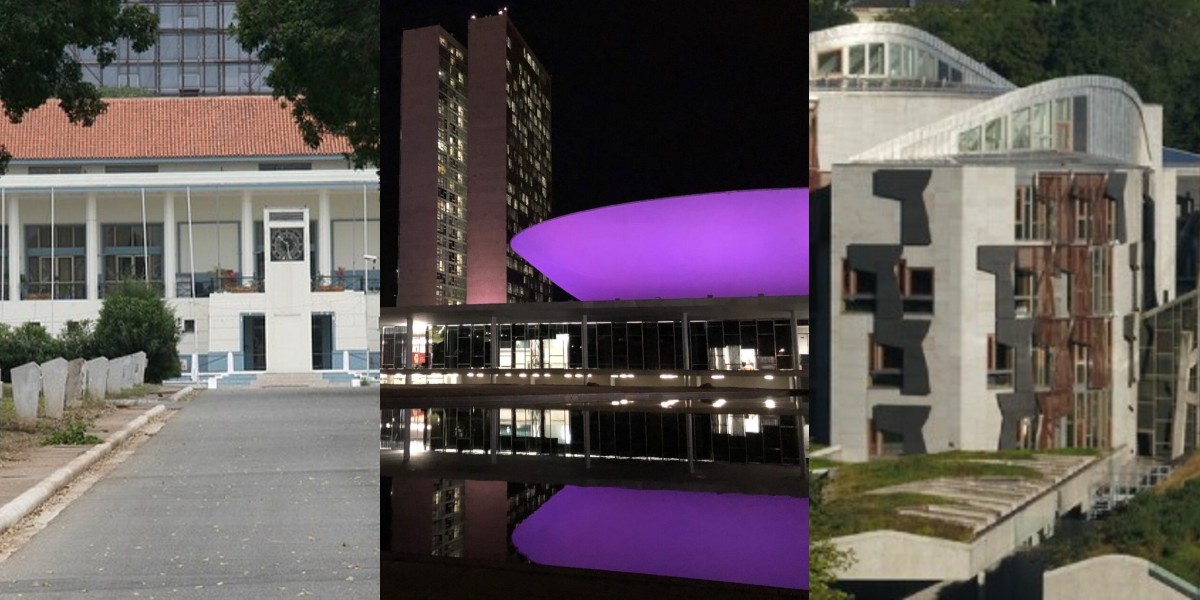
This seminar explored how three very different parliaments – Brazil’s Chamber of Deputies, the Parliament of Ghana and the Scottish Parliament – structure the delivery of public engagement services. The idea for this seminar came directly from one of our new IPEN members, who is setting up a new public engagement department in their parliament and wanted to hear about how other parliaments have done this.
Public engagement is understood in many different ways across parliaments, with some putting more emphasis on education, others on participation and others still on communications; or a combination of these. This results in very different types of services supporting public engagement activity. This can matter in the way public engagement relates to other activities, such as parliamentary business.
Public engagement services also vary very considerably in size across parliaments. Some parliaments may have one small team that needs to attend to every public engagement needs, perhaps keeping everything well integrated and connected – to the detriment of capacity to undertake a high number of activities. Other parliaments have separate services that address different aspects of public engagement, being able to provide a high number (and often more complex) set of activities – but perhaps resulting more in a culture of silos, where each service does their own thing.
Chaired by Cristina Leston-Bandeira (Professor of Politics at the University of leeds and Chair of IPEN), the seminar followed an in conversation format through which we heard from Enock Adomah (Administrator for the Department of Public Engagement, Parliament of Ghana), Sally Coyne (Head of Public Engagement Services Office, Scottish Parliament) and Rodolfo Vaz (Coordinator of Digital Solutions for Citizens, Chamber of Deputies, Brazil).
Rodolfo, Enock and Sally started by outlining how their parliament structures public engagement services.
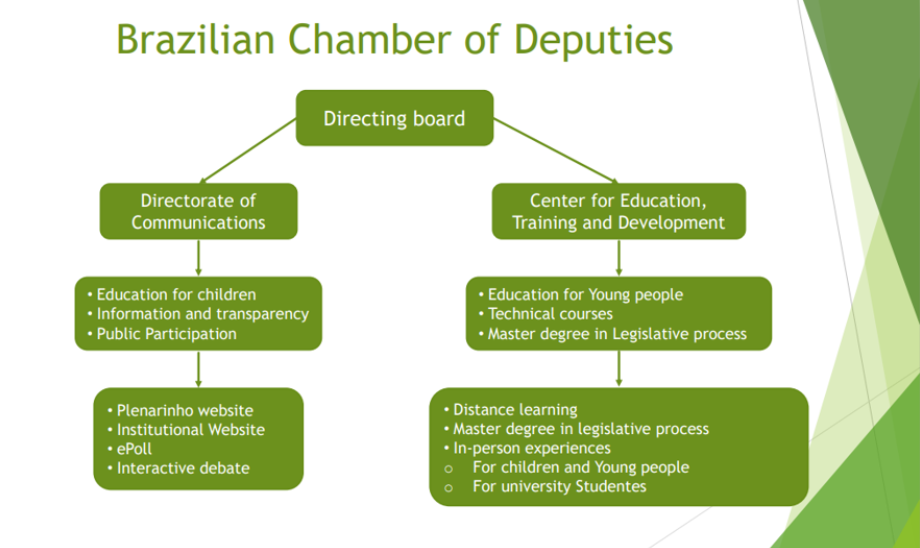
In the Brazilian Chamber of Deputies, this is divided by two main directorates: the Directorate of Communications and the Center for Education, Training and Development. The former includes as diverse services as the children’s parliament website and the interactive debates with committees; in the main digital activities. The latter focuses on more in-depth, in person and longer-term education activities.
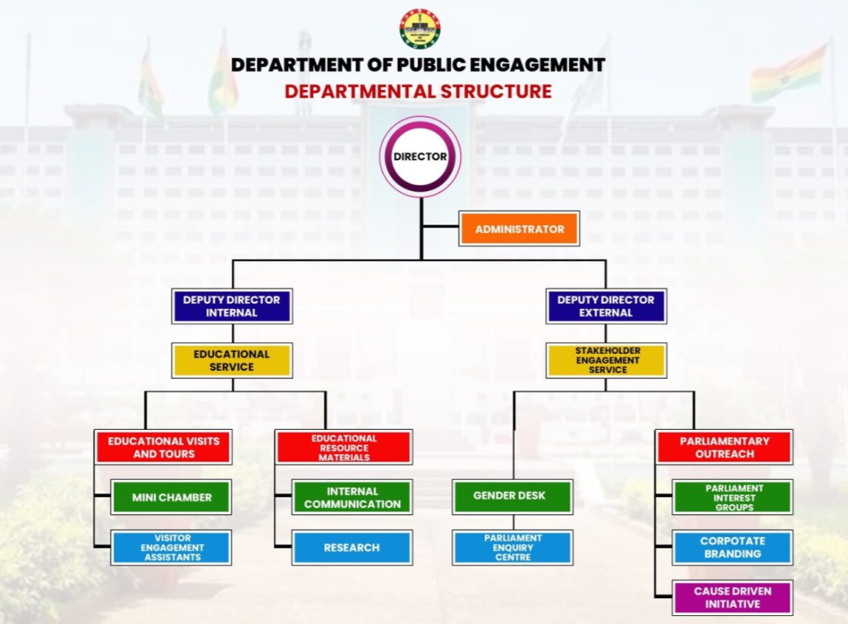
The Parliament of Ghana divides its services through an internally oriented service and an externally oriented one. The internally oriented educational service focuses on services taking place within Parliament, such as educational visits, tours and resources. The externally oriented delivers a wide range of outreach services.
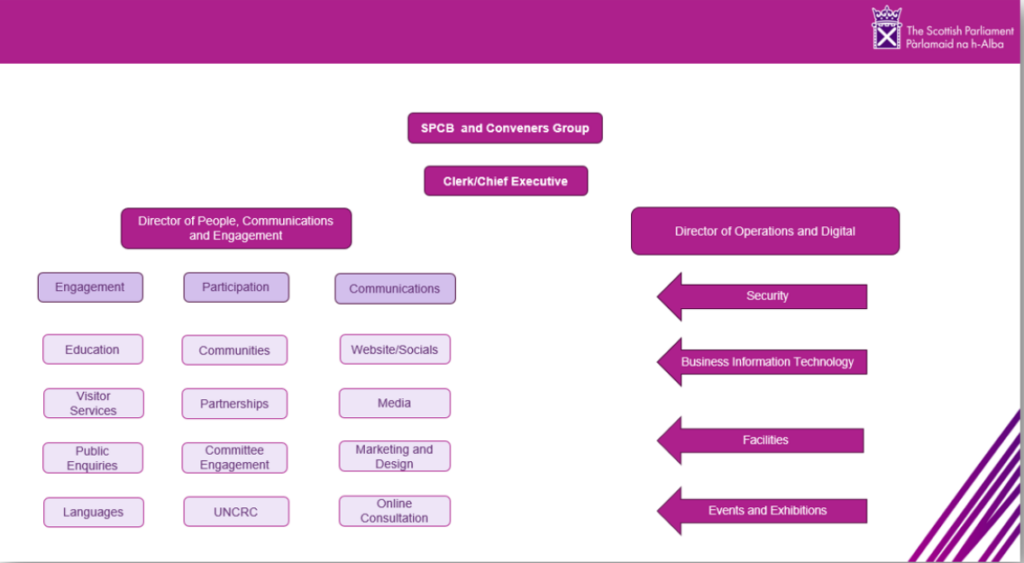
The Scottish Parliament has again a very different structure to deliver its public engagement services. The Directorate of People, Communications and Engagement brings together teams delivering very different types of services such as visits to parliament to committee engagement. The directorate is supported by other departments such as Events and exhibitions and Business information Technology.
After outlining the services, the speakers discussed key issues such as decision-making power within these services, the link between strategy, structures and activity, and what works particularly well within these structures and what could be better.
The seminar was attended by 34 participants from as far as British Columbia in Canada, all the way to Ireland, Portugal and Ghana. IPEN members can listen to a recording of the seminar through this link. IPEN members can also access organograms of all three parliaments through the seminar’s thread in MS Teams.
Image credits:
1. Parliament House (State House) – Parliament of Ghana. Photo by Wgsohne. CC BY-SA.
2. Palácio do Congresso Nacional, Brasília, Brazil. Photo by Cristina Leston-Bandeira.
3. Exterior view of the Scottish Parliament in Edinburgh. Photo courtesy of the Scottish Parliament.