
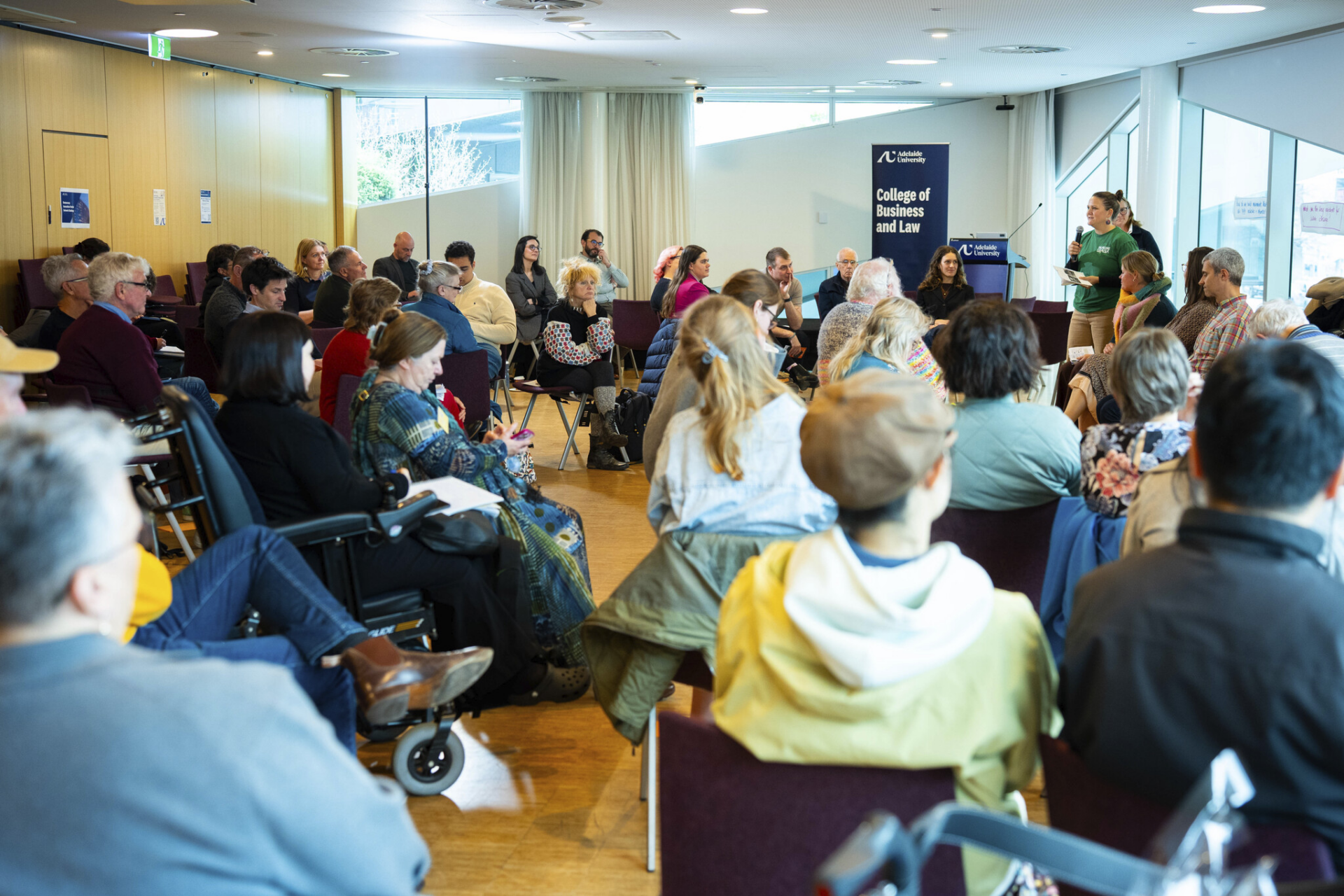
On 17-18 August 2026, Adelaide University (located in South Australia) hosted the inaugural Democracy Innovation Festival, bringing together academics, parliamentarians, policymakers, civil society organisations, educators and community members to explore practical ways of strengthening democracy and public participation.
Designed as a space for learning, collaboration and democratic innovation, the Festival featured a diverse program of workshops, panels and skills-based sessions focused on renewing democratic institutions and empowering citizens. It was attended by over 300 individuals, and attracted guests from afar afield as New York, as well as local Aboriginal contributors including an Kauna Elders panel on Aboriginal Governance.
The Democracy Innovation Festival was built around the idea that healthy democracies depend on strong relationships between institutions and the communities they serve.
A highlight of the Festival was Active Citizen Lab #1: Engaging with Parliament, an interactive online session delivered in partnership with the International Parliament Engagement Network (IPEN). The Lab was led by Associate Professor Sarah Moulds (Adelaide University and IPEN) and featured contributions from outgoing IPEN Chair Professor Cristina Leston-Bandeira (University of Leeds) and IPEN Deputy Chair Elise Uberoi (UK House of Commons Library).
The session explored the question: what does meaningful engagement with parliament look like from a citizen’s perspective? Participants examined a range of common engagement mechanisms used by Australian parliaments, including petitions, committee inquiries, parliamentary visits, community forums and public consultation processes. Discussions highlighted both the opportunities these mechanisms provide and the barriers that can prevent people from participating effectively.
Drawing on IPEN’s work and international research, Cristina Leston-Bandeira and Elise Uberoi introduced participants to IPEN’s Guides on Citizen Engagement for Parliaments, a suite of resources developed through collaboration between parliamentary practitioners and researchers from around the world, showcasing practical examples of parliamentary engagement and identify principles that underpin successful initiatives, including inclusion, collaboration and empowerment. The workshop also provided space for participants to share their own experiences of engaging with parliament. Through facilitated discussions and collaborative activities, attendees identified practical reforms that could make parliamentary engagement more accessible, inclusive and responsive.
The Festival also explored how democratic participation can be strengthened for people facing significant barriers to engagement. The Active Citizen Lab: Participating When Life Is Hard, facilitated by The Australian Centre for Social Innovation (TACSI), brought together community organisations, people with lived experience, and members of the public to examine how democratic processes can be designed to work for those navigating poverty, discrimination, social exclusion, and other life challenges. Through table discussions hosted by organisations including the Anti-Poverty Network SA, the Aboriginal Legal Rights Movement and the Multicultural Communities Council of South Australia, participants shared practical examples of what helps people feel heard, valued and able to influence decisions that affect their lives.
This focus on “doing democracy together” was reflected across the Festival program. Sessions such as Putting People Back in Our Democracy and the Youth Democracy Lab emphasised the importance of creating opportunities for citizens to contribute between elections, build civic capability, and work collectively to solve public problems. Together, these conversations highlighted a common theme: democratic renewal depends not only on improving institutions, but also on ensuring that participation is accessible, inclusive and meaningful for people from all walks of life.
It is hoped that the Democracy Innovation Festival will help spark innovations in research and practice within Australia and across the world, and open the door to new connections across disciplines and jurisdictions. To find out more about the Festival please contact Sarah Moulds [email protected] (Adelaide University) or Matt Ryan [email protected] (Democracy 2036).
Photo: Putting people back in our democracy – workshop at Democracy Festival
Photo credit: Nelson da Silva Pereira