
– reflections from our IPEN seminar –
by Laurian Hubbard (Head of Engagement Services, Welsh Parliament) and Laura Williams (Head of Communications, Welsh Parliament)
In September, we were pleased to join the International Parliament Engagement Network (IPEN) to share the story of the Senedd Commission’s 2026 election campaign. The election was the first held following major changes to the Senedd, including an increase from 60 to 96 Members, 16 new constituencies and a new voting system. Our communications challenge was therefore substantial: to explain unfamiliar changes clearly and neutrally, while helping people feel confident and motivated to participate.
We began with three objectives:
- increase awareness of the changes
- improve understanding of the Senedd’s role, and
- encourage participation, tracked through intention to vote.
Rather than treating these as separate tasks, we designed a journey from awareness to understanding and, ultimately, action.
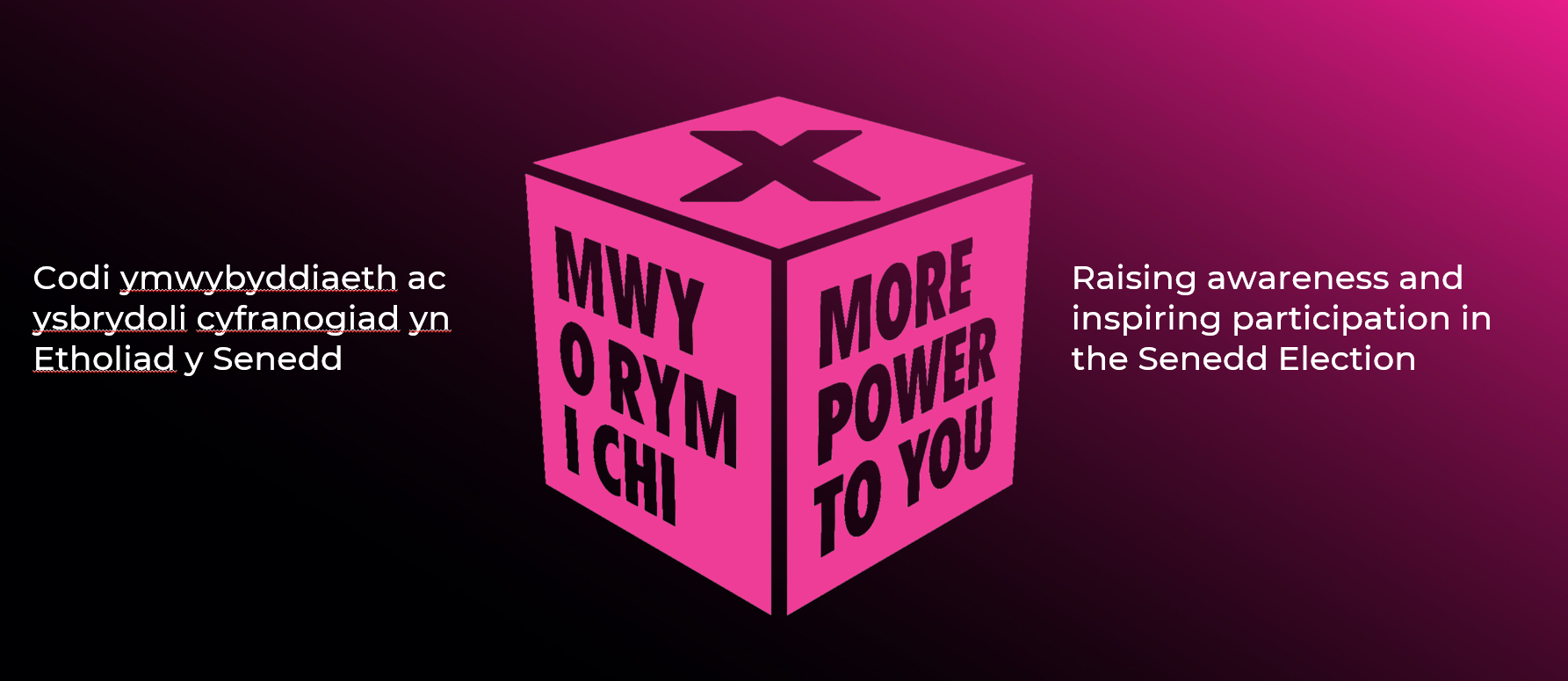
The campaign ran from May 2025 to polling day on 7 May 2026 and developed in three stages. “Your Senedd is Changing” first established the essential facts through media briefings, digital explainers, website content, visitor engagement and conversations at cultural events. We then broadened our activity, reaching communities across all 16 new constituencies and building relationships with groups that are often underrepresented. In the final phase, “More Power to You | Mwy o Rym i Chi” used bold, empowering language and vibrant creative to connect the act of voting with the issues that shape everyday life.
Audience insight was central throughout. Research highlighted particular gaps among young people, first-time voters and people in lower socio-economic areas, including uncertainty about when the election was taking place, what the Senedd is responsible for and how the new system would work. Behavioural science helped us simplify complex information, focus each communication on a clear action and avoid overwhelming audiences. Creative concepts and messages were tested with target groups and refined in response to feedback.
This was also an integrated effort. Communications, education, visitor and community engagement teams worked as one programme, supported by our marketing campaign with our selected agency, Cowshed. Coordination with the Electoral Commission, Democracy and Boundary Commission Cymru, Welsh Government and electoral administrators helped clarify responsibilities, reduce duplication and create more consistent public information where practically possible.
The scale of delivery was significant: 529 education sessions for voting-age learners, 37 events, seven activations, 837 social media posts and 32 videos. We spoke to 84,829 people face to face, generated 14.3 million impressions, 117,650 social media engagements and 337,744 views of election content. Evaluation found awareness of changes to the Senedd reached 82%, a 24-point increase, while understanding of the Senedd’s role reached 43%, up eight points. Reported likelihood to vote rose to 80% in February 2026, and turnout increased from 47.0% at the previous election to 51.6%.
Our main lesson for fellow parliamentary engagement practitioners is simple: start with audiences, not channels. Build an evidence base, define the behaviour you want to support, test with the people you need to reach and keep listening once delivery begins. Just as importantly, connect communications and engagement from the outset. Face-to-face conversations reveal questions and barriers that can strengthen wider content, while consistent campaign messages make every interaction more useful. We are audience-led and data-driven, designing connected audience journeys across communications and engagement so that every touchpoint builds awareness, deepens understanding and supports participation.
The IPEN seminar gave us a valuable opportunity to reflect on a year-long programme and to exchange ideas with colleagues working in different parliamentary contexts. We hope our experience shows that even complex institutional change can be communicated accessibly when insight, creativity, partnership and evaluation are brought together around a clear public purpose.