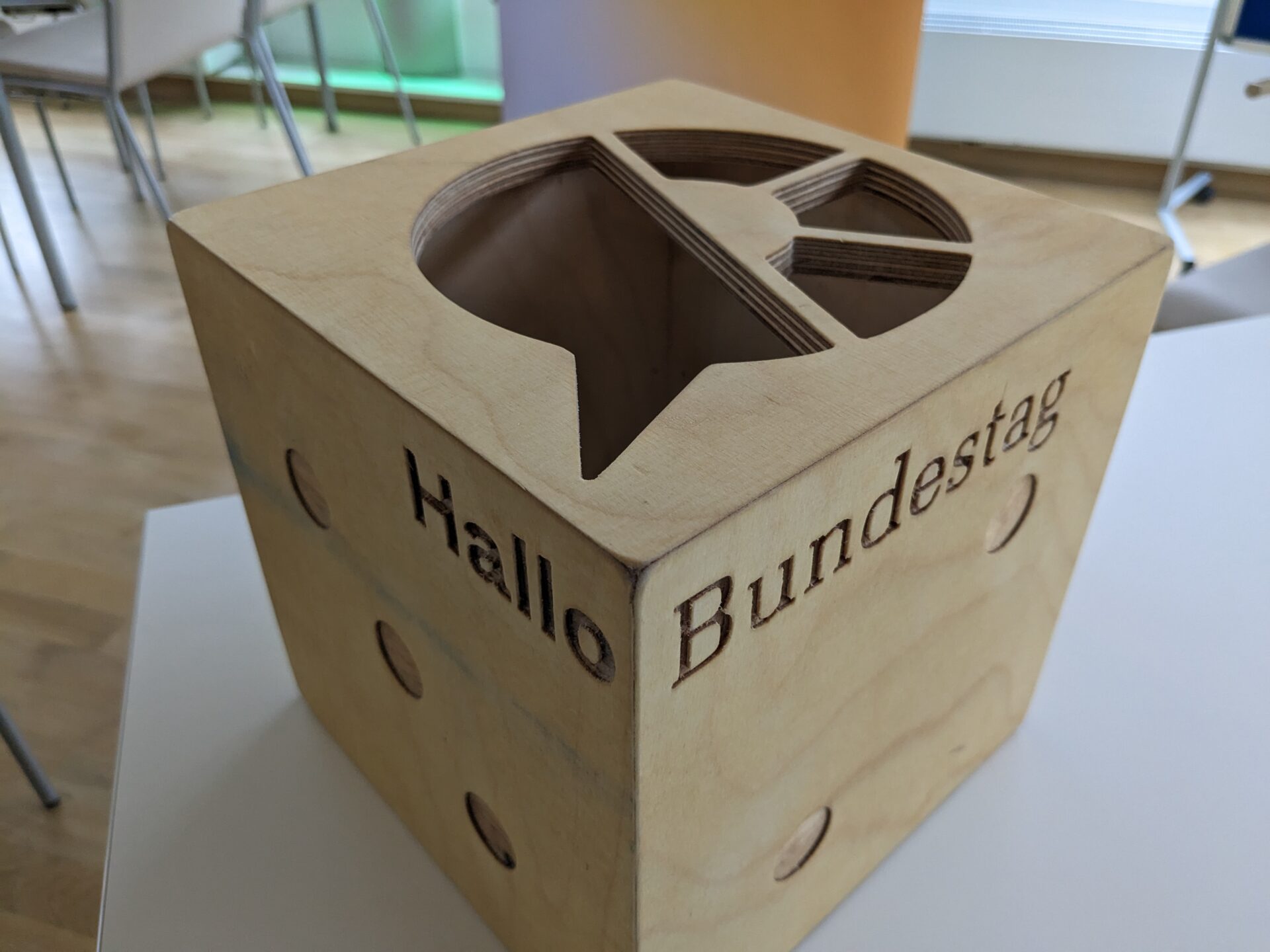
Speakers: Juliane Baruck (Project Lead Hallo Bundestag, Germany); Paul Naudascher (Team Member and Head of Science & Evaluation, Hallo Bundestag, Germany)
Chair: Chris Shaw (Clerk of the Home Affairs Committee, UK House of Commons, and IPEN Executive Team)
This IPEN event is a follow up to the seminar we held back in 2023 on the Hallo Bundestag initiative.
Juliane Baruck and Paul Naudascher will report back on the findings from this deliberative democracy methods initiative that was used in Germany in 2023/4 to engage citizens with the policy making process, through a focus on Members of Parliament.
They will talk about their operative learnings from the project and will also dive into the findings from the evaluation report which has just been published.
This online seminar will take place in MS Teams and is open to all members of the International Parliament Engagement Network.
The Civil Service Excellence and Innovation Awards were established in 2015 in Ireland to highlight innovations in policy and service delivery across the Civil Service where best practice and lessons can be shared.
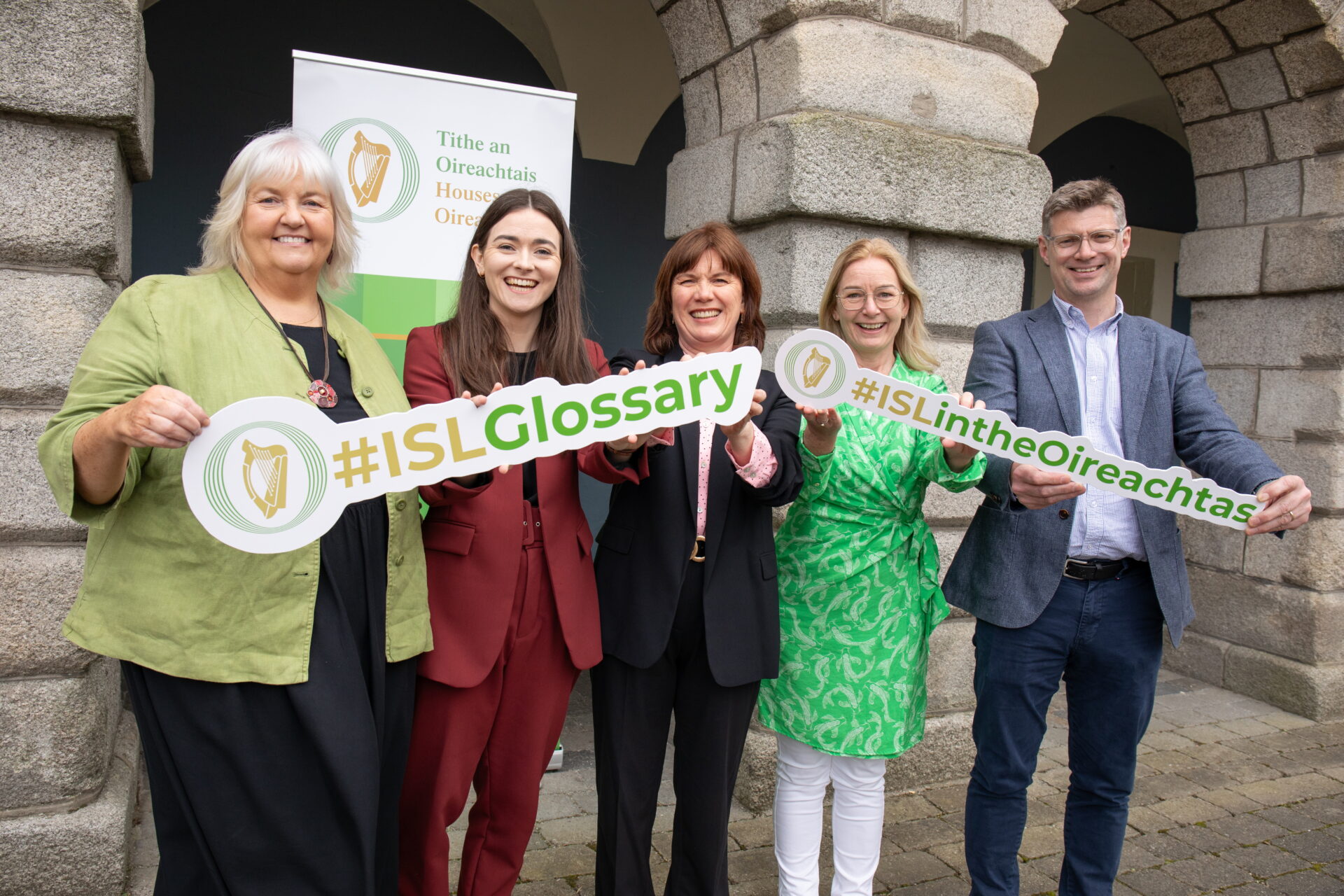
At a ceremony in June, the Houses of the Oireachtas team and integral project partners from the Centre for Deaf Studies received the award for the World Class Civil Service category. This award ‘recognises teams and projects that are a source of inspiration to other public administrations at home and abroad’.
Caroline O’Leary said:
“I believed in the value and aims of the project right from the start. Collaborating with deaf interpreters and in person engagement with the wider deaf community for feedback was vital to the success and future use of new signs within the glossary.”
Ciara Grant added:
“In our roles, we aim to provide greater accessibility to parliamentary proceedings through ISL. This project has created a culture of collaboration with deaf interpreters which will continue to be fostered in our work.
“Along with collaboration with the broader deaf community and sign language academics, this has resulted in a sustainable glossary which is hoped will further enhance language access to political discourse.”
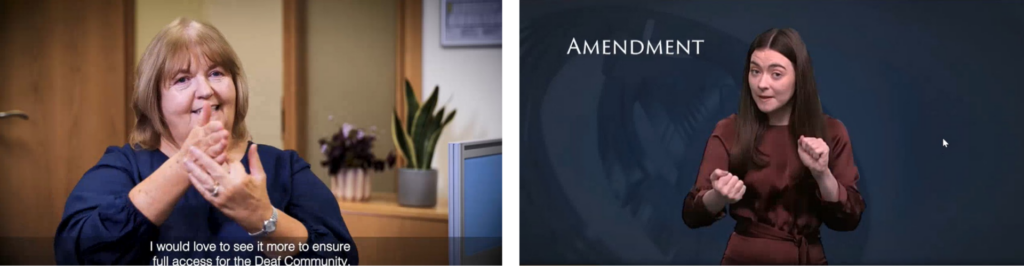
At an IPEN seminar in December 2023, Caroline and Ciara shared how the ISL Interpreting Team were working towards improving Irish Sign Language access into aspects of the Irish parliament. Attendees were treated to an exclusive preview of the new glossary (which launched the following day to coincide with National ISL Day) and a demonstration of some of the new signs created, including three ISL variations of the sign for ‘amendment’.
Cristina Leston-Bandeira, Chair of IPEN and Professor of Politics at the University of Leeds, said:
“The whole IPEN community sends their congratulations to the ISL team at the Oireachtas for their very well deserved prize, which recognises true trail blazing work in providing for more inclusive public engagement practices within parliament.”
This Public Engagement Hub seminar will focus on citizen-initiated legislation in Thailand.
Thailand has a provision for civil society organisations (CSOs) to submit legislative proposals to the House of Representatives if they gather a minimum of 10,000 signatures from eligible voters. This is this provision that was used to put forward a bill to address air pollution, known as the Clean Air Act, almost unanimously accepted by the House of Representatives in January 2024.
Following this, a 39-member ad hoc committee was set up to review the seven drafts submitted, including the civil society draft, and consolidate them into a single, cohesive bill that will then be presented to Senate early 2025.
Join us for a conversation that explores a very concrete example of public engagement through the citizen initiative mechanism designed to allow public participation in the legislative process.
This event will take place on Zoom and is open to anyone with an interest in public engagement with parliaments.
The seminar will be presented in English. Translation will be available to/from French.
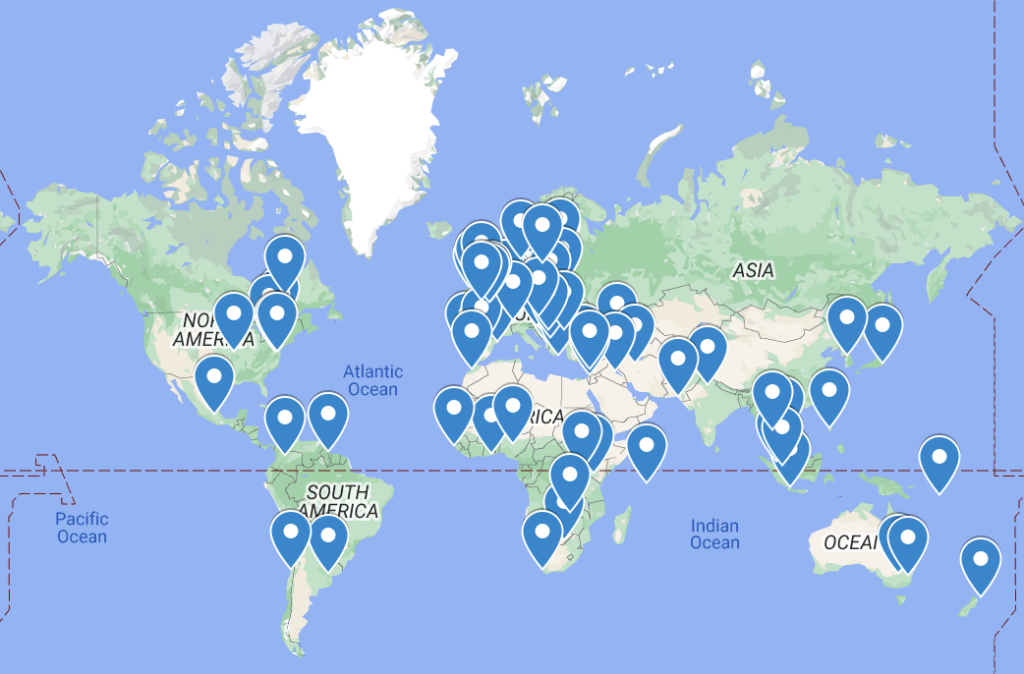
Practitioners who work on matters directly relevant to the theme of public engagement and parliament are invited to take part in a new survey to create an accessible global map of public engagement practice.
The survey is part of a project titled ‘Mapping public engagement in parliaments across the world’ which is designed to help us understand how different parliaments engage with their citizens.
“The aim of this project is to show how parliaments engage with their citizens across the world, through the creation of a map which will be hosted on the IPEN website.
“The survey is specifically aimed at officials who work for parliaments, the Civil Service, and those working for third sector organisations that help parliaments deliver public engagement activities.
“The survey asks a range of questions to determine the wide-ranging approaches parliaments use with regard to public engagement. The rich information gathered through the survey will be collated to create summaries which will be accessed via an interactive map by each country’s parliament or legislature.”
“This new map will enable us to celebrate the multiple ways parliaments from across the world engage with the public.
“To make this possible, we need the input and insights of the dedicated staff who plan and deliver public engagement initiatives and activities within their own parliaments.
“If you work directly to deliver public engagement activities for parliaments then we invite you to contribute to the map by giving some of your time to complete the survey.”
This Public Engagement Hub seminar will focus on Kenya’s bicameral parliament to lead a reflection on how to institutionalise public engagement practices.
Speaker: Dr Brenda Ogembo, Principal Clerk Assistant and the Deputy Head of the Senate Liaison Office at the Parliament of Kenya
Chair: Professor Cristina Leston-Bandeira, University of Leeds and Chair of IPEN
Kenya’s constitution sets a number of provisions about public engagement expectations. The seminar – which will primarily focus on the Senate – will share some of its practices in implementing these constitutional provisions while identifying some of the associated challenges.
This event will take place on Zoom and is open to anyone with an interest in public engagement with parliaments.
The seminar will be presented in English. Translation will be available from/to French.
Speakers: Matthias Keppel, Head of the Demokratikum – Experience Parliament, Parliament of Austria; Barbara Blümel, Head of the Department Services for Citizens, Parliament of Austria
Chair: Cristina Leston-Bandeira (University of Leeds and Chair of IPEN)
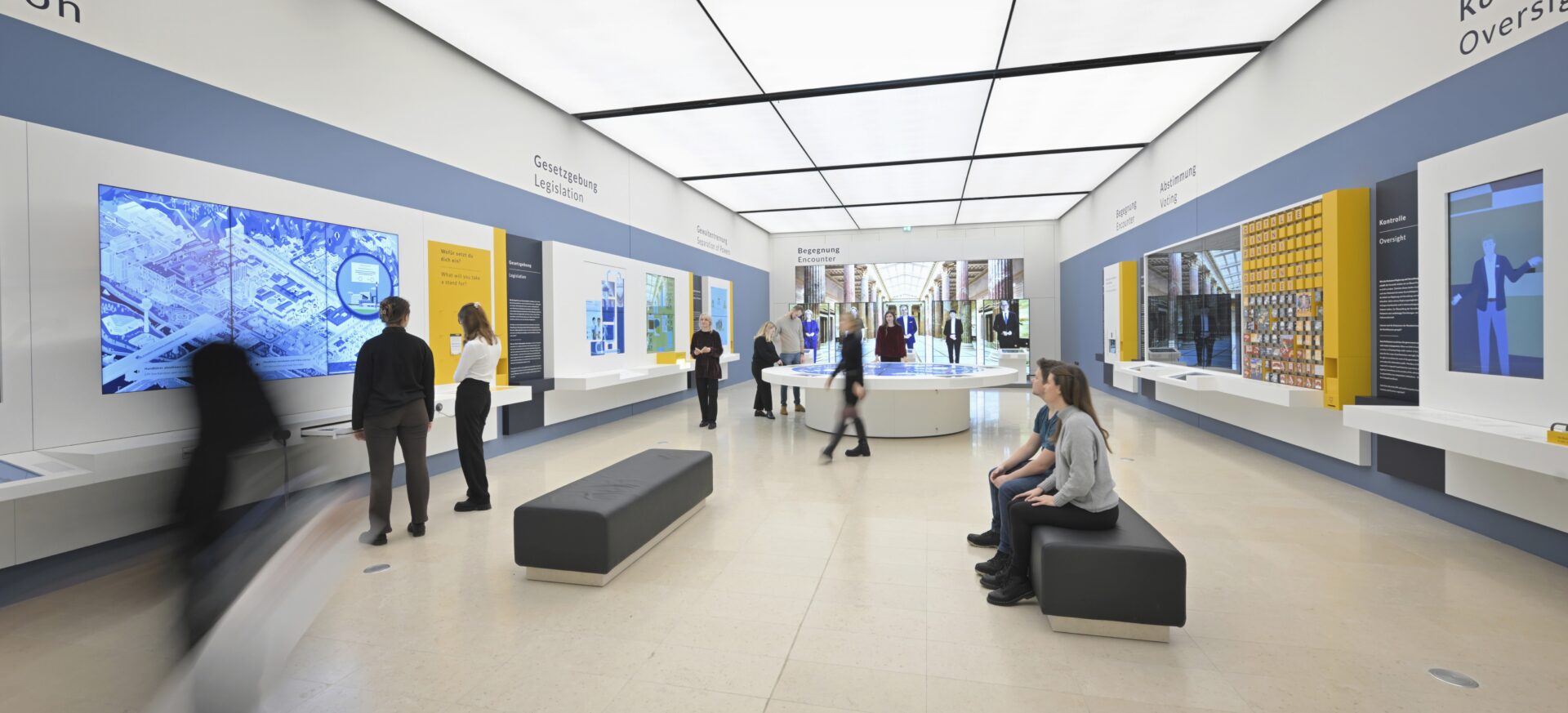
This IPEN seminar will explore how, as part of the renovation of its building, the Parliament of Austria adopted a highly informative and experience-orientated approach to create an interactive and welcoming new space.
This new space, the Demokratikum – situated at the parliament’s entrance – both welcomes and integrates visitors in the parliament. The seminar will outline the process behind this development and present its core characteristics.
This online seminar will take place in MS Teams and is open to all members of the International Parliament Engagement Network.
Presented in Spanish, this seminar is open to IPEN members only.
Speaker: Ana Elorza (Coordinadora FECYT, Oficina C, Congreso de los Diputados, España)
Chair: Eva Campos-Domínguez (Universidad de Valladolid, España)
This IPEN seminar presents the experience of Science and Technology Office, Congress of Deputies (Spain), which provides the parliament with scientific evidence on topics of interest and facilitates dialogue between the scientific community and Members of Parliament.
Ana Elorza will explain the objectives and working method of Science and Technology Office, which is based on scientific evidence – extracted from articles published in scientific journals, interviews with researchers, scientists, and experts, etc. – contextualised, analysed, and summarised in the C Reports through a standardised process (the C Method). The C-Reports are available to all Members of Parliament and the public. Science and Technology Office emerged from the citizens’ initiative ‘Science in Parliament’ (CeeP), with the close collaboration of FECYT and the COTEC Foundation and the support of the vast majority of Spanish scientific institutions.
IPEN members can also find the details in Spanish in our MS Teams space
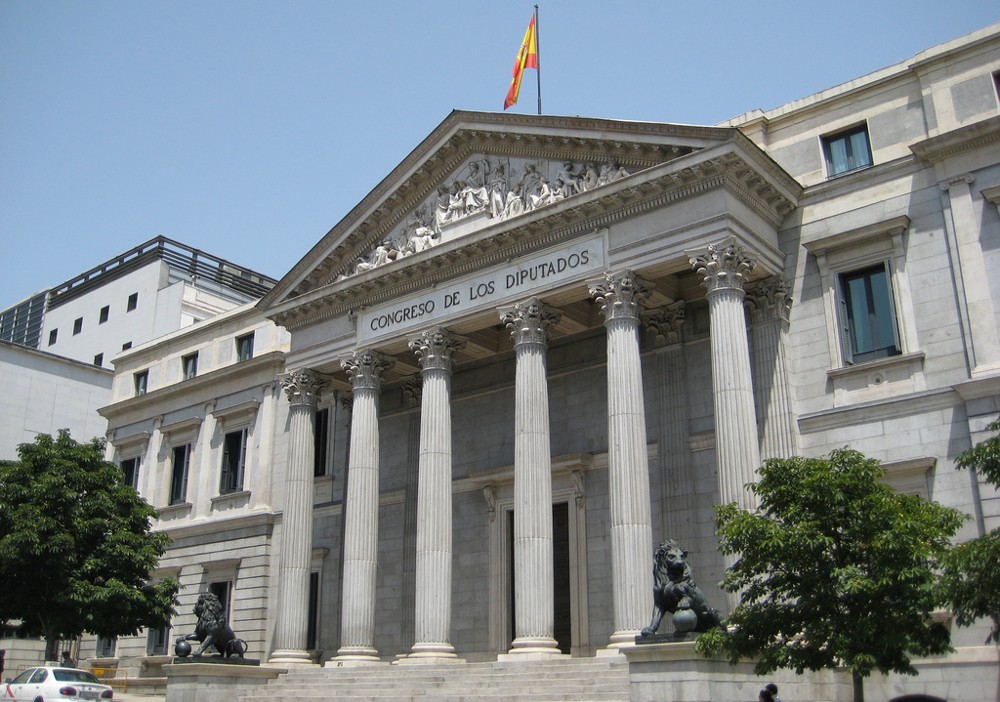
Image: Congreso de los Diputados (Madrid, España). Photo by Luis Javier Modino Martínez. Image licensed under the Creative Commons Attribution 2.0 Generic license.
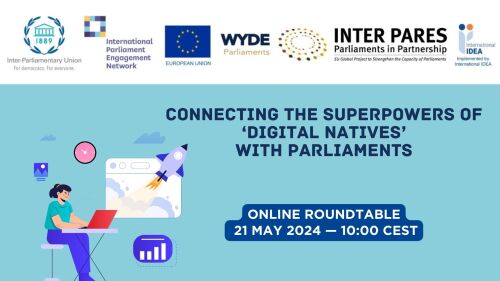
Date and time: Tuesday 21 May (09:00-10:30 GMT+1 / UK time; 10:00-11:30 CEST)
Moderator: Lotte Geunis, INTER PARES
Speakers: Pradip Kahtiwada, Executive Director, Youth Innovation Lab, Nepal; Hanah Lahe, Member of the Riigikogu, Estonia; Andres Lomp, Community Engagement Manager, Parliament of Victoria, Australia; Nerima Wako, Executive Director, SIASA Place, Kenya
Bringing together the perspectives of parliaments and young people, this roundtable considers opportunities and challenges for connecting parliament with ‘digital natives’ born or brought up during the age of digital technology. How can digital natives engage parliaments in efforts towards transparency, accountability and participation? How can parliaments draw upon the skills and know-how of young people to strengthen their practices?
Join us for a conversation that explores what digital natives have to offer to parliaments and vice versa, how this complements parliaments’ search for efficiency and independence, and what this could look like in practice.
This event will take place on Zoom and is open to anyone with an interest in public engagement with parliaments.
This event will be presented in English. Translation will be available from/to French.
Speakers: Dr Narelle Wood (Senior Education Advisor, Community Engagement, Parliament of Victoria); Natalie Badcock (Community Education & Engagement Manager, Parliament of South Australia)
Chair: Dr Sarah Moulds (University of South Australia and Deputy Chair of IPEN)
This IPEN seminar will explore approaches used by the legislatures of South Australia and Victoria (Australia) to promote more meaningful engagement from teachers in civics, democracy and citizenship teaching.
Narelle Wood will outline how the Parliament of Victoria has partnered with Swinburne University of Technology to use co-design principles in civics and citizenship professional development workshops with teachers. Narelle will share some of the co-design activities, some of the benefits and key learnings from using co-design, and how this work has influenced the education strategy moving forward.
Natalie Badcock will present on contemporary practices around finding and engaging teachers with professional learning in South Australia, and the flow on effect the training has on perceptions of the Parliament. Natalie will also take attendees through a preview of the Parliament’s ‘Top 5 Tips for Teaching Civics & Citizenship’ seminar, which involves interactive elements and stepping into the shoes of a teacher.
This online seminar will take place in MS Teams and is open to all members of the International Parliament Engagement Network.
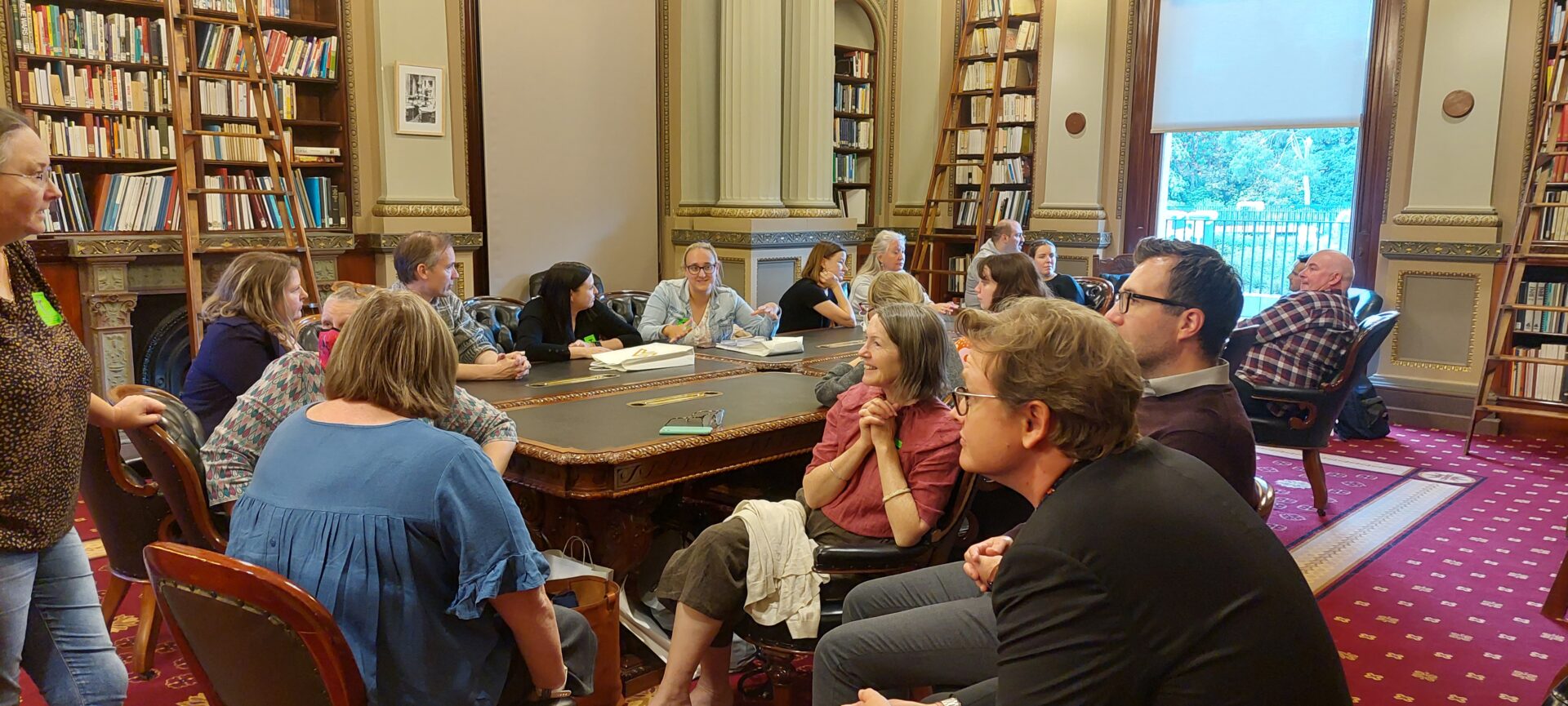
Teachers from the Victorian Academy of Teaching and Leadership Teaching Excellence Program participating in a workshop at Parliament Victoria on excursions in the Humanities. Photo courtesy of Parliament of Victoria.
Speakers: Professor Cristina Leston-Bandeira (School of Politics and International Studies, University of Leeds and Chair of IPEN); Dr Blagovesta Tacheva (School of Politics and International Studies, University of Leeds)
Chair: Matt Ringer, Director of Participation, UK House of Commons
This IPEN seminar will discuss barriers that people from seldom heard groups (e.g. low socio-economic backgrounds, ethnic minorities) face to engage with parliament and the type of approaches that parliaments may develop to enhance engagement from these groups.
It will draw on research undertaken in the UK which included focus groups with people from seldom heard groups and interviews with community organisations representatives, as well as parliamentary officials.
Cristina Leston-Bandeira and Blagovesta Tacheva will show the importance of thinking about participation through a holistic approach which values the scaffolding of participatory activities with appropriate education and information resources.
This online seminar is open to all members of the International Parliament Engagement Network.