
By Conor Reale (Parliamentary Education Officer, Oireachtas) and Tara Kelly (Clerk of the Joint Committee on Education and Youth, Oireachtas)
Engaging young people in parliamentary democracy is a core priority for the Houses of the Oireachtas, and nowhere is this more evident than in the work of the Joint Committee on Education and Youth. In recent years, the Committee has developed a distinctive and meaningful approach to involving young people directly in parliamentary scrutiny, ensuring that their lived experiences and perspectives inform national policy discussions.
This spotlight highlights how the Education Committee embeds youth voice in its work, the principles guiding this approach, and the positive impact it has had on both Members and young participants. The practice is also referenced as an example of meaningful engagement in the IPEN Guide on Youth Engagement in Parliaments (p. 12).
Why Youth Engagement Matters
Education policy has a uniquely direct impact on young people’s daily lives. Decisions made in this space affect their learning environments, wellbeing, future opportunities, and sense of belonging in society. Recognising this, the Education Committee has embraced a core principle: those most affected by policy should have opportunities to share their experience with policymakers.
By opening its deliberations to students, learners, and youth organisations, the Committee aims to:
- Bring lived experience into Parliamentary discourse
- Model transparency and accessibility
- Support civic literacy and participation
- Enrich Members’ understanding of emerging issues in education
How the Committee Engages Young People
1. Inviting Young Experts to Committee Hearings
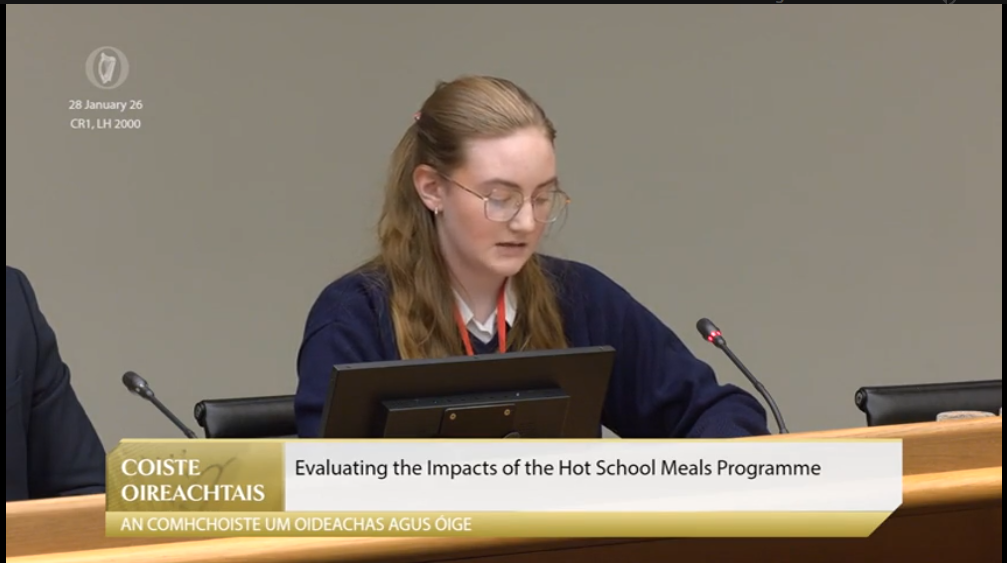
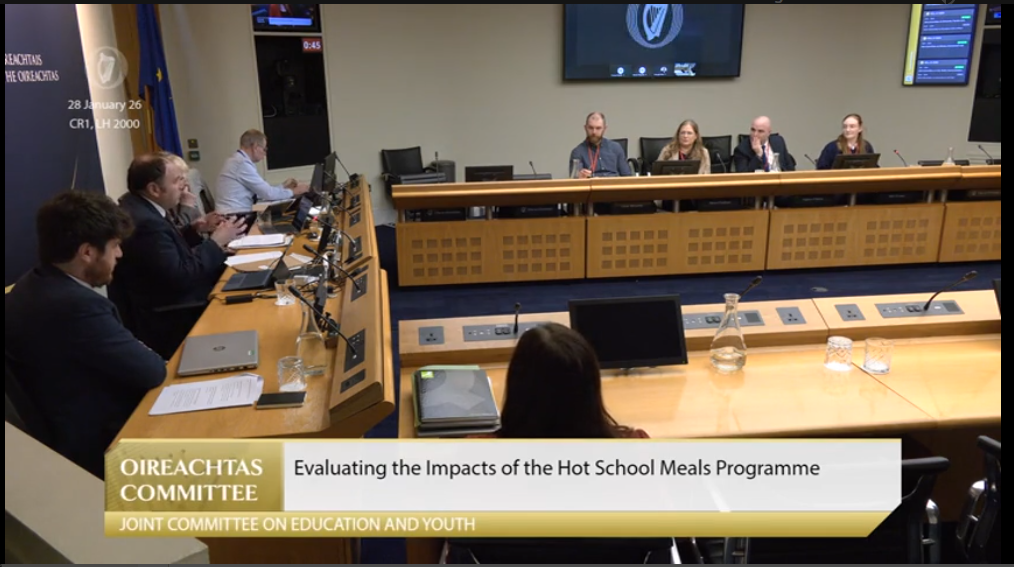
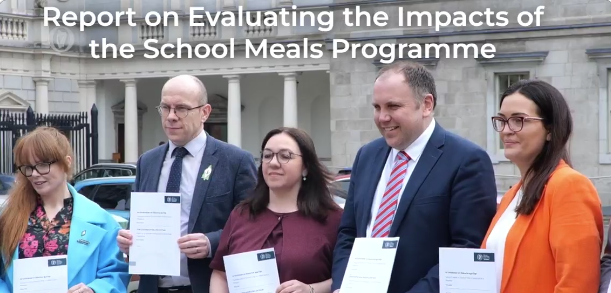
One of the most impactful approaches is the Committee’s practice of inviting young people to speak directly at public hearings. A recent example has seen young people presenting their views on the topic of Hot School Meals. These sessions follow the same format as any expert witness appearance, signalling that the Committee values youth input as evidence, not tokenism. Members frequently refer back to young people’s testimonies during debates, questions to Ministers, and report drafting, often including their recommendations. See for example the recent report on the provision of school meals: https://data.oireachtas.ie/ie/oireachtas/caighdeanOifigiul/2026/2026-03-26_report-on-evaluating-the-impacts-of-the-school-meals-programme_en.pdf
2. Collaboration with Youth Organisations
The Committee works closely with organisations such the Irish Second-Level Students’ Union (ISSU), youth advocacy networks, and school communities. These partnerships help:
- Identify young people interested in contributing
- Ensure accessibility and safeguarding
- Provide preparation and support
- Amplify the outcomes of engagement
These relationships ensure young participants feel informed, prepared, and confident when stepping into the parliamentary environment.
3. Integrating Education Committee Engagement into Civic Education
Beyond the hearings themselves, the Committee’s youth engagement model reinforces broader Parliamentary education efforts. Teachers, youth workers, and students increasingly view Committee engagement as an extension of active learning: a real‑world opportunity to see democracy in action.
This aligns closely with the Oireachtas Education Programme’s goal of helping young people understand:
- How laws are made
- How Committees hold Government to account
- How individuals and groups can participate in democracy
What We’ve Learned
Across these engagements, several key lessons have emerged:
- Young people are articulate, informed, and highly capable contributors to policy debate.
- Preparation and support are essential for meaningful participation.
- Committee members benefit from insights that may not surface through traditional submissions.
- Youth engagement can reshape how parliaments think about evidence, expertise, and representation.
Perhaps most importantly, youth witnesses consistently express that they feel heard, respected, and valued—often citing the experience as transformative in shaping their confidence and sense of agency.
Looking Ahead
As parliaments worldwide explore new models for involving young people, the Education Committee’s approach demonstrates that authentic engagement is not only possible, but deeply enriching for legislative work. The Houses of the Oireachtas remain committed to evolving this practice, continuing to embed youth voice at the heart of Irish parliamentary democracy.
You can read more out about meaningful youth engagement by parliaments in the guide IPEN developed in partnership with Inter Pares: Guide on Youth Engagement. The Guide includes this case study from the Oireachtas plus others from around the world. The Guide is part of a series of eight different Guides on Citizen Engagement for Parliaments.
Featured photo credit: Houses of Oireachtas