

By Dr Sarah Moulds (University of Adelaide and Vice-Chair of IPEN)
Leadership transitions provide an opportunity not only to look ahead, but also to reflect on the people whose vision, dedication and leadership have shaped an organisation’s success. As IPEN prepares for a new chapter, it is fitting that we pause to recognise the extraordinary contribution of our outgoing Chair and co-founder, Professor Cristina Leston-Bandeira, whose influence can be seen across every aspect of the network’s development and achievements.
I am thrilled (and slightly daunted by the very large shoes to fill!) to be elected as IPEN’s Vice Chair and, in accordance with IPEN’s governance arrangements, will assume the role of Chair in September 2026. More information about my vision for the future of IPEN is available on our website.
This transition also marks the end of an important chapter in IPEN’s history. Founded in 2020 as a collaboration between the Centre for Democratic Politics at the University of Leeds and the UK House of Commons Service, IPEN was established to create an international community focused on strengthening understanding and practice of parliamentary public engagement. From the outset, Cristina was a driving force behind this vision, helping to build a network that connected academics, parliamentary officials, engagement practitioners and democratic innovators in ways that had rarely been achieved before.
Over the past six years, Cristina has guided IPEN from a promising idea into a thriving international network with a growing global membership and an increasingly influential voice in debates about parliamentary engagement and democratic renewal. Under her leadership, IPEN has expanded its reach across continents, developed a vibrant programme of events and knowledge exchange activities, and created valuable opportunities for collaboration between research and practice.
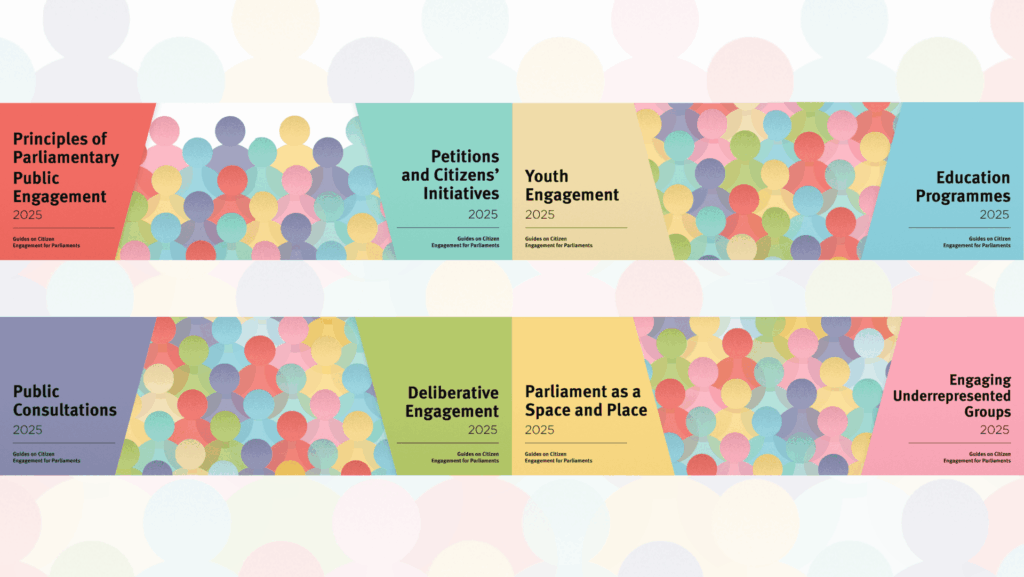
One of Cristina’s most significant achievements has been her commitment to ensuring that IPEN delivers practical resources that support parliaments around the world. A particularly notable example is the publication of IPEN’s Guides on Citizen Engagement for Parliaments, developed in partnership with Inter Pares (and funded by the European Union) which bring together international evidence, expertise and practical lessons to help legislatures strengthen their engagement with citizens. These guides exemplify Cristina’s long-standing belief that research should not simply analyse democratic institutions, but actively contribute to improving them.
Cristina has also played a central role in establishing and nurturing strategic partnerships that have enhanced IPEN’s international profile and impact. Between 2022 and 2025, IPEN co-hosted the Public Engagement Hub of the Inter-Parliamentary Union‘s Centre for Innovation in Parliament, creating an important global platform for sharing knowledge and best practice in parliamentary engagement. The Inter-Parliamentary Union remains a valued partner of the network, reflecting the strong relationships that Cristina helped to cultivate. More recently, IPEN welcomed the Westminster Foundation for Democracy as a key partner, opening new opportunities for collaboration and extending the network’s reach even further.
Beyond these tangible achievements, Cristina’s greatest legacy may be the culture she has built within IPEN. Members consistently speak of her generosity, enthusiasm and ability to bring people together around a shared purpose. Whether supporting early-career researchers, connecting practitioners across jurisdictions, or championing innovative ideas, Cristina has fostered a collaborative and inclusive community that has become one of IPEN’s defining strengths.
Her influence extends beyond the network itself. As a leading scholar of parliamentary studies and public engagement, Cristina’s research and public-facing work have contributed to important conversations about the future of democratic institutions. The growing recognition of both her work and IPEN’s contributions, including references in discussions around parliamentary modernisation and democratic innovation, is testament to the impact of her leadership.
While Cristina is stepping down as Chair from September 2026, the foundations she has created will continue to shape IPEN for many years to come. The network’s growth, reputation, partnerships, practical resources and strong sense of community all reflect her vision and commitment. It is no exaggeration to say that IPEN would not be the organisation it is today without her leadership.
I would like to extend my deepest thanks to Cristina for her outstanding service, leadership and friendship. I look forward to the next chapter of IPEN’s journey, building on the remarkable foundations that Cristina has helped create.
Keep an eye out on Microsoft Teams and LinkedIn for information about how to continue to acknowledge and celebrate Cristina’s contribution.